Global economy shifting rapidly amid Strait of Hormuz standoff




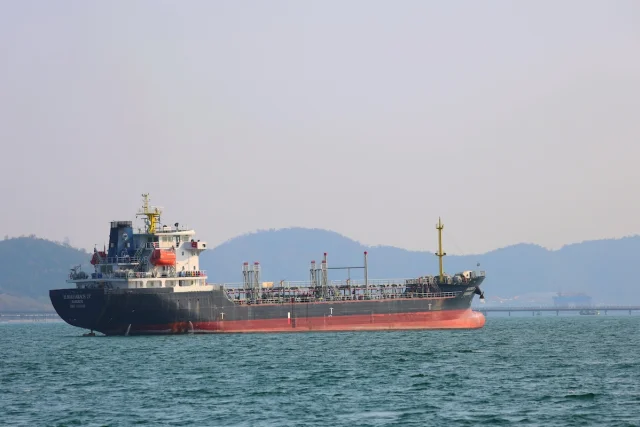
The disruption of energy shipments through the Strait of Hormuz is rapidly tightening global oil markets, forcing countries to drain reserves while analysts warn the economic fallout could worsen in the months ahead.
Oil producers outside the Middle East, including the U.S., Canada, Norway, Nigeria and Venezuela, have responded by ramping up production, while countries around the world are drawing down reserves at record rates. At the same time, rising energy costs and slowing economic activity are already contributing to “demand destruction” and job losses across multiple industries.
Goldman Sachs, the New York-based investment bank that monitors global economic activity, warned this week that oil reserves were drawn down at twice their normal rate in April. Since early May, inventories have reportedly been falling at a pace of 8.7 million barrels per day, the fastest rate ever recorded.
“Physical markets continue to tighten, as estimated oil exports through the strait remain at a very low 5% of normal,” the Goldman Sachs analysts said.
The warning follows an earlier Goldman Sachs report published in May, which said global crude oil inventories were approaching an eight-year low. Analysts added that while it remained "unlikely” that supplies would “hit minimum operational levels this summer,” the pace of depletion and regional supply losses was becoming increasingly concerning.
Citi, another major investment bank with global interests, told investors this week that “It appears increasingly likely, in our view, that the Iranian regime will disrupt SoH flows for some time,” warning that oil prices could climb as high as $200 per barrel if the disruption continues for an extended period.
Other analysts have projected a less severe outcome if an agreement to reopen the Strait is reached by the end of June. Under that scenario, Brent crude prices could fall to roughly $80 per barrel by the end of the year – still elevated by historical standards, but significantly more manageable for global markets.
Countries across the Middle East are also attempting to reroute energy exports through alternative infrastructure in order to reduce reliance on the Strait of Hormuz.
Israel has increased production of natural gas from its offshore platforms and is shipping larger volumes to the liquefaction facilities at Idku and Damietta in Egypt for export to global markets.
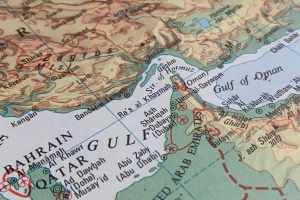
Meanwhile, the United Arab Emirates has accelerated construction of a new pipeline that would allow additional crude oil exports through the port of Fujairah on the Gulf of Oman, bypassing the Strait of Hormuz altogether. State-owned energy company ADNOC formally announced the project last week.
"Today, it's already almost 50% complete, and we are accelerating its delivery toward 2027," Sultan Al Jaber announced during a live-streamed event hosted by the Atlantic Council think tank. "Right now, too much of the world's energy still moves through too few choke points. That is exactly why the UAE made the decision more than a decade ago to invest in infrastructure that bypasses the Strait of Hormuz."
Existing UAE pipelines can already transport approximately 1.8 million barrels of oil per day to Fujairah, although the terminal has been targeted during the current conflict by some of the 3,000 ballistic missiles and drones Iran has fired at the UAE.
Al Jaber commented on those attacks, saying "The UAE was attacked for its model of development," adding that even if the war ends soon, it could still take months for global energy flows to return to pre-war levels.
"Once you accept that a single country can hold the world's most important waterway hostage, freedom of navigation as we know it is just finished," he said. “If we don't defend this principle today, we will spend the next decade defending against the consequences."
You might also like to read this: