Shavuot: What the Book of Ruth, Sinai, and the giving of the Torah reveal about God’s plan for the nations




Does the New Testament story of Pentecost demonstrate the biblical role of Israel and describe a restoration for the tragedy that accompanied the giving of the Torah?
A lecturer at the Israel College of the Bible takes us on a journey through several stations, from the giving of the Torah, the Golden Calf tragedy, Israel’s priestly role to the nations, and how the story of Ruth shows that the union of Jew and Gentile leads to the Messianic Redemption.
Dr. Golan Broshi, a lecturer at the only Hebrew-speaking Evangelical Bible college in the world, explains the connections between the Biblical Feast of Weeks (called Shavuot in Hebrew) and the beginning of the congregation of followers of Yeshua (Jesus), known as Pentecost in the Christian world.
Broshi teaches courses in Second Temple literature and the Bible, with a focus on early Rabbinic traditions and the writings of the New Testament. Those disciplines help him see connections among disparate threads in early Jewish and early Christian literature, pointing to the faithful hand of God.
The following is based on a Hebrew article written by Broshi, and a conversation with ALL ISRAEL NEWS about the path to Pentecost, from the giving of the Torah, to the Gospel being proclaimed to the nations.
The early Second Temple Jewish writing known as Jubilees, written in the 2nd century B.C., tells us that the giving of the Torah at Sinai took place on the Feast of Weeks (also called First Fruits).
This statement is repeated in the early Rabbinic Midrashic literature, which says that when God gave the Torah from Sinai, the divine word was divided into seventy tongues of fire (Shabbat 88b). In Hebrew, the word for tongue is often used to refer to languages.
The number seventy appears to come from the number of Israelites who went down to Egypt with Jacob (Gen. 46:27; Deut. 10:22), which gets linked to the number of nations in the world by a passage in Deuteronomy 32:8. In the Masoretic text, the passage reads: "When the Most High gave the nations their inheritance, when He divided mankind, he determined the borders of the peoples according to the number of the sons of Israel."
The Rabbinic midrash indicates that even at the giving of the Torah on Sinai, God intended to bless the nations of the world.
However, as we see several times in the Torah, the goodness of God often meets with the evil of mankind. As Moses descends from Mount Sinai with the tablets of the covenant, he discovers that the Children of Israel have already broken the commands inscribed on them.
The people made an idol of a golden calf, named it after God, and began to worship it (Exodus 32). In his anger, Moses called the tribe of Levi to execute judgment on the people, and 3,000 people were killed. What should have been a day of blessing became a day of tragedy and curse.
Jewish tradition calls for the reading of Psalm 67 during Shavuot, because the main body of the Psalm has 49 words, corresponding to the number of days counted from the waving of the Omer until Shavuot (Lev. 23:15-16).
Psalm 67 contains a clear allusion to the Aaronic blessing of Numbers 6:24-26, which is often called the Priestly blessing: “May the Lord bless you and keep you; may the Lord make His face shine upon you and be gracious to you; may the Lord lift up His face upon you and give you peace.”
In Numbers, Aaron and his sons were commanded to say that blessing over the nation of Israel, so that God would bless the people: “So they will put my name on the people of Israel, and I will bless them.”
In Psalm 67, however, that blessing is extended to the nations (Gentiles). It starts with a blessing for Israel: “May God be gracious to us and bless us and make His face shine upon us, Selah.” (Psalm 67:1), but shifts to a blessing for the nations: “that your way may be known on earth, your saving power among all nations. Let the peoples praise you, O God; let all the peoples praise you!” (Psalm 67:2-3)
The author of Psalm 67 appears to understand that just as the priests in Numbers 6 were called to bless Israel, so Israel was to function as “a kingdom of priests,” blessing the whole world. This is exactly what God told Israel they would be if they accepted His Torah (Exodus 19:6).
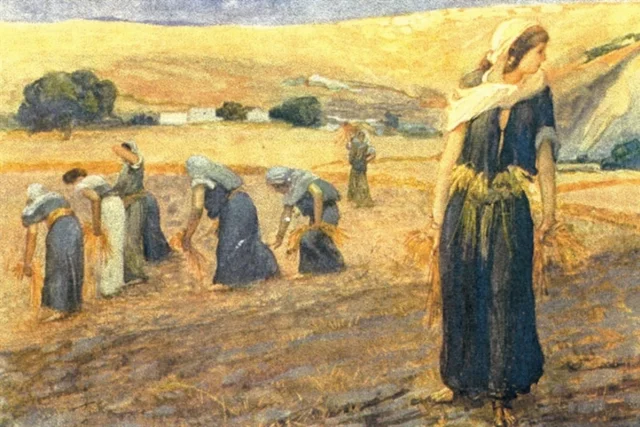
The question is, how could this happen? Israel had failed to keep the Torah on the very day it was given. This is where the story of Ruth, which is traditionally read on Shavuot, demonstrates that God’s specialty is taking broken people and situations, and turning them into blessings and hope.
Ruth, the Moabite, was forbidden from joining the people of God according to the Torah (Deut. 23:4). However, because she had already married an Israelite, who died before they had children, the Torah also commanded that she be redeemed, in order to raise up children for her deceased husband (Lev. 25).
Boaz, her new husband, who also came from a less-than-perfect background (Matthew says he is the son of Rahab the prostitute), spreads his wing over her, welcoming her into the people of God, and honoring her trust in the God of Israel. Their union ultimately leads to David, the King of Israel, and the ancestor of Messiah Yeshua, the king of the world.
Unlike the children of Israel, who offered up false worship to a false god, Yeshua honored God, sanctifying the name of God by willingly offering himself in place of His people.
His death and resurrection led His disciples to wait patiently in Jerusalem for the Holy Spirit (Acts 2), just as the 70 elders in Numbers 11 [70 again] received the Spirit to serve as elders to the congregation of Israel.
These disciples, after receiving the Spirit, became elders and leaders in the congregation of the Messiah. But the sign of their receiving the Spirit was not prophesying, as in Numbers 11, but tongues of fire, which led to them speaking in other languages, which was heard and understood by “devout men from every nation under heaven.”
But the messianic redemption is also symbolized in a reversal of the tragedy of Sinai. Just as 3,000 Israelites were killed for the sin of not waiting patiently and instead worshipping the golden calf (Exodus 32), so in Acts 2, the patient waiting of the disciples for the Spirit led to the proclamation of the Gospel and eternal life. “So those who received his word were baptized, and there were added that day about three thousand souls.”
Thus, Pentecost is when the nations rejoice at receiving blessings from the God of Israel, who is faithful to fulfill His promises.
You might also like to read this: