Israeli Negev gains recognition as global wine region



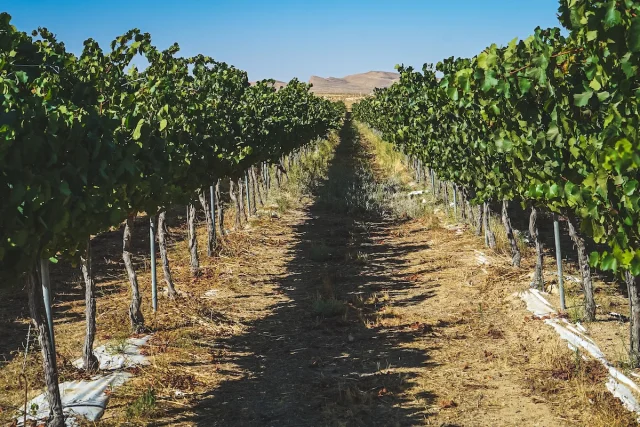
Israel’s southern Negev Desert received official recognition on May 11 as an international wine region, placing it alongside globally renowned wine-producing areas such as Napa Valley, Bordeaux, Champagne and Chianti. The designation allows locally produced wines to carry the “Negev” label, indicating their geographical origin.
The recognition follows a four-year initiative led by the Merage Foundation Israel, a private philanthropic organization focused on regional and economic development projects across Israel. Supporters say the move could significantly boost tourism, investment and international visibility for the desert region’s growing wine industry.
The foundation’s executive director, Nicole Hod Stroh, welcomed the recognition as a "deeply personal milestone."
"As someone who made aliyah from Colombia and has spent many years advancing regional development and economic growth in the Negev, I see wine tourism as a modern and meaningful expression of contemporary Zionism," Stroh stated.
She predicted the designation would strengthen both the local economy and the Negev’s status as a tourism destination.
"This recognition strengthens the region’s economic and tourism potential while positioning the Negev internationally as an innovative, high-quality wine region," Stroh explained.
"I have no doubt that in the coming years the Negev will become a sought-after wine tourism destination alongside leading wine regions around the world," she added.
The arid Negev covers roughly 60% of Israel’s territory but is home to only about 10% of the country’s population. The newly recognized wine region stretches from Kiryat Gat in the northern Negev to Israel’s southernmost resort city, Eilat, on the Red Sea.
Despite the harsh desert climate, the region now produces more than one million bottles of wine annually through some 60 wineries. Local breweries have also emerged in recent years.
Negev Wineries Club Director Irene Benjamin hailed the international recognition as a "major achievement" for Negev wineries and the broader Israeli wine industry.
"Through my work with the Negev Wineries Consortium, I witness daily both the unique challenges of producing wines in desert conditions and the extraordinary professionalism and dedication of the region’s growers and winemakers," Benjamin said.
"This international recognition marks an important milestone in the development of the region and further strengthens its place on the global wine map," she added.
Until relatively recently, the idea that the arid Negev could sustain a successful wine industry was widely viewed as unrealistic. However, local winemakers have increasingly demonstrated how advanced irrigation techniques and the region’s abundant sunlight can offset limited rainfall.
In 2022, Negev winemaker David Pinto described how climate challenges have unexpectedly positioned the region at the forefront of modern wine production.
"We're masters of the conditions, without depending on the whims of the weather," Pinto explained in an interview with the Israeli news outlet i24 News.
"Winemakers from Bordeaux came to visit us following the heatwave in France," he revealed.
"Now we share the same challenges, with the extreme climate and the dryness that harms the grapes," Pinto added.
Modern Israel’s first prime minister, David Ben-Gurion, viewed the Negev as central to the country’s future development as early as the 1950s. Ben-Gurion spent his final years in Sde Boker, a rural community in the northern Negev, where he and his wife, Paula, are buried.
Alongside its growing wine industry, the Negev has also emerged as a major Israeli technology hub, with startups increasingly establishing operations in the region. The local tech sector has benefited from cooperation with IDF military bases and Ben-Gurion University of the Negev in Beersheba.
You might also like to read this: