New alliances strengthen Israel’s global position


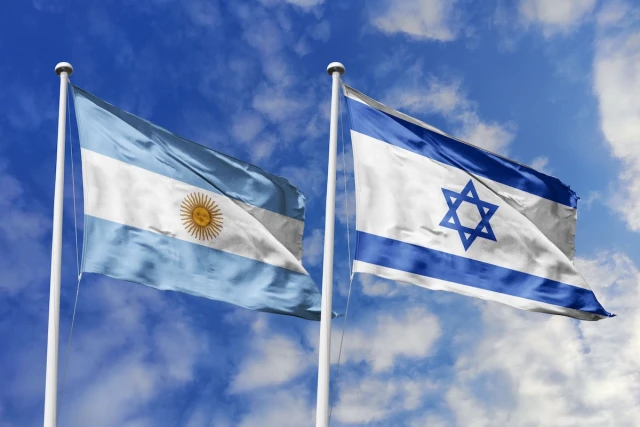
In an age where deception can spread across social media in seconds, truth remains steady and enduring. While harmful narratives about the United States, Israel, and their alliance continue to multiply, there is another reality that deserves attention. Truth must be spoken clearly and confidently. As Isaiah 62:1 declares, “For Zion’s sake I will not keep silent, for Jerusalem’s sake I will not remain quiet, till her vindication shines out like the dawn, her salvation like a blazing torch.”
Even as headlines focus on conflict with Iran, important developments are unfolding that highlight strengthening alliances and meaningful progress. Two such developments offer encouraging news for Israel and its global relationships.
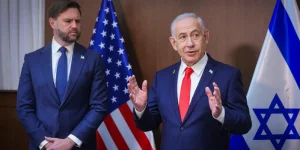
The first is the emergence of the Isaac Accords. In 2025, Argentina’s president, Javier Milei, launched this initiative to deepen ties with Israel, following the framework established by the Abraham Accords. The agreement was formally signed in Jerusalem on April 19 by Prime Minister Netanyahu and President Milei, marking a significant shift in Argentina’s foreign policy.
This moment stands in sharp contrast to Argentina’s past. In the years following World War II, the country provided refuge to thousands of Nazi war criminals, including Adolf Eichmann and Josef Mengele, both central figures in the Holocaust. Today, Argentina has taken a markedly different path. It is now home to the largest Jewish population in Latin America, where Jewish citizens play an active and influential role in society.
The Isaac Accords aim to strengthen cooperation across economic, security, cultural, and diplomatic areas between Israel and Latin American nations. Supported by the Genesis Prize Foundation and the nonprofit American Friends of the Isaac Accords, the initiative promotes shared democratic values and mutual interests.
At the signing ceremony, Prime Minister Netanyahu emphasized the importance of this partnership, noting the role of the United States in supporting free societies. President Milei’s leadership has been widely recognized, including his selection as a recipient of the Genesis Prize for his strong support of Israel.
Milei has also committed to relocating Argentina’s embassy to Jerusalem and has reversed his country’s previous voting patterns at the United Nations to align more closely with Israel. He has prioritized investigations into past terrorist attacks in Buenos Aires, including the bombings of the Israeli embassy and the Argentine Israelite Mutual Association in the 1990s. These attacks, carried out by Iran-backed operatives, resulted in over one hundred deaths and hundreds of injuries.
Other countries in the region are following Argentina’s lead. Ecuador, Costa Rica, and Paraguay have designated Hamas, Hezbollah, and the Islamic Revolutionary Guard Corps as terrorist organizations. Bolivia has restored diplomatic ties with Israel. Brazil has established a parliamentary caucus focused on strengthening relations with Israel, and Honduras and Chile are exploring similar steps.
These developments also highlight a broader concern. The influence of the Islamic Regime is not limited to the Middle East. Its presence in Latin America has been established over decades through diplomatic and cultural channels. Addressing this influence is increasingly seen as important for regional stability and security.
Another positive change comes from Switzerland. Traditionally known for its neutrality, Switzerland has taken several steps to address terrorism and financial misconduct. Last year, the Swiss parliament banned Hamas and related groups from operating within its borders and strengthened measures to combat terror financing.
These actions represent a shift from longstanding policies that allowed financial secrecy. For years, concerns have been raised about the misuse of funds intended for humanitarian purposes. New regulations aim to increase transparency and cooperation with international partners.
In another significant decision, Switzerland voted against recognizing a Palestinian state, citing the absence of the institutional criteria required for statehood. This position reflects a reassessment of long-standing diplomatic approaches.
Together, these developments from Argentina, Switzerland, and other nations suggest a changing landscape in international relations. They demonstrate that alliances can evolve and that policies can shift toward greater accountability and cooperation.
In a time when negative narratives often dominate, these examples offer a reminder that constructive partnerships and principled decisions are still taking place. Speaking truth with clarity and conviction remains essential.
This article originally appeared here and is reposted with permission.
You might also like to read this: