Reservists over 60, overlooked soldiers: IDF takes drastic measures to tackle severe troop shortages
IDF needs 12,000 soldiers including 7,000 combat soldiers, officer says





The IDF urgently needs 12,000 more recruits and three new laws to be able to respond to all the security challenges facing the country, a senior IDF officer told a Knesset committee last week.
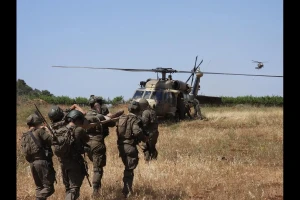
In the continued absence of a political effort to close these gaps, the Israeli military is increasingly forced to find creative solutions to its manpower problem, including using battalions with an average age above 50 and reactivating soldiers who were not called up for reserve duty for decades, if at all.
Speaking to the Knesset’s Foreign Affairs and Defense Committee last week, Brig.-Gen. Shay Tayeb, head of the IDF Personnel Directorate’s Planning and Personnel Management Division, warned, “The standing army is reaching its limit; it is at war for the overwhelming majority of the year, and there are many casualties. The intensity of the fighting is only increasing, and this is what the coming years are going to look like.”
He reiterated the IDF’s request for “an effective conscription law,” including a return to a 36-month mandatory service period and a new reserve duty law with fewer limitations.
A shortening of military service to 30 months took effect in August 2024, and the government has not extended it since. The first cohort of recruits serving under the shorter term is due to complete its service in January 2027, after which the army is expected to immediately call up many of them for hundreds of days of reserve duty.
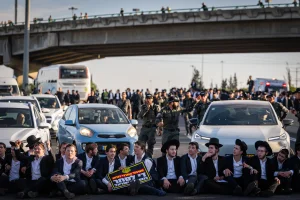
“Extending service will provide an answer for force buildup and burnout, as well as flexibility,” Tayeb explained, reiterating the IDF's needs for 7,000 additional combat soldiers. The discussion at the committee came against the backdrop of the ongoing fight over a new IDF Draft Law and weekly demonstrations against it by the ultra-Orthodox (Haredi) community.
These pressures have forced the IDF to find alternative solutions to maximize the available troops.
One approach has been to raise or remove the age limit for reserve duty while shifting former combat troops to security tasks that require a lower level of physical fitness.
According to Ynet News, the IDF Home Front Command has begun using some reserve battalions for routine security tasks along the defensive lines, freeing up the regular combat soldiers.
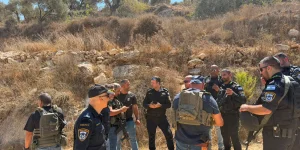
Ynet highlighted the “Atzmon” battalion, which is currently providing security in Judea and Samaria (West Bank) by patrolling the area, conducting arrest raids of wanted suspects and responding to shooting incidents, among other routine tasks.
However, unlike the regular troops made up of soldiers aged 18-21, its average age is around 50, while the battalion commander, Lt.-Col. A., is 63 years old.
Far beyond the regular reserve duty age, Lt.-Col. A, the CEO of a company, together with some of his friends, decided after the Hamas Oct. 7 attack to return to reserve duty and establish a new battalion, consisting of veterans of the IDF’s infantry troops.
“We have a fighter who was a platoon commander in the Paratroopers' 202nd Battalion back in the Yom Kippur War, and today he expertly runs our battalion operations room,” he told Ynet. “One of my company commanders is even older than I am.”
He acknowledged that the battalion isn’t “a maneuvering force that's going to enter deep into enemy territory. We're a battalion that carries out complex defensive operations. If we're told otherwise, we'll know how to maneuver too, but right now our clear mission is to defend, hold operational lines, and replace other battalions so they can get the rest and recovery they need.”
Another way the IDF has dealt with the troop shortage is by combing through the lists of soldiers who, for various reasons, fell through the cracks and were either released from reserve duty or had never even been called up.
For example, one soldier explained, “During COVID they called me up for reserve duty, but I was working as head of the security unit at Assuta Ashdod Hospital, so the officer I spoke with gave me an exemption.”
In another example, this author's former unit in the Intelligence Directorate was closed down, and he was released from the reserve lists.
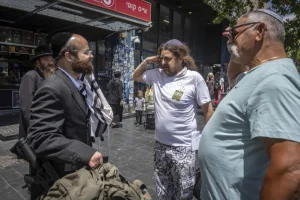
Ynet reported that the IDF's Personnel Directorate has launched several efforts to find and reassign these people. In June, it held four “re-enlistment days” where prospective reservists were summoned for personal interviews with representatives of units in need of new troops, similar to the initial enlistment process.
“We looked at the objectives of the fighting, and the soldiers are being assigned to places where there are manpower gaps,” explained Lt.-Col. Rotem Tayar, head of the Reserve Manpower Planning Branch.
“If a soldier goes through several interviews and isn't found suitable, or if there's another status that requires closer examination, there's an officer with higher authority who can make special decisions, refer the person to a medical board, or assign them elsewhere,” Tayar said, pointing to a social worker who argued she could contribute the most in a therapeutic role in the military.
As part of this process, around 17,000 civilians were summoned, of whom just over half appeared. According to the report, 94% of those who did attend were assigned to active units.
You might also like to read this: