Why do so many ultra-Orthodox Jews refuse to serve in the Israeli army?




The refusal of many ultra-Orthodox (Haredi) Israelis to serve in the IDF is a well-known but little-understood phenomenon. What is it in their belief system that makes sharing the burden of defending their country so unconscionable?
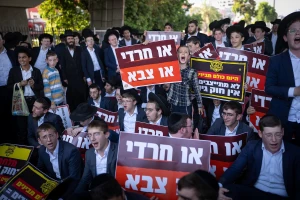
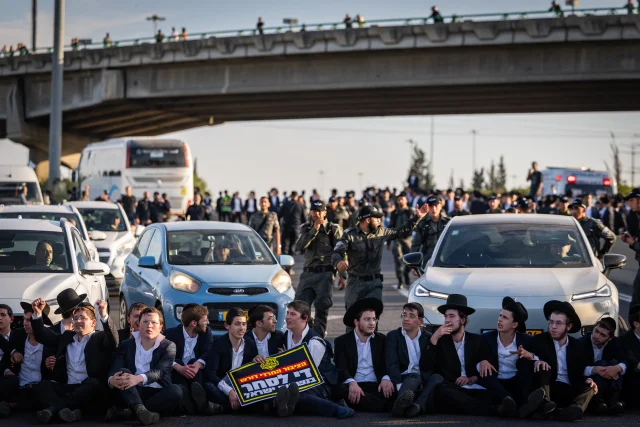
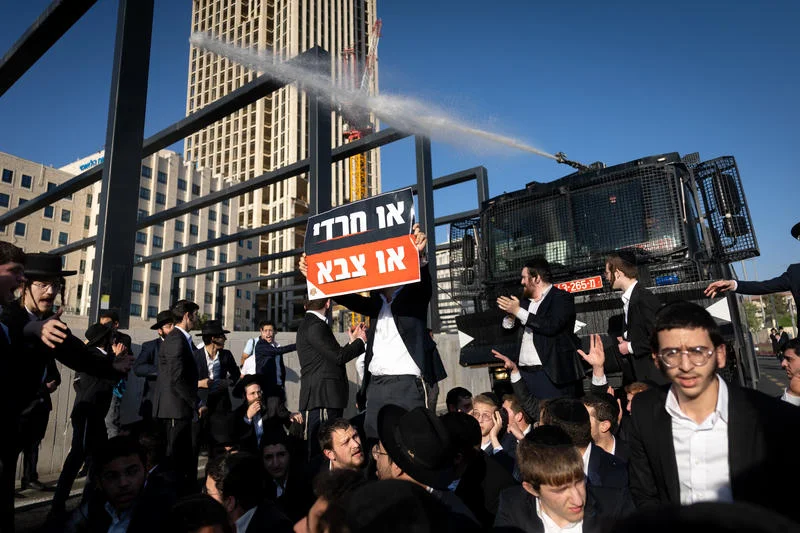
With war simmering down somewhat, Israel is returning to internal fighting, or at least it seems that’s what the Haredi community has decided. In several major demonstrations against the compulsory military service, the main arteries into Jerusalem have been blocked, with protesters even bringing roads and railways to a halt, causing enormous disruption.
Those affected have been furious, not least because the cause seems so unreasonable to most Israelis, and comments expressing anger and vitriol have flooded social media. Haredim seem to be shirking their duty while everyone else carries the burden of defending the country with their lives.
Explaining Haredi resistance to army service
While he was chief rabbi in 2024, Rabbi Yosef advised yeshiva students to pay no attention to a draft notice when it arrives in the mail, and even to destroy it.
"Tear it up, throw it in the toilet and flush it. Ignore it entirely," he instructed. The strong sentiment endures. What is behind this utter revulsion?
Corey Gil-Shuster of the "Ask Project" invited Rabbi Yonatan Dorfman to explain.
“Why don't Haredim serve in the army? The Maccabees did,” he challenged, referring to the Jewish warriors who fought the ancient Greeks in the Hanukkah story.
“That's a good question,” came the response. “I'm actually really pro having an army, if it's like the Maccabean army, or [King] David's army, if the army was structured in a fashion in which there was religious freedom and security, I absolutely think that we should be serving our country in that fashion,” Dorfman replied.
As Rosh Kollel (akin to an academic dean) of the Emek Learning Center, Dorfman offered insight into the reluctance to enlist from a theological perspective, noting that it has nothing to do with pacifism.
“The thing that makes us special and unique as Jews is our religion, is our culture, is our life,” he explained. “And if we're going to be out there on the field, and because of that, the thing that we hold most sacred and dear is going to suffer for that, then I think that that's a mistake.”
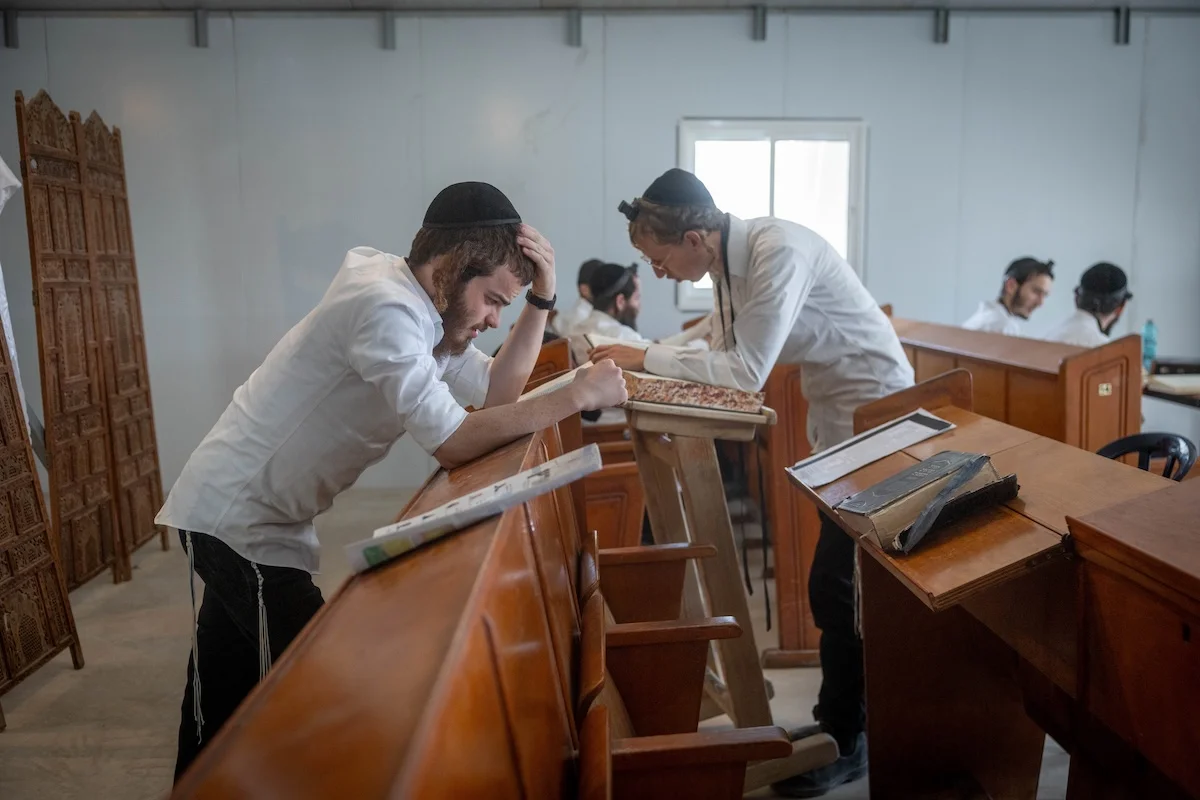
For Dorfman, the secular influence of the army makes it a place of spiritual contamination, and the cost of abandoning Torah study is too high a price to pay.
“We’re not going to sign up to destroy that which we hold most sacred,” he insisted.
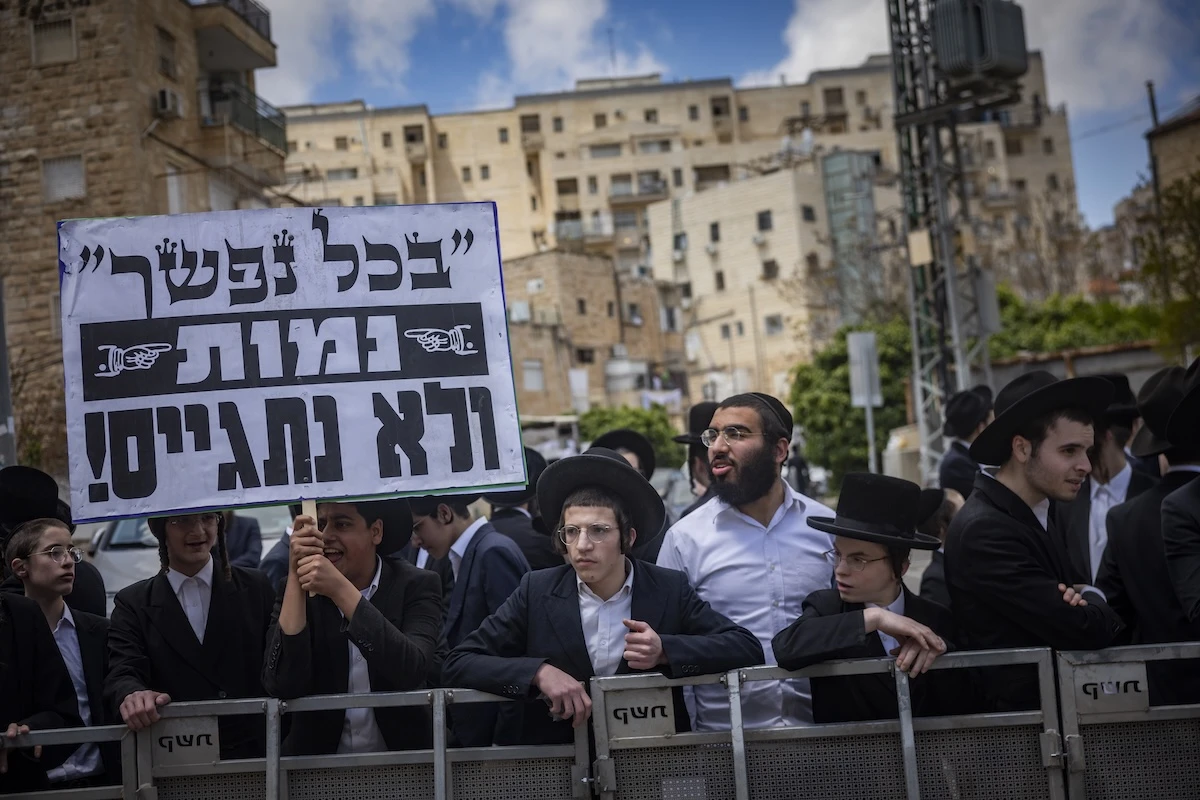
As scholar Aharon Rose explained, “Haredi Judaism, regardless of its particular faction, objects to Jews entering the cultural fray of the modern West, studying in its institutions, revering its leaders, fighting in its wars, or partaking of its cultural bounty.”
Torah study, which more often means studying Jewish commentary on the Torah rather than the Torah itself, is seen as far too important to abandon and (serving in the IDF is seen) as a risk to a religious lifestyle.
Rabbi Yosef was so appalled by the thought that he declared, "Even someone who's idle shouldn't join the army," with the word “idle” meaning someone out of work or not studying in a yeshiva. His objection was that some yeshiva students were "corrupted" from their time in the army and left their religious lifestyle. While some later return, others do not.
Far better to have secular Israelis in that environment, according to Dorfman.
“Instead of a secular Jew who wants to go clubbing in Tel Aviv — I'm not saying every secular Jew does, that's an example — that person should be pulled in versus more, let's say, the religious Jew who is learning a yeshiva all day,” he asserted, with the caveat that if it were a more religious-friendly environment, the situation could be different.
As it is, the concern about the pull towards secularism and away from a religious lifestyle and values makes the proposition unthinkable. Dorfman did, however, offer suggestions:
“If you want us so badly, we don't mind serving, so create an environment that really supports what we hold sacred and most dear to our lives, that we're willing to give our lives for,” he said.
The rising cost in demographics
According to a report earlier this year by the Israel Democracy Institute (IDI), there are some 1.45 million ultra-Orthodox Jews in Israel among a population of ten million. They are known as “Haredi,” which means “one who trembles,” in this case referring to the fear of God. Isaiah 66:2 God says He looks toward those who are humble and contrite in spirit, “and trembles at my word” (חָרֵ֖ד עַל־דְּבָרִֽי).
The report found that while the Haredi community currently constitutes about 14.3% of the total population, due to high birth rates, a quarter of those designated for army service will be Haredim by 2030, potentially rising to 40% by 2050. Yet currently most refuse to sign up, even for non-combatant roles.
The heavy burden of defending the country falls on the rest of Israel, taking reservists away from home and family for months at a time. If Haredim were to conscript like everyone else, mandatory service could be reduced by 11 months by 2050, and reserve duty could even become a thing of the past in the best-case scenario presented by the IDI.
Initially given a pass by Ben-Gurion, the Haredi community represented just a few hundred men at the time. Now it looks like a quarter of the country could be Haredi by 2050.
In some ways, the relatively recent obsession with full-time, state-funded yeshiva study can be seen as a response to the Holocaust. The phenomenon developed largely in an attempt to reconstruct the world destroyed by the Nazis, resisting the modernization that followed it.
Many claim that Israel is kept safe by their prayer and diligent Torah study, and that their exemption is helping Israel’s security rather than harming it.
The history of the Haredi exemption from conscription
Why was the exemption from army service granted in the first place? It was a calculated move by Ben-Gurion at a critical stage in the history of the modern state of Israel.
In the early twentieth century, a group of Haredi Jews mobilized to form Agudat Israel, opposing the Zionist movement. They believed Israel would be restored only by divine intervention and the coming of the Messiah and resisted the secular, often atheist movement to establish a Jewish state.
In order to keep them on board, Ben-Gurion made several concessions, assuring that Israel would uphold rather than desecrate the Jewish religion and lifestyle, one of these concessions being exemption from army service.
Jewish life and Torah study had continued in the land long before the modern state of Israel, as young Haredi father and full-time yeshiva student named Itzik Ackerman explained:
“We lived here just fine without you Zionists for 800 years. Suddenly, you showed up. Your first Aliyah was in 1882… We [the Haredim] are the first Aliyah."
“You show up in the 1800s and establish a state? Where did you even come from? You can leave, we lived here just fine without you. Oh, we’re starting a state, and it’s gonna be secular, and we’ll do whatever we want, we’ll have the Eurovision contest on Shabbat… Like, guys? Give us a break," he retorted.
The tension between the two groups is currently sky-high, with millions of Haredim protesting on Israel’s streets, preferring even jail time over conscription.
Yet the rest of the population who serve in the army, including many who would consider themselves orthodox, have become incensed by the unbearable burden placed on them by the mushrooming Haredi sector.
Just as Israel’s roads are blocked, we seem to be at something of a social and political impasse.
The public is invited to express their opinion in an online poll with only one question: Should all Jewish citizens who are physically and mentally fit serve in the Israeli army?
You might also like to read this: