








ANALYSIS More sirens, fewer votes? Could another round of war with Iran sink Netanyahu at the ballot box?
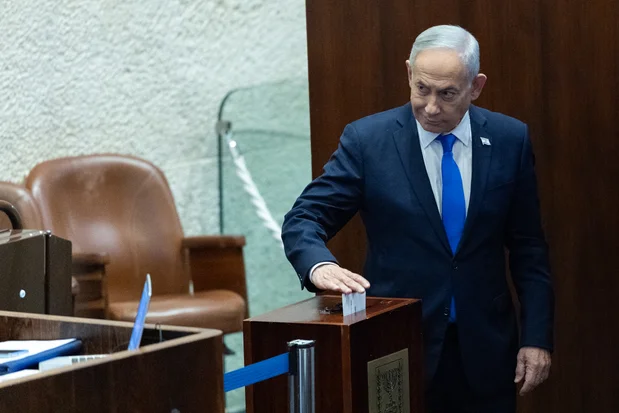
After days of mixed messages from Washington, Jerusalem, and Tehran, many Israelis are left wondering whether the war is ending, expanding, or still just paused until the next political opportunity.
As Iran's foreign minister threatened retaliation against the United States following overnight American strikes in response to an Iranian attack, and after Israel struck targets in Iran despite a fragile ceasefire, it remained unclear whether the conflict was moving toward a diplomatic resolution or merely paused ahead of upcoming elections in both the United States and Israel.
Both U.S. President Donald Trump and Israeli Prime Minister Benjamin Netanyahu have competing priorities when it comes to the war. Although they both have conservative constituencies, their core supporters and voters are not necessarily demanding the same outcomes.
Before the United States launched its strikes against Iran overnight, Trump publicly warned Israel not to attack Iran and suggested that Jerusalem could lose U.S. support if it acted alone against the Ayatollah regime. That is strategic backing for Israel, and especially for the prime minister, that Israel cannot afford to put at risk right now.
“Each leader has its own political base, and those bases are pulling them in different directions altogether,” Tal Schneider, political and diplomatic correspondent for The Times of Israel, told ALL ISRAEL NEWS.
“Netanyahu’s core base wants to see more aggressive action [against Iran]; they call it total victory. And some of Trump’s base is putting pressure to end things and not continue, to let the economy relax and not have the effects of the war continue to take a toll,” she said.
But while a vocal minority of Netanyahu supporters, to whom he often appears to cater, may want this war, the majority of Israelis do not. Schneider said that a return to active combat with Iran could hurt the prime minister politically more than Netanyahu may be expecting.
“I don't think people are happy to be in shelters and in safe rooms or in this situation all the time,” she told ALL ISRAEL NEWS. “It’s going to hurt him politically. It’s bad.”Netanyahu has served as prime minister for more than 19 years, making him Israel's longest-serving premier by far. Yet he has given no indication that he plans to step aside ahead of the next election, which is expected to take place on October 27, 2026, although the date has not yet been officially set.
If Netanyahu runs for re-election while the war with Iran is still ongoing, Schneider said, it is likely to hurt his chances of success.
A poll released on Tuesday by the Israel Democracy Institute showed a sharp decline in optimism about achieving the war's goals.
Only 56% of Israelis believe that a future agreement between the United States and Iran would include provisions preventing the development of nuclear weapons, down from 63% who believed this goal was achievable in March 2026.
Moreover, fewer than a third of respondents (32%) said such an agreement would lead to the elimination of Iran's ballistic missile program, down from 64.5% in March. Finally, only 28% of Israelis said such an agreement would weaken the Ayatollah regime, compared to 55% three months earlier.
The shift is particularly striking given public sentiment at the outset of the conflict. A separate poll conducted in March by the Institute for National Security Studies found that 81% of Israelis supported the war, known as Operation Rising Lion, and that a majority (63%) believed it should continue until the Iranian regime was overthrown.
But months later, after thousands of rockets and drone attacks from Iran, and with fighting continuing on Israel's northern border despite the ceasefire with Tehran, many Israelis are growing weary. Northern villages and communities have traditionally supported Netanyahu's Likud Party, but "he is losing support" from that constituency, Schneider said.
“They're tired of it,” she noted. “Many of them are still displaced. They're not living in their homes. They haven't returned since the beginning of the war on October 7th, 2023. Some of them returned, and they're not happy. It will get to the point where they will not be able to vote because their polling station will be bombed. It is not a good situation.”
Tamar Hermann, a senior research fellow at the Israel Democracy Institute, offered a similar assessment. Renewed exchanges of fire with Iran, she told All Israel News, “would weaken” Netanyahu.
“His position is already not good in this regard. The fact that Trump simply canceled the Israeli attack plan is another political blow,” she added.
In Hermann's view, the episode makes Netanyahu appear weaker than the US president, who is increasingly seen as the one calling the shots. The perception comes alongside that same IDI poll released on Tuesday that also showed a significant decline in the share of Israelis who view Trump as committed to Israel's security.
Moreover, many Israelis are beginning to feel increasingly marginalized on the world stage, and the data suggests that sentiment is not merely a perception.
A Pew Research Center study released last week found that the ongoing war has exacerbated Israel's international isolation and contributed to increasingly negative views of both the Jewish state and its prime minister.
The survey, conducted after Israel and the United States launched their military campaigns against Iran, asked citizens in three dozen countries how they view Israel. Majorities in most of those countries expressed unfavorable views of Israel and little or no confidence in Netanyahu.
Specifically, 67% of adults across 36 countries said they have an unfavorable view of Israel, compared to 25% who hold a favorable view. In addition, the report noted that “majorities in most countries we surveyed say they are not too or not at all confident in Israeli Prime Minister Benjamin Netanyahu to do the right thing regarding world affairs.”
Against that backdrop, Trump was asked on Tuesday whether Netanyahu would run in Israel's upcoming election. He told ABC News that he did not know.
However, Trump praised the Israeli leader, calling him a “wartime prime minister.”
“We will very shortly win the war one way or the other, and you know he’s a wartime prime minister,” Trump said.
But many Israelis seem to have already reached their own conclusion. According to the IDI poll, a majority of Israelis (61%) believe Netanyahu should not run in the next election.
Only respondents on the political Right support another Netanyahu candidacy, with 69% saying he should run. In every other political camp, a majority believes he should step aside. Among those on the Left, opposition to another Netanyahu run reaches 97%.
So while Israelis continue to sit on the edge of their seats, waiting for the next siren or living in the shadow of a ceasefire that they believe delays the conflict but does little to make them feel safer, Netanyahu is balancing on the edge of his own.
The prime minister is caught between the possibility of claiming victory on the battlefield and facing defeat at the ballot box.
Which outcome awaits him may depend less on political strategy than on whether Israelis spend the coming months hearing promises of peace or the sound of more sirens before they head to the polls on Oct. 27.
Popular article:
interview Easter message of resurrection hope amid war at Jerusalem's Garden Tomb

biblical commentary Let my people go: a Passover message for today
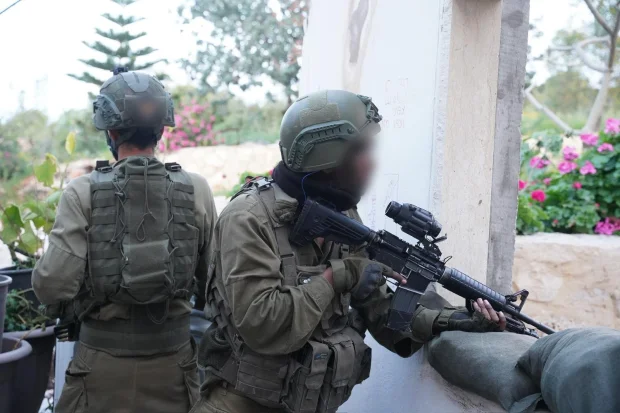
4 IDF soldiers killed, 2 wounded in fighting in southern Lebanon, as Israel eliminates dozens of Hezbollah terrorists

Receive latest news & updates
A message from All Israel News
Help us educate Christians on a daily basis about what is happening in Israel & the Middle East and why it matters.
For as little as $10, you can support ALL ISRAEL NEWS, a non-profit media organization that is supported by readers like you.
Latest articles:
ANALYSIS North American Jewish organizations to recruit 100 professionals to combat antisemitism

ANALYSIS ‘No need’ for pre-election Iran strike, IDF chief says as gov’t, opposition trade blame for potential escalation – report
terror attack 2 Israeli soldiers killed, 2 terrorists eliminated in Hebron shooting; IDF says much larger attack was prevented
analysis A people dwelling securely? Israel’s strategic standing, 3 years after Oct 7
ANALYSIS Hamas on wheels: What I found in Dearborn reveals a troubling history and a battle over Israel