Netanyahu losing support in north, as residents demand stronger action against Hezbollah
Hezbollah rejects Lebanon ceasefire, launches rockets at Israeli targets



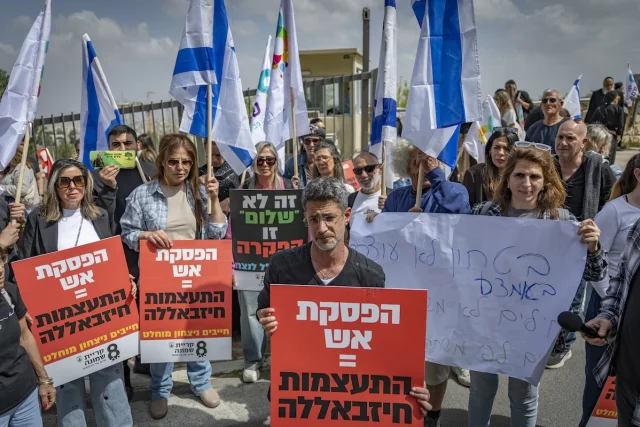
Prime Minister Benjamin Netanyahu is losing support among voters in northern Israel, after weeks of Hezbollah rocket and drone attacks, a recent poll showed.
A poll conducted by Agam Labs at the Hebrew University of Jerusalem showed that northern residents who backed Netanyahu’s Likud party in large numbers in the last election are holding the prime minister responsible for the lack of security in the region.
Netanyahu's coalition government describes itself as the most right-wing in Israel's history, with many voters on the right traditionally favoring a strong security position. However, those same voters, almost half of whom voted for the coalition government, are looking for a firmer response to Hezbollah, unrestrained by U.S. interference.
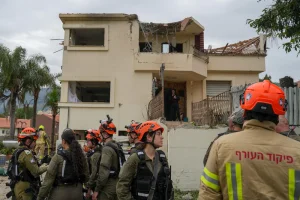
Residents in the northern communities, including Kiryat Shmona and Metula, typically have just seconds to respond and find shelter when siren alerts blare. Many are expressing skepticism about any ceasefire deal involving Hezbollah.
“All night there are loud explosions,” Kiryat Shmona resident Moshe Yifrah (45) told Reuters. He said he does not believe a ceasefire with Hezbollah will produce any lasting security. “Who would we make it with? Murderers who want to kill us?” he asked.
Residents of most northern communities left the region after Hezbollah forces joined Hamas' war against Israel in October 2023. With its focus primarily on Gaza, the Israeli government urged residents to evacuate, only inviting them to return following Operation Northern Arrows in late 2024.
The operation, which saw Israeli forces conduct their first large-scale ground operations in Lebanon since 2006, concluded with a U.S.-brokered ceasefire between Israel and Lebanon. Hezbollah agreed to the deal after suffering the loss of more than 1,000 militants.
While only around 50 residents in northern Israel have been killed by Hezbollah attacks since October 2023, the frequent barrage of rockets and drones has left many residents feeling abandoned by the government. Those who returned to the north in an effort to rebuild their homes and communities say government investment in rehabilitation and recovery has been slow to materialize.
The poll suggests that northern residents are considering alternatives as Israel heads toward elections this fall.
According to the survey, only about 23% of respondents said they plan to support Likud in the next election, compared to 35% who voted for the party in 2022. Support for the governing coalition has declined more sharply in northern Israel than in other parts of the country.
Security concerns are among the factors driving this shift, with 70% of respondents saying they disapprove of Jerusalem’s handling of the war in Lebanon, a higher rate than in other parts of Israel.
“We see a dramatic shift,” Nimrod Nir of Agam Labs told Reuters. "It's almost a mirror image of what we saw regarding the past elections, with two-thirds intending to vote for the anti-Netanyahu bloc.”
Former IDF Chief of Staff Gadi Eisenkot, who is running as a candidate for prime minister in the upcoming elections, said the government should give the IDF more freedom in fighting Hezbollah.
“Everywhere Hezbollah is deployed it must be struck and the hands of the IDF should not be tied,” Eisenkot said in a speech on Monday.
On Thursday, Hezbollah rejected the ceasefire agreement announced in a joint statement by Israel, Lebanon, and the United States on Wednesday night.
That ceasefire deal was contingent on Hezbollah ceasing attacks on Israeli targets.
“The result of the direct, humiliating and disgraceful negotiations is rejected by broad parts of the Lebanese people,” Hezbollah leader Naim Qassem said in a written statement to the group’s al-Manar television channel. “The Washington declaration conditions the basic principles that America and Israel want, toward the subjugation of Lebanon to the Greater Israel project.”
“The ceasefire must be comprehensive, without a separation between the south and the rest of Lebanon, and without the Israeli enemy having the freedom to kill,” he added.
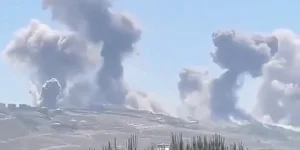
After announcing its rejection of the ceasefire, Hezbollah fired rockets towards Israel’s northern communities and IDF soldiers operating in southern Lebanon.
Hezbollah leader Na'im Qassem's rejection of the ceasefire and rocket interceptions over Kiryat Shmona tell the story: Hezbollah continues to attack Israel and destabilize the region.
— Israel Foreign Ministry (@IsraelMFA) June 4, 2026
The Iranian proxy Hezbollah must be disarmed and its terrorist infrastructure in southern… pic.twitter.com/tDQRIbrPDG
Most of the rockets were intercepted.
You might also like to read this: