Washington pushes Israel-Lebanon peace talks forward, Hezbollah casts a long shadow


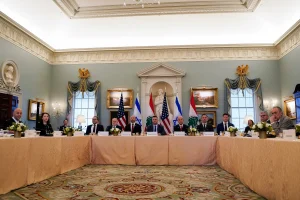
Israeli and Lebanese officials are back at the negotiating table in Washington, D.C., this week with the latest round of U.S.-brokered talks.
It's being billed as yet another attempt to stabilize a key part of the Middle East’s dangerous jigsaw puzzle. While the specifics can be complicated, there is one basic truth: any meaningful peace agreement will ultimately hinge on what happens with Hezbollah.
U.S. officials have described the discussions as productive and focused on both security and political issues.
The U.S. State Department is using cautious language, saying that “Progress continues on the political and security tracks as we break from the failures of the past 20 years and advance toward a comprehensive agreement aimed at restoring Lebanon’s sovereignty and ensuring Israel’s security.”
Right now, there's a very fragile ceasefire that both sides hope can become more permanent. Senior Lebanese officials said these talks in Washington are exploring a more phased approach.
One idea under discussion is “pilot zones," which would be specific geographic areas where hostilities would cease, Israeli forces would withdraw and Lebanese troops would deploy. That could eventually expand into broader areas.
Of course, there are several potential stumbling blocks. One major point of contention involves the Lebanese Armed Forces. The United States and Israel want the Lebanese military to assume responsibility for southern Lebanon.
There is also the issue of the so-called Litani Line buffer zone. Israel insists that Hezbollah must permanently withdraw north of the Litani River and ultimately disarm.
Israeli leaders argue that allowing Hezbollah fighters and missile stockpiles to remain near the border simply guarantees another war down the road. Consequently, Israel’s military has continued operating in areas beyond southern Lebanon, a move Lebanese officials view as a violation of sovereignty.
Israeli officials say the operations are necessary to prevent Hezbollah from rebuilding military infrastructure near the border.
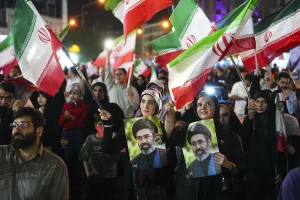
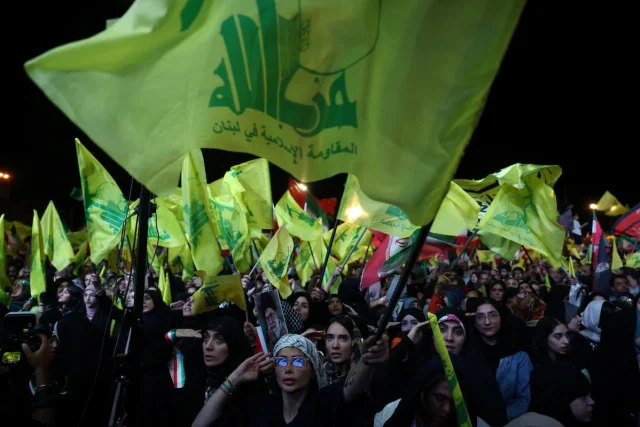
History shows Hezbollah has long undermined peace. Formed in the early 1980s with support from Iran’s Islamic Revolutionary Guard Corps (IRGC), the Iranian-backed terror organization emerged during Lebanon’s civil war and quickly established itself as a powerful military force operating outside the control of the Lebanese state.
Every time momentum has appeared to build toward stability, Hezbollah has often found ways to reignite tensions. That reality is why many analysts view the current negotiations as about much more than the Israel-Lebanon border.
Among them is Jake Novak, formerly with the Israeli Consulate in New York and now host of “The NewsHour with Jake Novak” on WABC Radio, who told ALL ISRAEL NEWS that Lebanon faces a historic opportunity.
“The thing so many people are missing is the fact that this current conflict could and should become Lebanon’s war of independence. It’s up to the Lebanese if they want to realize that if Hezbollah is truly defeated, Lebanon can truly become an independent country. All Lebanon has ever had to do is stop accepting Islamist terrorist armies inside its borders. Until now, its hatred for Israel [has overridden] its desire for independence. Let’s see if this time is different,” he said.
The reality seems clear: Lebanon’s future depends on finally separating itself from Hezbollah’s grip. Dr. Zuhdi Jasser, founder of the American Islamic Forum for Democracy and a congressional candidate in Arizona, told ALL ISRAEL NEWS that he sees the conflict as inseparable from the broader battle against Iran.
In Jasser's view, Hezbollah's role as Iran's proxy means developments in Lebanon cannot be separated from the pressure currently facing Tehran.
“To Israel, Hezbollah launching over 2,500 rockets into its homeland since January is not an existential domestic threat. It is real and in their backyard for decades. For Tehran, as it is now finally squeezed by U.S. forces militarily and economically and domestically by its own people, now is the time to finish off Hezbollah and coordinate its surrender with the surrender of Tehran, its primary cancer. The Lebanese government long feckless due to terror control by Hezbollah is also finally primed to do that."
Jasser acknowledged that the timing may complicate ongoing diplomatic efforts, but argued that addressing the Hezbollah issue is essential to achieving lasting stability in the region.
“While strategically the timing this week is not ideal for our U.S. strategy to broker an end, it’s an essential, unavoidable front in this conflict, which if resolved for Israel’s security, Lebanese security and regional stability will have long term peace dividends. Just like the defeat of the IRGC in Tehran will give the revolution the space and oxygen it needs to finally defeat the mullocrats and their IRGC, in Lebanon we are seeing a reawakening of non-Islamist Lebanese leaders as Hezbollah may be seeing its last months.”
Jasser also argues there is little meaningful distinction between Hezbollah and Iran’s Islamic Revolutionary Guard Corps, describing the Lebanese terror group as an extension of Tehran’s broader regional project.
In his view, any effort to weaken Iran’s influence in the Middle East must include confronting Hezbollah.
“There is little to no meaningful difference between the IRGC and Hezbollah. Hezbollah is the largest active metastases of Tehran’s IRGC and mullocracy since their Islamist Revolution in Tehran in 1979. They committed the first act of suicide bombing against our troops in Lebanon in 1983. Israel’s war against Hezbollah in Lebanon is in fact our war against Tehran. We cannot defeat the primary cancer of the IRGC without the decimation of their proxy in Hezbollah. After 47 years of administrations ignoring and facilitating the threat of the IRGC-Shiite axis across the Middle East, we finally have President Trump who is ending the forever wars.”
Whether that approach can ultimately help bring an end to the current conflict remains an open question.
But can he help end this one? The jury is still out.
You might also like to read this: