Is Israel really on the cusp of peace with Lebanon? Not as long as Beirut refuses to confront Hezbollah






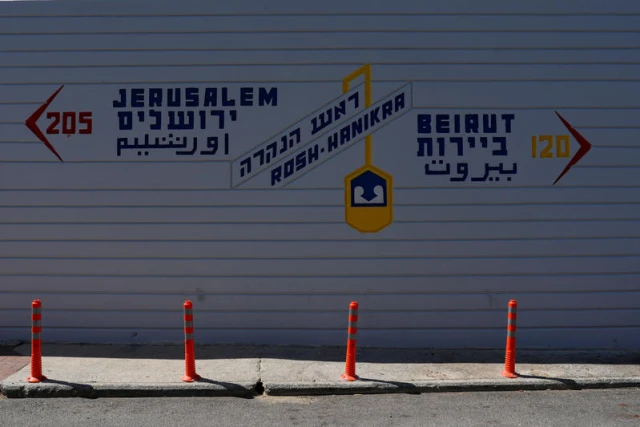
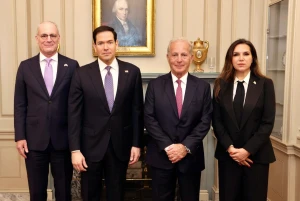
Recently, there has been a lot of talk about a “once in a lifetime opportunity” for peace between Israel and Lebanon, with some even dreaming that it could be next in line to sign the Abraham Accords since the historic first summit between Lebanese and Israeli envoys in Washington in April.
However, we are nowhere close to a stable agreement with the Lebanese state, let alone true peace.
This is for several reasons, most importantly, because Hezbollah will not lay down its weapons, and there is no one to force it to do so.
To get an obvious point out of the way – the end of the Iranian regime would cut off most of Hezbollah’s funds, weapons, training and diplomatic cover, and would be the single most significant step toward destroying the group.
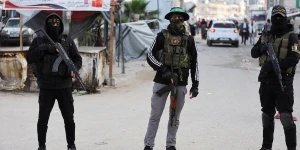
However, the regime’s downfall doesn’t seem imminent for now, and Hezbollah continues to be the most powerful military force in Lebanon, while openly threatening its government to violently prevent attempts to disarm it or to enter into a peace agreement with Israel.
The case for peace presented by the optimists rests mainly on – it must be granted – unprecedentedly hostile statements made by Lebanese President Joseph Aoun and his prime minister, Nawaf Salam, who have vowed to disarm Hezbollah.
In addition to offering words, Beirut did, indeed, agree to launch the first high-level, face-to-face meeting between officials in some 30 years, breaking a strong taboo in Lebanese politics and theoretically putting the leadership in danger of assassination.
This has brought about some extraordinary statements from think tanks, journalists, and even senior U.S. and Israeli officials, who are trying to frame the talks as being essentially about normalizing relations with Lebanon and potentially paving the way toward a true peace deal.
Are Israel and Lebanon on the same side?
To that end, the two countries have sought to draw a distinction between the Lebanese state and Hezbollah, portraying the terror group as a foreign oppressor enacting its malign influence on the (ostensibly) peace-seeking Lebanese state.
Israel’s ambassador, Yechiel Leiter, said after the Washington meeting that Israel and Lebanon are on the “same side.” U.S. Secretary of State Marco Rubio echoed this, saying, “We have to remember the Lebanese people are victims of Hezbollah. The Lebanese people are victims of Iranian aggression. And this needs to stop.”
A message lighting up Times Square:
— Israel Foreign Ministry (@IsraelMFA) April 28, 2026
Neighboring nations deserve better than what stands between them. 🇮🇱🇱🇧 pic.twitter.com/FvW5Lyyzbc
Israel even underlined this message with a PR campaign in New York City's Times Square, with displays showing the Israeli and Lebanese flags side by side, only being divided by Hezbollah.
Even though that image has some truth, neither the Lebanese government nor its people are unified entities; instead, large portions of both are either openly pro-Hezbollah or neutral while hating Israel for their own reasons.
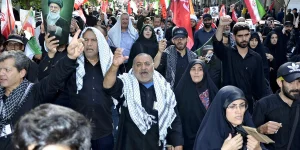
There is no “liberating” Lebanon from Hezbollah – Hezbollah is a large, powerful part of the country itself, with strong support from the Shiite third of the population.
Even worse, this is particularly true for the Lebanese Armed Forces (LAF), ostensibly the state’s main tool meant to disarm Hezbollah, according to the government’s “plan.”
Meanwhile, the LAF is being led by a general who is at least openly hampering the government’s plans, if he isn’t on the terror group’s payroll outright, as some have claimed.
Retired IDF Col. Dr. Jacques Neriah, a senior researcher at the Jerusalem Center for Public Affairs (JCPA), noted that many of the Shiite soldiers and officers are cooperating with Hezbollah.
“There is doubt whether the army would intervene [to disarm the group] at all – and if it did, it might collapse,” he warned.
The Lebanese government is not ready to truly confront Hezbollah, whose name its leaders will not dare mention in most of their statements, while they obscure their plans for disarmament by using phrases like “establishing a monopoly on weapons” through an “agreed-upon process.”
Despite the misguided optimism from some, other, more cautious observers argue that highlighting the mere fact that Beirut has agreed to direct talks with Israel is already weakening Hezbollah’s standing in Lebanese society – in fact, this is probably the reasoning behind Israel’s PR campaign surrounding the talks.
However, this doesn’t have any tangible effects on the ground.
Hezbollah’s standing in Lebanon has been substantially weakened anyway, but this doesn’t really matter as long as the underlying conditions remain, particularly that the Iranian-backed group is by far the most powerful military force, controlling huge swathes of the country with the backing of around a third of the population.
Is the Lebanese government a partner for peace?
There is no real partner for change in Beirut. In his heart of hearts, President Aoun may wish to change the situation, but he is not working toward that goal. Demonstrating this, he reiterated this week that “civil peace is a red line.”
“The Lebanese state is not serious. It’s either in cahoots with Hezbollah or too scared of it. It took Aoun less than 24 hours of Washington hype to go back to ‘preserving civil peace,’ code for never disarming Hezbollah,” explained Hussain Abdul-Hussain, research fellow at the Foundation for the Defense of Democracies (FDD).
“PM Salam chickened out and cancelled his trip to DC and meeting with Rubio. Israel has no partners in power in Lebanon, only in the opposition or silent on the margins,” he added.
His FDD colleague, David Daoud, concluded, “Israel and the United States must be clear-eyed that Lebanon has come to the table seeking a return to the status quo ante – which, whatever Beirut’s intentions, will create the conditions for Hezbollah’s regeneration… Photo ops, however rare or exciting, are no substitute for concrete Lebanese action against Hezbollah – and that remains conspicuously absent.”
Peace will only be possible once Hezbollah no longer threatens Israel. But the Lebanese government cannot disarm Hezbollah, even if it wanted to – and it apparently doesn’t even want to.
Any Israeli concession given to achieve this illusory goal will ultimately be in vain and may even backfire by giving Hezbollah time to recover.
As long as Hezbollah remains stronger than the state itself, any diplomatic process will remain “largely symbolic,” concluded Neriah.
Meanwhile, Aoun has refused to even speak to Israeli Prime Minister Benjamin Netanyahu on the phone, let alone meet him in person. This week, Aoun said that “we must first reach a security agreement and stop the Israeli attacks on us before we raise the issue of a meeting between us.”
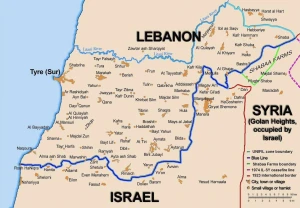
For the government in Beirut, this means making the IDF cease its fire and depart from Lebanese territory – which means removing all obstacles to prevent Hezbollah from launching attacks– or punishing them if they do, because we know the LAF won’t do it.
At the same time, Beirut wants to continue receiving funds from the U.S. and European states, while stringing them along with empty promises to disarm Hezbollah and PR stunts showing LAF soldiers confiscating old weapons buried underground.
Yoni Ben Menachem, a Middle East analyst at the Jewish Council for Public Affairs, warned that talks about an agreement are a “manufactured narrative” and a “deceptive move intended to stop IDF operations.”
Hezbollah has continued to violate the ceasefire agreements it signed with Israel.
— Embassy of Israel to the USA (@IsraelinUSA) May 7, 2026
Despite clear commitments, its forces remain entrenched and active in southern Lebanon - a direct contradiction of the terms they agreed to.
As long as this threat persists, the @IDF will… pic.twitter.com/twkl5iFfg6
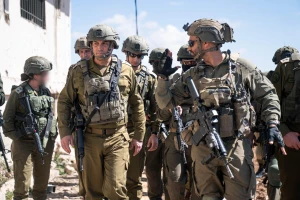
Meanwhile, Hezbollah has already exploited the dragged-out talks to violate the ceasefire on a daily basis, killing and maiming Israeli soldiers with drones, while the IDF has its hands tied by U.S. pressure.
The only way to destroy Hezbollah in the current situation would be for the government to truly confront and fight it, meaning another Lebanese civil war. It is obvious and understandable why the Lebanese government seeks to avoid this, but for Israel, it means that the situation can be marginally improved, but not treated at its root.
Neriah concluded: “Without a substantial blow to Hezbollah’s power, any talk of an arrangement is mostly for show… You can sign documents, but on the ground, Hezbollah is the one that decides.”
You might also like to read this: