Lebanon's Pres Aoun refuses Trump's offer for historic call with PM Netanyahu amid reports of heavy US pressure for ceasefire
IDF expects ceasefire within several days, meanwhile, strikes continue





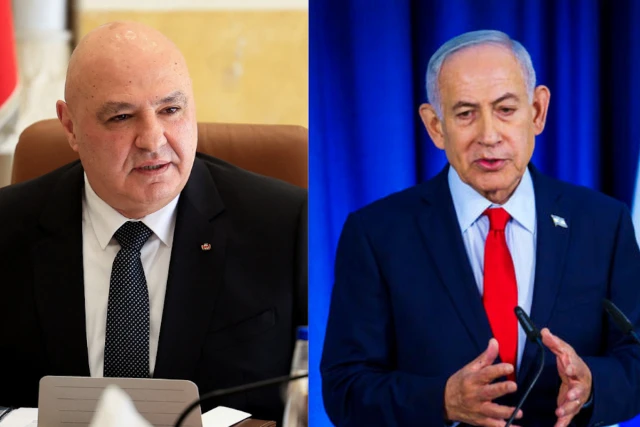
After a surprise announcement from U.S. President Donald Trump that the leaders of Israel and Lebanon were set to hold a historic phone call on Thursday, Lebanon's President Joseph Aoun reportedly rebuffed Trump's idea, amid reports that the White House is exerting heavy pressure on both sides to agree to a ceasefire.
Trump wrote on Truth Social, “Trying to get a little breathing room between Israel and Lebanon. It has been a long time since the two leaders have spoken, like 34 years. It will happen tomorrow. Nice!”
Later on Thursday, the Lebanese news outlet LBCI and the Qatari newspaper Al-Araby Al-Jadeed reported that Aoun told U.S. Secretary of State Marco Rubio that he is not interested in a conversation with Prime Minister Benjamin Netanyahu. This is despite Aoun having pushed for the first high-level contacts with Israel in over 30 years.
There was no immediate official confirmation of Trump's idea from Israel, though Technology Minister Gila Gamliel affirmed plans of the talks in an interview with Army Radio.
Official Lebanese sources told the Saudi channel Al-Hadath that Beirut “learned about the date of the negotiations with Israel from a tweet by Trump.”
The Israeli and Lebanese envoys to Washington met on Tuesday, marking the first high-level, direct contacts between the neighboring countries since 1994. Lebanese government sources quoted by Al-Hadath said a second meeting is expected in Washington soon.
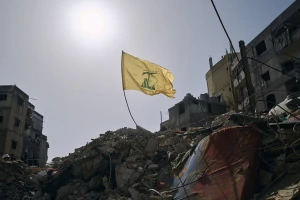
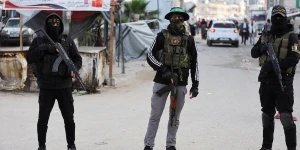
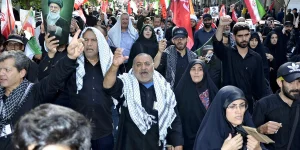
Meanwhile, the Israeli military continues fighting in southern Lebanon against militants of Hezbollah, which has strongly opposed talks with Israel and is demanding a ceasefire without offering any concessions.
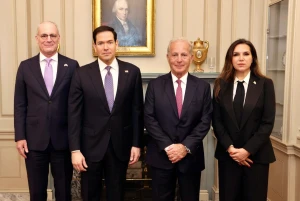
Trump’s surprise announcement reportedly followed a meeting with State Secretary Marco Rubio and his envoy to Beirut, Michel Issa, who mediated the Lebanon-Israel talks.
On Wednesday evening, multiple media outlets reported that Washington was exerting heavy pressure on Beirut and Jerusalem to agree to a ceasefire. Netanyahu’s security cabinet discussed the situation on Wednesday night, though it ended without a clear decision on the ceasefire, Channel 12 News reported, citing two Israeli officials.
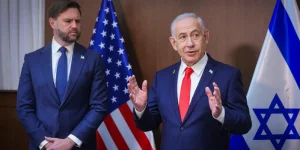
In a statement on Wednesday evening, Netanyahu affirmed, “we are conducting negotiations with Lebanon. These negotiations have not taken place for over 40 years. They are happening now because we are very strong, and nations are coming to us, not just Lebanon. In the negotiations with Lebanon, there are two central goals: First, the disarming of Hezbollah, and second, a sustainable peace. Peace through strength.”
Possibly anticipating criticism should Israel agree to a ceasefire, he also vowed to stand by northern Israel’s residents, adding that “our forces are continuing to strike Hezbollah. The fighting is focused on Bint Jbeil. Bint Jbeil was the capital of Hezbollah in southern Lebanon… we are, in effect, about to eliminate this great stronghold of Hezbollah.”
“At the same time, I instructed the IDF yesterday to continue widening the security zone and to also spread it eastward toward the slopes of Mount Hermon, so that we can better assist our Druze brothers in their time of distress.”
Hezbollah and its Iranian patrons continue to seek to connect the ceasefire in Iran to a ceasefire in Lebanon, in effect, demanding Israeli concessions without making concessions themselves.
“The completion and consolidation of a comprehensive ceasefire in Lebanon will be the result of the resistance and steadfast struggle of the great Hezbollah and the unity of the Axis of Resistance,” declared Iran’s powerful parliament speaker, Mohammad-Bagher Ghalibaf.
“The United States must comply with the agreement. Resistance and Iran are one soul, both in war and in ceasefire,” he said.
Speaking to Reuters, senior Hezbollah official Ibrahim al-Moussawi credited the Iranian blockade of the Strait of Hormuz with bringing about a ceasefire.
“Our assessment is that within a few days, we will have no choice but to fully cease fire in Lebanon,” a senior Israeli political source told Channel 12. The channel reported that the U.S. wants Israel to declare a one-week truce in Lebanon, hoping to leverage this step to support negotiations for an end to the war with the Iranian regime.
However, a senior U.S. official briefed media outlets in the evening that “This is not something we have asked for, nor is it part of the peace negotiations with Iran,” while noting that “the president would welcome the end of hostilities in Lebanon as part of a peace agreement between Israel and Lebanon.”
Asked about the military’s stance on a ceasefire in Lebanon, IDF spokesman Brig.-Gen. Effie Defrin said, “We present to the political echelon a wide range of options and operate according to the political echelon’s directives. Accordingly, we will act.”
According to Ynet News, the IDF has formulated three conditions for a ceasefire, including a buffer zone up to the Litani River without Hezbollah’s presence and infrastructure; full military freedom of action to remove threats even north of the Litani; and a long-term process to disarm Hezbollah under a U.S.-supervised mechanism.
For now, Israeli operations on the ground, as well as airstrikes, are continuing. A source told Ynet that Israel is “doing as it sees fit” while expecting a ceasefire within a few days.
You might also like to read this: