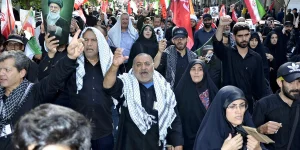
Bad week for Hezbollah: DC talks between Israel and Lebanon that could change everything




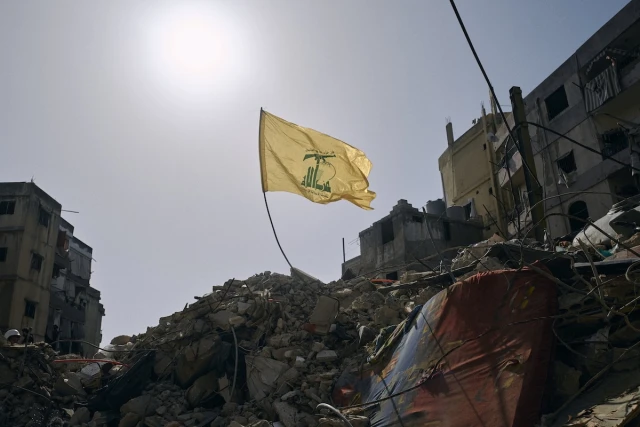
This has not been a good week for Hezbollah.
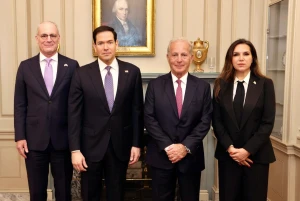
This week’s talks in Washington between Israel and Lebanon – brokered by the White House were truly historic. Not because peace suddenly broke out. It didn’t. Nobody expected it to. But the fact that the conversation even happened is itself a victory.
It’s a dialogue between two countries that hadn’t talked officially since 1993. Let’s be clear here: Israel and Lebanon don’t exactly have a history of sitting down for friendly chats.
Technically, the countries are still at war. There is no formal peace treaty. There’s no normalization like Israel has with some other Arab states.
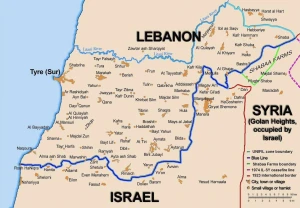
Instead, it's been a tense, often violent standoff – especially along the southern Lebanese border, where Hezbollah operates as the dominant force. And that’s the key to everything.
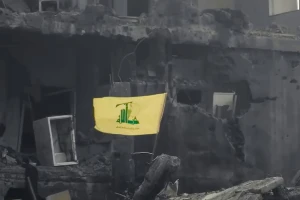
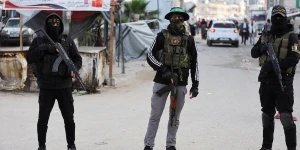
Let’s be honest: when people say “Lebanon,” what they often really mean is a divided state – one where Hezbollah, backed by Iran, holds enormous military and political power...and is a giant threat to Israeli citizens.
So while the Lebanese government has diplomatic, economic and geopolitical ties with Iran, it’s really the Iranian-backed Hezbollah terrorist group that threatens Israel and the region.
For decades, the U.S. has tried to play referee, mediator, and sometimes enforcer between the two countries, but this week, that role was on full display.
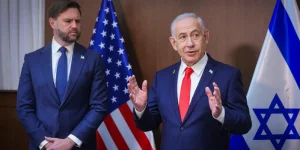
The White House didn’t just host the talks – it shaped them and framed the stakes. The future of Hezbollah was smack dab in the middle of it.
Secretary of State Marco Rubio laid it out bluntly:
“We understand we’re working against decades of history and complexities that have led us to this unique moment…This is a lot more than just about that. This is about bringing a permanent end to 20 or 30 years of Hezbollah’s influence in this part of the world and not just the damage that it’s inflicted on Israel, but the damage that it’s inflicted on the Lebanese people.”
“We have to remember the Lebanese people are victims of Hezbollah. The Lebanese people are victims of Iranian aggression. And this needs to stop.”
Let’s rewind a little to give some proper perspective. In 2006, the last major war between Israel and Hezbollah ended with United Nations Security Council Resolution 1701. It was essentially a roadmap for peace in southern Lebanon.
Hezbollah was supposed to disarm south of the Litani River and the Lebanese army was to take control of the area. The problem was that it never actually happened. Lebanon never fully enforced the UN Resolution. Hezbollah remained. And re-armed. They just dug in deeper and became even stronger. They effectively turned southern Lebanon into an operating base against Israel.
Of course, since then, for years, Israel has been actively degrading Hezbollah’s capabilities – targeting infrastructure, leadership, and supply lines. That military pressure is now intersecting with diplomatic pressure coming out of Washington.
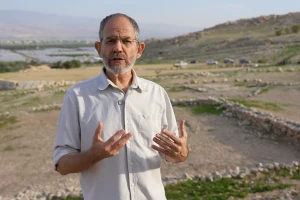
ALL ISRAEL NEWS spoke with Gol Kalev, chairman of the Judaism 3.0 Think Tank and also author of the new book, “From Survival to Peace: Turning the Assault on Judaism Around. He didn’t mince words.
“The talks in DC are bad news for Hezbollah,” Kalev said. The meeting in DC this week just confirms that, actually, Israel and the Lebanese Government don’t have a real conflict. Instead, they have a common enemy in Hezbollah.
So could these initial talks this week, brokered by the White House, actually be game-changing? “We don’t know yet if the Lebanese army has the ability to fight Hezbollah, even if they wanted to, but Israel degrading Hezbollah's capabilities and senior leadership helps Lebanon deal with Hezbollah.”
In other words, Israel may be doing the heavy lifting militarily, but the long-term solution depends on whether Lebanon can step up politically and militarily. Of course, that’s a big “if.”
So is this a turning point, or does it have the potential to be one? Kalev isn’t ready to declare victory – but he sees the possibility.
“To the extent Israel liberates Lebanon from Hezbollah, it's possible,” Kalev told ALL ISRAEL NEWS. “It’s too soon to tell. We need to see how things evolve on the ground and how much damage Israel does to Hezbollah. Can Israel kick Hezbollah out of South Lebanon? Can it damage its command structure?… The more successful the Israeli operation is against Hezbollah, then the more Lebanon moves away from ‘Iran of the Middle East’ back to ‘Switzerland of the Middle East.’”
We sure don’t know the outcome, but here’s what we do know: the Trump Administration is determined to break the previous cycle where Hezbollah controls the south, Lebanon looks the other way, Israel responds when necessary, and the U.S. tries to keep things from spiraling. Trump, Rubio, et al aren't interested in managing the chaos enemy. They’re fixated on ending the cycle...at least under their watch.
You might also like to read this: