How did Lebanon go from 'Switzerland of the Middle East' to a country shaped by war, Hezbollah and foreign influence?





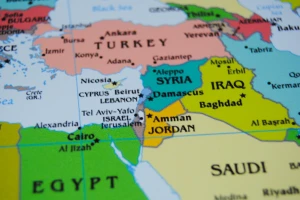
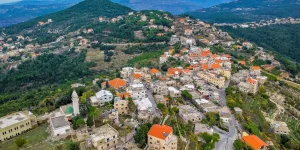
Lebanon is the only country in the Middle East without a desert, and is the country with the highest percentage of Christians in the Middle East. It’s also the only direct neighbor of Israel whose government has largely tried to avoid direct war with Israel. So what happened to this beautiful country, and why is it where it is today?
Let’s start from the beginning.
“Lebanon” in the Bible is not a country but a mountain range. Just as “Jordan” in the Bible is not a country but a river that later gave its name to a country, the same is true for Lebanon. The original “Lebanon” is a beautiful snow-capped mountain range famous for its cedars, and its name comes from the word for “white” in Semitic languages – Laban or Lavan.
In the 1800s, the area around the Lebanon range had a Maronite Christian majority, and they had a semi-autonomous district under the Ottoman Empire, with strong ties to France. When the French took over Lebanon and Syria after World War I, they divided the area they were ruling into different units – one of them being Lebanon – which they expanded into the modern country we know today.
The French government took the land of the existing autonomy of Lebanon and added Beirut, Tripoli, the Bekaa Valley, and the Shiite districts of what is now southern Lebanon. This reduced the Christian majority but also made the country more economically viable with ports, farmland, and trade routes. Some Muslims resisted and wanted to join Syria, but France insisted on ruling Lebanon as a separate entity with a Christian majority in order to strengthen Christians and weaken Arab nationalism.
I won’t go into the details of World War 2 and the Vichy France rule and subsequent independence, but when Lebanon discussed its upcoming independence around 1943, the Christians and Muslims reached a compromise. The Muslims gave up their aspirations to become part of Syria, while the Christians gave up their aspirations to be a Western European-aligned nation. This is also when they created their confessional “democratic” system. Think of it as a federation, similar to the United States, but instead of having representatives of counties from different states, they have a fixed number of representatives for each ethnicity or religion. The constitution says the president must be Maronite Christian, the Prime Minister must be Sunni Muslim, the Speaker of the Parliament must be Shia Muslim, and the deputy Prime Minister and deputy Speaker must both be Greek Orthodox. The exact number of representatives per religion was established based on a census in 1932, which they haven’t bothered to update since.
This worked well for a while, and after 1948, Lebanon was really Israel’s calmest neighbor. Even if they joined the wider Arab boycott of not recognizing Israel, they didn’t play a major role in the 1948 assault on Israel. Until 1970, Lebanon was known as the “Switzerland of the Middle East” with its ski resorts, secure banking hub, and luxury hotels.
My dad told me he still remembers how leaders in Christian ministries in Israel often went on vacation in Beirut. The border was even semi-open, and neighbors on opposite sides of the border could visit one another and work in one another’s fields. Some northern Israelis who could afford it even opted to go to the world-class hospitals in Beirut for medical treatment, since it was closer than Tel Aviv. Throughout this era, Israelis and Lebanese conducted secret negotiations about a peace deal, but ultimately, Lebanon didn’t dare to be the first Arab country to recognize Israel.
But what about the Palestinian refugees? Well, they arrived in 1948, were placed in refugee camps and denied citizenship. And it was there that the troubles started.
In 1970, these camps became the springboard for what would eventually erupt into a conflict with Israel and the Lebanese civil war of 1975-1990. This war devastated the country, took 150,000 lives, made a million Lebanese flee, spilled into Israel and Syria, and I’d argue it never truly ended.
After being expelled from Jordan in 1970, the PLO relocated to Lebanon and turned the south into what Israelis later called “Fatahland,” launching attacks into northern Israel. The Lebanese state was too weak to control them, and tensions between Palestinian militants and local Shiite villagers helped ignite the Lebanese Civil War in 1975. The war soon drew in Syria, Israel, and later Iran. Israel invaded in 1982, reached as far as Beirut and expelled the PLO leadership, which was forced to relocate to Tunisia, where they stayed for a decade until the Oslo Accords brought them to Ramallah.
The Lebanon war was, however, not without its controversy inside Israel. Many Israelis were worried that getting involved in Lebanon’s civil war would become Israel’s Vietnam. And then there were the massacres in Sabra and Shatila, the Palestinian refugee camps. Carried out by Lebanese Christian militias, but not prevented by the IDF, it was highly controversial both inside and outside Israel.
After the PLO was out, Israel managed to get a Christian pro-Israel president elected, hoping to finally end the civil war and get a peace agreement – but he was promptly assassinated by the Assad regime of Syria and replaced with a pro-Syrian puppet. Israel kept a large chunk of southern Lebanon as a “security zone,” which it ruled with the SLA – the Christian South Lebanon Army. This was a military occupation only, and no Israeli civilian settlers were allowed.
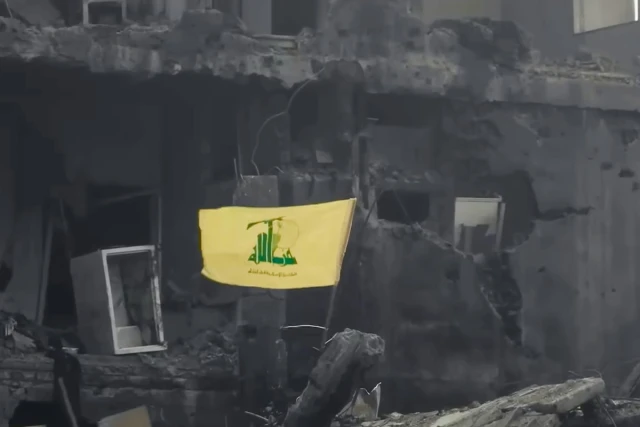
But there was a power vacuum left after the PLO left, and the Shiites were quick to fill it. After the 1979 coup in Iran, and with the Shia-positive Alawite Assad regime in Syria, the Shiites of south Lebanon, who had been oppressed by the Sunni PLO, now welcomed an Iranian-backed militia – Hezbollah.
Hezbollah operated outside of the Israeli security zone and had as its chief goal the expulsion of Israelis from Lebanon, often infiltrating and attacking Israeli and SLA positions. During this time, Lebanese villagers from the zone would routinely be admitted to Israel to work, trade, and receive healthcare, while others were recruited by Hezbollah.
When the civil war officially ended in 1990, the Lebanese government resumed authority and demanded that all militias must disarm – except Hezbollah. Why? Because Hezbollah was considered a resistance movement against the Israeli occupation. Inside Israel’s security zone, the SLA also continued to operate and did not disarm. I remember as a teenager hearing grown-ups discussing this in the 1990s. It was the era of the Oslo Accords and the peace agreement with Jordan, and they talked about how negotiations were underway with Syria. I asked them about Lebanon, and they waved it away. “Lebanon is a puppet state of Syria now. If we get peace with Syria, Lebanon will follow.”
In the year 2000, Israel decided to withdraw unilaterally, and the SLA collapsed. Most of its members received asylum in Israel and settled in the Galilee. Those who stayed in Lebanon were often convicted of treason and collaboration with the enemy.
But Hezbollah, which had now reached its goal of evicting Israel from Lebanon, did not disarm. With Iranian funding, they grew stronger, becoming Iran’s front against Israel. Those Israelis who had protested the withdrawal of 2000 had claimed that it would only bring the frontline closer to Israel, and they turned out to be correct.
Hezbollah constantly tested Israel’s boundaries until they went too far in 2006 and Israel launched the Second Lebanon War. Rockets rained down over the Galilee, and at the time, the war was seen as a failure in Israel, but in retrospect, it deterred Hezbollah and bought Israel another 17 years of quiet. The war ended with a UN-mediated agreement in which Hezbollah must be disarmed. Which they didn’t.
By 2023, Hezbollah was significantly larger and more powerful than Hamas, and while Lebanon had deteriorated into a failed state with a banking crisis, an explosion in the Beirut port, and frequent power outages, Hezbollah had money, weapons, and new combat experience from the Syrian civil war. The legacy of the civil war still hung over Lebanese politics, and with the war in Syria and the influx of Syrian refugees, the Lebanese government remained in a constant state of crisis and on the verge of collapse.
After October 7th, 2023, Hezbollah's Secretary-General Hassan Nasrallah opted to await Israel’s response rather than launch his own attack at the same time, and even though he started attacking Israel from October 8th, it was not a full-scale invasion. For almost a year, Hezbollah pounded the Galilee, and Israel evacuated the border cities for the first time in history. In September 2024, Israel launched the beeper attacks and assassinated Nasrallah, reducing Hezbollah to a shadow of its former self in mere days. Two months later, a cease-fire was signed between Israel and Lebanon, agreeing to disarm Hezbollah. Which they didn’t.
Between that ceasefire and up until recently, Hezbollah tried to rebuild, while Israel kept its side of the ceasefire by trying to enforce Hezbollah’s disarmament, targeting their fighters and weapons stockpiles from time to time. The Lebanese army did not quite keep their end of the deal, and maybe they weren’t able to. But the Lebanese government is more stable now than it used to be and is more Hezbollah-critical and Israel-friendly than it was in the past.
But the real test came when Israel struck Iran. After all, Hezbollah was built to be Iran’s front against Israel. So when Israel struck in the 12-day war of June 2025, it was a great sign of Hezbollah’s weakness to see that they stayed out.
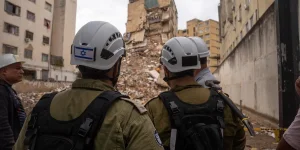
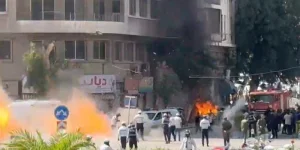
In the current war, however, since February 28th, 2026, we’ve seen Hezbollah getting directly involved, as was expected. And it’s very clear they didn’t get as disarmed as they were supposed to. Israel has started another full-scale invasion of South Lebanon, and I’m not sure whether this is the third or fourth Lebanon war.
Lebanon’s tragedy is not that it was born artificially. Many countries were. Its tragedy is that the Lebanese state has rarely been strong enough to control the forces operating within its borders. First, it was Palestinian militias. Then Syrian domination. Then Hezbollah – armed and financed by Iran.
The result is that the country once known as the “Switzerland of the Middle East” has repeatedly become the battlefield of other people’s wars.
Whether Lebanon can ever return to being the peaceful and prosperous country it once was depends on one question that has haunted it for decades: Will the Lebanese state ever regain control of its own territory?
Lebanon’s current president, Joseph Aoun, has repeatedly emphasized the need for the Lebanese state to regain a monopoly on arms, which is a clear reference to Hezbollah. Many observers believe that Lebanon’s long-term stability depends on precisely that: restoring state control, reducing foreign influence, and eventually integrating into a more stable regional order, such as the one emerging with the Abraham Accords.
The challenge, however, is not identifying the solution, but whether the Lebanese state is strong enough to enforce it.
You might also like to read this: