Democrats playing with fire: Anti-Israel rhetoric may win 2028 primary...but cost them everything


The early jockeying for the 2028 Democratic U.S. presidential nomination is already revealing a major fault line – and it runs straight through Israel.
Potential contenders are slowly recalibrating their positions; some subtly, others dramatically. It’s all being driven by a Democratic base that has moved sharply away from Israel, which is forcing candidates to rethink how they play their political cards.
However, it comes with a political catch: what may be necessary to win a Democratic primary could become a liability in a general election. It’s that tension now defining the early contours of the 2028 race.
A Quinnipiac University poll last summer found that 77% of Democrats agreed that Israel is committing “genocide.” Meanwhile, a more recent NBC poll shows Democrats sympathizing more with Palestinians than Israelis by a 67 to 17% margin. There’s no doubt that voter sentiment has shifted rapidly against Israel after October 7, 2023.
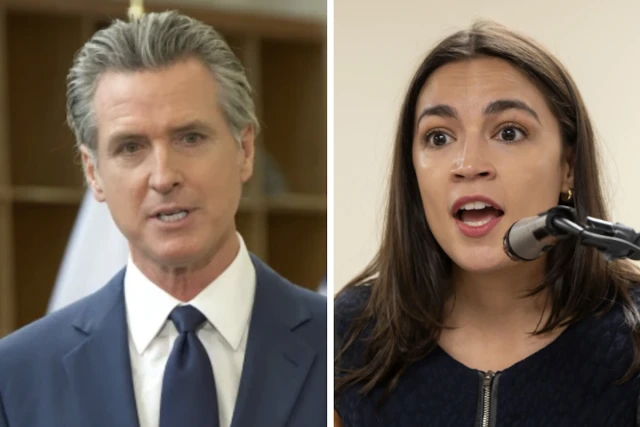
No one embodies that shift more clearly than U.S. Representative Alexandria Ocasio-Cortez (AOC). This past month, she pledged to oppose all U.S. military aid to Israel.
“I will not support Congress sending more taxpayer dollars and military aid to a government that consistently ignores international law and U.S. law,” she said. “The Israeli government is well able to fund the Iron Dome system.”
This is definitely a policy line in the sand that aligns closely with an anti-Israel progressive base. AOC’s position is also strategic. As a potential 2028 candidate, she is consolidating support on the left flank, where skepticism toward Israel is now strongest. Whether she actually runs is another matter, but she’s already staking out her leftist stake in the ground.
Of course, the risk will be that while it energizes activists, it could alienate moderates and swing voters later. But that’s a potential problem for another day.
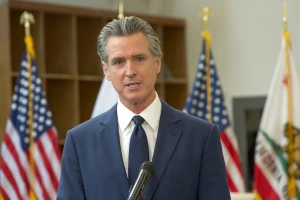
Then there’s California Governor Gavin Newsom, who many consider the proverbial frontrunner if and when he decides to run for president. He may represent the party’s most revealing case study in political balancing.
At one point, Newsom described Israel as “sort of an apartheid state,” but then came the walk-back. Newsom later emphasized: “I revere the state of Israel. I’m proud to support the state of Israel.”
At the same time, he sharply criticized Israeli leadership and suggested the United States may need to reconsider aspects of its support. So, which is it exactly? It’s called the mushy muddy middle – and it’s being done on purpose.
The back-and-forth is not accidental. It reflects the exact political tension Democrats face right now: how to satisfy a base demanding stronger criticism of Israel without fully abandoning a traditional alliance that still matters to broader electorates. Maybe he should be called “Newsom the Navigator.”
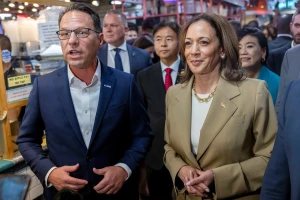
That brings us to Pennsylvania Governor Josh Shapiro, who represents another lane entirely. As a religious Jew, he has largely maintained a more traditional pro-Israel posture, even as the party shifts around him. He’s spoken out passionately against antisemitism. But even he is under pressure to adapt their rhetoric and respond to growing anti-Israel sentiment within the party.
On a recent podcast appearance, Shapiro began to play into the narrative of how Israel dragged America into the war in Iran. “America should never be led around by any other nation,” he said. “It should always be about America’s interests, our national security interests. We should never, ever be bullied, as maybe President Trump was, by any other world leader.”
The liberal left loves to hear that rhetoric. Shapiro is also trying to downplay his Judaism a bit as well. “I don’t view this issue as a Jewish American,” he said on the podcast. “I view this issue as an American, and I view this issue in a way of trying to understand what is the best thing for America, which to me is having peace and stability in the Middle East.”
Meanwhile, the Democratic National Committee (DNC) is caught in the middle. On one hand, the base is pushing for more aggressive action – conditioning aid, confronting pro-Israel lobbying groups, and reshaping party policy. That's where the energy is.
On the other hand, party leadership is not ready to fully break with Israel, knowing full well that it could pose more of a problem when the electorate becomes broader in a general election.
At a recent meeting, the DNC rejected a resolution targeting the influence of AIPAC, frustrating progressives who see the move as symbolic of the party’s reluctance to fully align with the base.
All of this sets up a stark political reality, which is that the Democratic Party is in a tough spot – and there’s no way around it.
A 2028 Democratic primary will be won by a candidate who criticizes Israel more forcefully than previous generations of Democrats and aligns with a base that is increasingly pro-Palestinian.
But to win a general election, the eventual candidate will need to reassure moderates and independents that they aren’t extreme on foreign policy. How do you square the two competing views?
You might also like to read this: