Hezbollah banking arm reportedly resumes operations despite Israeli strikes, Lebanese gov't ban



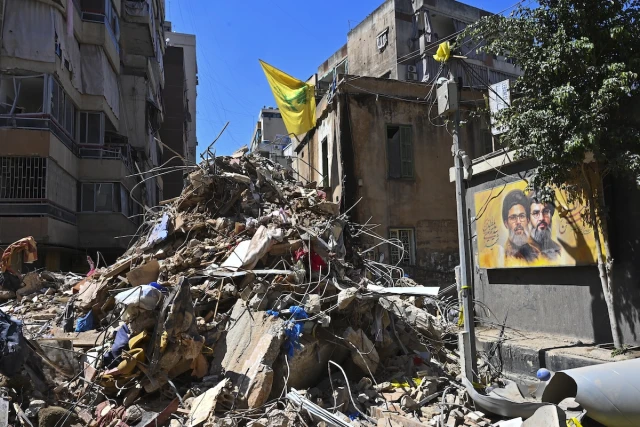
Hezbollah’s banking and financing arm has reportedly resumed operations in Beirut despite repeated Israeli strikes, U.S. sanctions and an official Lebanese government ban, according to a report on Saturday by the Saudi-owned Al-Arabiya media outlet.
The reopening of the Al-Qard Al-Hasan Association underscores Hezbollah’s continued ability to preserve key parts of its infrastructure despite months of devastating Israeli attacks that killed much of the group’s senior leadership and destroyed large portions of its rocket and missile arsenal.
According to the report, a branch of the Al-Qard Al-Hasan Association in the Haret Hreik neighborhood of Beirut’s Dahieh district reopened on Saturday and resumed official business activities.
The association has been a major target during the war. Over the past several months, the IDF has conducted strikes on at least 30 of its branch locations. Those attacks reportedly killed senior leaders, mid-level managers and lower-level operatives, while also destroying large quantities of assets, including cash reserves and precious metals.
In addition to the Israeli strikes, Lebanon’s internationally recognized government formally banned the Al-Qard Al-Hasan Association, making it illegal for Lebanese financial institutions to conduct business with it. The organization has also been subject to severe sanctions by the U.S. State Department since 2007.
Despite those measures, Hezbollah’s financial network appears to have adapted and survived, reinforcing criticism that the organization continues to function as a “state within a state” inside Lebanon.
In recent weeks, Hezbollah has sustained heavy losses in fighting with the IDF, following Israeli operations in late 2024 that killed much of the organization’s senior leadership and destroyed large portions of its rocket and missile arsenal. Although the group has been significantly weakened, it continues to operate under new leadership that has restored parts of its operational and financial networks.
Lebanon’s Interior Ministry responded cautiously to reports of the reopening, issuing muted statements about the technical and legal procedures surrounding the association’s activities. Analysts said the restrained response highlighted the Lebanese government’s limited ability to enforce its authority against Hezbollah.
The government has also faced criticism from Hezbollah’s domestic opponents. Majid Harb, a Lebanese attorney who has pursued legal action against Hezbollah over the years, said that "the policy of cutting corners and the fear of state institutions [of] Hezbollah have brought us to the current situation, in which the expansion of the association is damaging Lebanon's financial reputation."
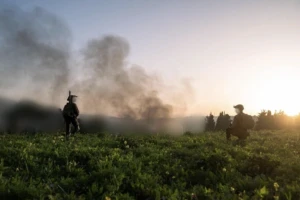
The reopening also came amid renewed violence in southern Lebanon. Heavy exchanges of fire between Hezbollah fighters and IDF troops over the weekend left at least 12 people dead and many more wounded. Most of the fatalities were Hezbollah fighters, although the organization claimed some civilians were also among the casualties.
The IDF said three Israeli soldiers were wounded in Hezbollah drone attacks and announced that 85 Hezbollah targets had been struck, including several in the Bekaa Valley near the Syrian border.
Although a ceasefire between Israel and Hezbollah officially remains in place, both sides have continued sustained military operations for weeks, with little indication that the fighting will ease in the near future.
You might also like to read this: