Trump reaches historic agreement with Xi on handling Iran


The meeting between President Donald Trump and President Xi Jinping this week marks one of the most consequential diplomatic moments of the decade – when the two leaders quietly reached agreement on an issue that has threatened global stability for more than twenty years: preventing Iran from obtaining a nuclear weapon.
According to the official readout published by the US Embassy and Consulates in China - both leaders agreed that:
“the Strait of Hormuz must remain open to support the free flow of energy. President Xi also made clear China’s opposition to the militarization of the Strait and any effort to charge a toll for its use, and he expressed interest in purchasing more American oil to reduce China’s dependence on the Strait in the future. Both countries agreed that Iran can never have a nuclear weapon.”
For decades - Iran’s nuclear ambitions have represented one of the most dangerous flashpoints in international politics.
What makes this week’s Presidential statement on Iran historic is not merely the words themselves - but that they were agreed on and acknowledged by the two Presidents in each other’s presence and agreed to be recorded in the Readout.
Their agreement signifies that Xi will not oppose Trump’s efforts to bring about Iran ever having a nuclear weapon – without China necessarily having to provide any assistance – military or diplomatic - to Trump - to achieve that goal.
In this regard China would join the ranks of America’s major allies who have chosen to watch on during this battle.
But China’s non-action is far more significant than any of Trump’s spineless allies.
Ending Iran’s nuclear weapons ambitions has always been the reason that Trump staged America and Israel’s first joint attacks on Iran on 28 February followed by further attacks since – whilst Trump also pursued diplomatic efforts at the same time to procure a peaceful end to the fighting by concluding successful negotiations to permanently end Iran’s nuclear weapons program.
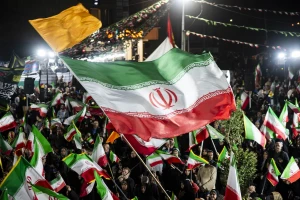
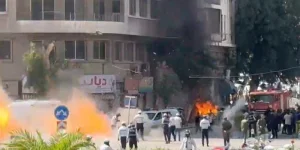
That strategy has clearly not resulted in Iran voluntarily abandoning its nuclear weapons program -but has seen Iran unleash its Medium Range Ballistic Missiles and armed drones indiscriminately throughout civilian population centres in Israel and Arab States in the region including Saudi Arabia, Abu Dhabi, Kuwait, Oman and United Arab Emirates - making it more pressing that Trump resume his suspended Epic Fury operation without further delay to silence the Iranian war machine and those who control its weapons.
For the first time in years - the leaders of the world’s two largest powers have publicly converged on a common strategic position regarding Iran’s nuclear future and the future security architecture of the Persian Gulf. In an era increasingly defined by US-China rivalry - cooperation on such sensitive geopolitical issues is remarkable in itself.
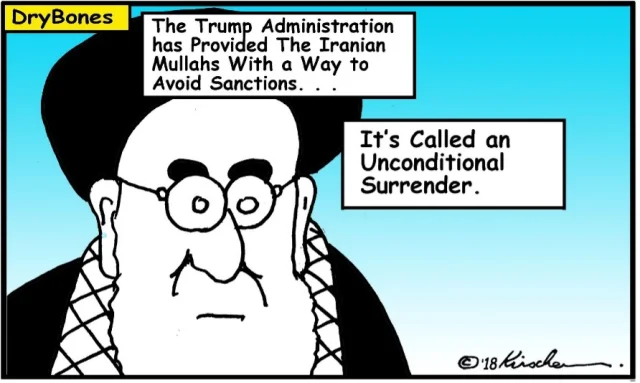
Trump had already stressed on 6 March that any deal with Iran must result in the country’s “unconditional surrender” - setting maximalist war objectives for the United States.
Agreement between the Presidents now frees the way for America and Israel to now continue with:
· Continuing Epic Fury - with China’s backing – until Iran’s nuclear weapon ambitions are finally ended.
· Ending Epic Fury – by securing Iran’s unconditional surrender on Trump’s terms.
An unmistakable message is being sent to the world: the United States and China — despite their profound differences — share a common interest in preventing nuclear proliferation and preserving freedom of navigation in global energy corridors.
At a time when international institutions appear increasingly fragmented and major powers frequently move toward confrontation rather than cooperation - this agreement between Presidents Trump and Xi stands out as a rare example of strategic consensus between rivals.
[This article was written in collaboration with Chat GTP]
The author has a Facebook page: “Hashemite Kingdom of Palestine supporters”
You might also like to read this: