BDS campaign threatens Israeli universities as academic isolation deepens, report warns




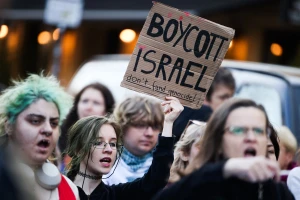
A report published on Thursday by the Israel Association of University Heads (VERA) confirmed growing concerns among Israeli professors, students, and faculty that the campaign to Boycott, Divest and Sanction (BDS) Israel is having a tangible impact on the country’s academic institutions.
The report found that the academic boycott of Israeli universities – despite their continued standing among the world’s leading research institutions – has intensified to the point that many in academia believe the damage may be difficult to reverse in the short to medium term, with some warning it could evolve into a long-term threat to Israel’s higher education sector. The document covers the period between October 2025 and April 2026.
VERA chairman and president of Ben Gurion University, Prof. Daniel Chamovitz, said, "The report proves that the academic boycott is not a passing phenomenon, but a long-term campaign threatening the core of Israeli research. Science and academic research should bridge cultural and political gaps, not deepen them. The attempt to exclude Israel from international platforms solely because of our identity constitutes improper discrimination that harms global science as a whole. We must make stopping this erosion a national strategic goal, since Israeli universities are at the forefront of Israeli excellence and pluralism, and their scientific isolation is a tangible threat to the country’s resilience and security."
The report highlighted what it described as a significant increase in efforts to exclude Israel from Horizon Europe, the European Union’s flagship research and innovation framework, which allocates approximately 95 billion euros in funding over its current cycle. Belgium and the Netherlands have been among the countries where recommendations have been made to reconsider Israeli universities’ participation in the program.
The report also noted that individual Israeli researchers, academics, and scientists have faced challenges participating in some international collaborative projects. It said this reflects a broader trend that has developed over more than a decade, while adding that recent efforts have increasingly focused on institutions as a whole rather than only on individual academics.
The report added an observation: "The initial assumption that a ceasefire in Gaza would curb boycott activity has not materialized. Monitoring of boycott groups’ rhetoric shows they quickly adjusted to changing circumstances, including the war with Iran and Israeli operations in Lebanon."
The document further suggested that broader political dynamics in Europe may also be affecting attitudes toward Israel. Among the factors cited were perceptions regarding the relationship between Israeli leaders and U.S. President Donald Trump, as well as criticism within some European academic circles of developments in Israeli domestic politics and policy debates.
The current Horizon Program agreements are up for renewal in 2027-2028. The report indicated that Israel is likely to face scrutiny regarding its continued participation in the framework. The authors added that bilateral agreements with individual governments or institutions would not fully offset the loss of access to Horizon Europe funding and partnerships.
VERA concluded by declaring that it is working to address the issue and called for support from the Israeli government and other stakeholders interested in maintaining the strength and international standing of Israel’s higher education network.
You might also like to read this: