Jerusalem Day: Caught between unifying celebration and political tensions




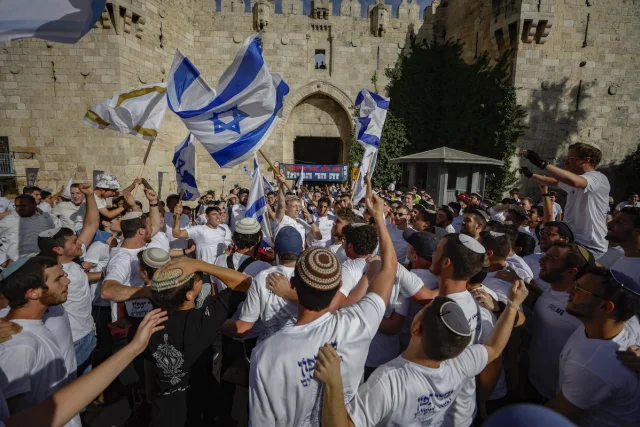
Jerusalem Day is a unique national holiday, established to celebrate the capture and unification of the city by Israeli forces during the Six-Day War in 1967.
After 2,000 years of diaspora and almost 20 years after the creation of the state, Israel had taken full possession of the holy city. This prompted the chief rabbis to designate this event as a minor religious holiday, imbuing it with special significance for religious Jews as well as for secular Israelis.
But since its inception as a wholesome, universally beloved holiday celebrating Israel’s eternal capital, Jerusalem Day has garnered some controversial elements, making it a complex day that reflects the deep fissures in Israeli society today and obscuring its uniquely unifying spirit.
In its original form, the holiday had a way of bringing together Israelis from all walks of life and across the political and religious spectrum, in a joint celebration of Israeli patriotism and Jewish history.
Much of this spirit continues in the events leading up to Jerusalem Day, as could be seen this week.
In its early days, the holiday was marked with military parades, which have gone out of fashion in recent decades. Today, Jerusalem Day is marked by various cultural events across Israel, as well as a central parade in the capital that includes the now-infamous “flag march,” which has become a focal point of controversy.
However, most Jerusalem Day events are non-controversial and aim to unite various sectors of society in a joint celebration.
This week, members of the mostly national-religious youth groups held a parade in Tel Aviv, highlighting the connection between the religious center and the newer, secular city on the beach. In Jerusalem, religious singer Ishay Ribo and secular performer Idan Raichel held a joint concert at Sultan's Pool near the Old City walls, drawing what media reports described as a heavily mixed crowd of secular, religious, traditional, and ultra-Orthodox fans who came together in song.
In addition, students from over 30 secular and religious schools in the capital competed in a quiz about Jerusalem’s 4,000-year history at the historic Tower of David.
While these events dominate the perception of the “regular” Israelis in the days leading up to Jerusalem Day, the event has become (in-)famous in recent years for spiking security tensions, particularly those caused by the flag march.
The march begins in the western part of Jerusalem but leads through the Old City, including its Muslim Quarter, celebrating the unification with the formerly Jordanian, still majority Arab eastern part of the city; and this is where most of the friction lies.
In recent years, a variety of factors has led to a rising popularity of the flag march among the national-religious sector of Israeli society. On a surface level, this appeal is easy to understand because this part of society is both patriotic and proudly Zionist – unlike the ultra-Orthodox community – while also being religiously observant, allowing it to find deep meaning in both aspects of the holiday.
However, the national-religious sector has struggled with a rising phenomenon of radicalism among fringe groups of violent teenagers, like the so-called “hilltop youth” – the same people who cause most of the “settler violence” in Judea and Samaria, as well as the attacks on Christians in the capital’s Old City.
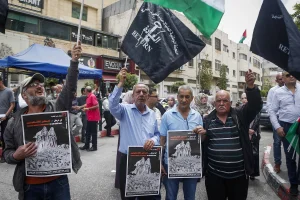
These same groups of radical and often slightly inebriated youths have made the flag march their favorite event, exploiting the protection of numbers and the heavy security surrounding the march through the hostile Muslim Quarter to attack bystanders, vandalize property, chant racist slogans, and attack members of the press.
One of the most popular figures in this sector of society was National Security Minister Itamar Ben Gvir, formerly the go-to attorney for this crowd, but he has tried to distance himself from it since going into politics. Nevertheless, the recent rise of such violent incidents and the lack of effective police response have been widely blamed on the political leanings of Ben Gvir, who controls the police.
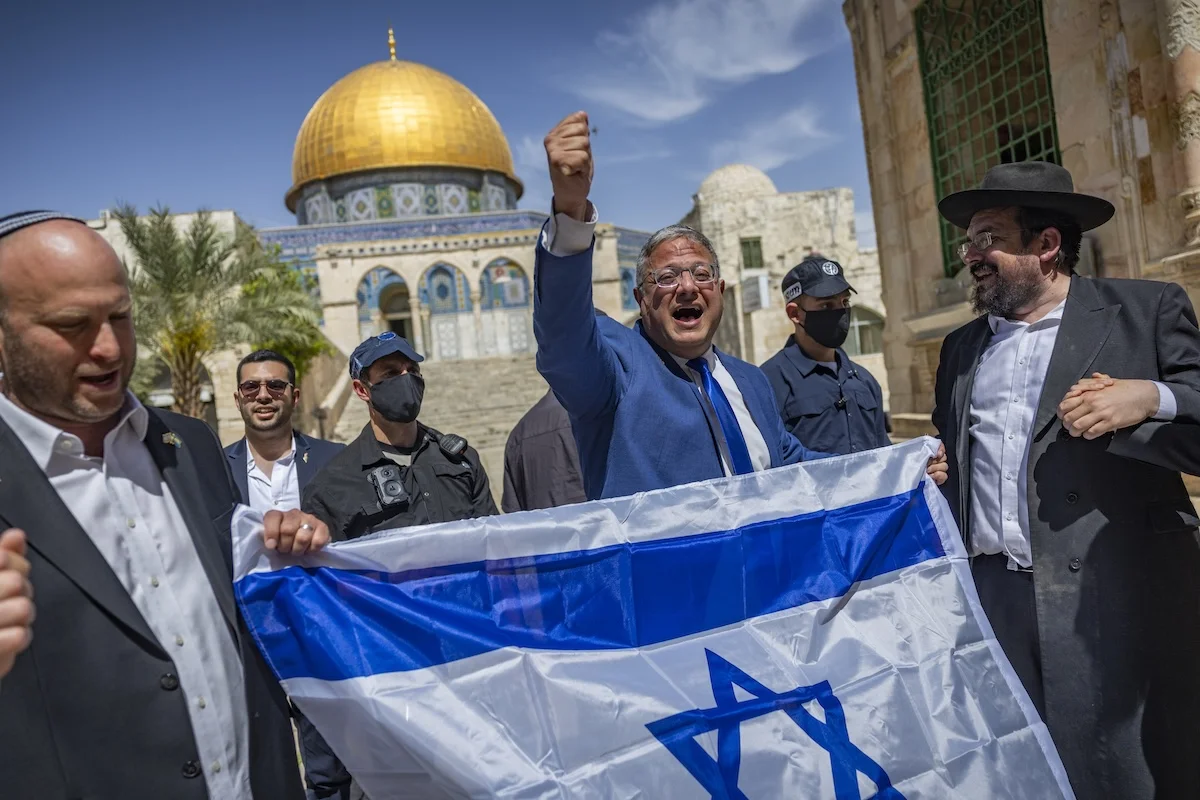
The increasing popularity of the march among the national-religious community also coincides with the past few years of escalating political and societal tensions, marked by four Israeli election campaigns in quick succession. Together with the rise of violent incidents caused by the radical youths, this has alienated many secular Israelis from the once popular flag march.
While it is an extreme example that doesn’t represent most left-leaning Israelis, a recent column on Haaretz even compared the march to the Palestinians’ “Kristallnacht,” highlighting the degree of disgust with which some Israelis view the event.
Knesset Member Gilad Kariv (The Democrats party) said a request to prevent the march from entering the Muslim Quarter was denied again this year. “For years, we have been calling on the police to change the route of the Flag March so that it would not pass through the Muslim Quarter… The violent incidents and racist incitement that take place under the auspices of the Flag March are an embarrassment to Judaism, Zionism and the State of Israel,” Kariv wrote.
The tensions caused by clashes between radical youths and Palestinians have also been exploited by terror groups to stoke tensions, most prominently by Hamas in the Gaza Strip. In 2021, Hamas used the flag march and other incidents as a pretext to launch rockets at Jerusalem, triggering the two-week war Israel called “Operation Guardian of the Walls.”
This year, there was a push from leaders within the national-religious community to prevent vandalism and additional violence, with several senior rabbis stressing that the ways of the Torah “are the ways of pleasantness.”
“Let us remember that true strength is measured by our ability to preserve the dignity of the occasion and to add to the sanctity of the city, through confident conduct free of any blemish, as Torah adherents who sanctify the name of Heaven through their behavior,” they wrote.
Jerusalem Mayor Moshe Lion, himself being religiously observant, stated that he “sees utmost importance in ensuring that Jerusalem Day is observed as a festive and joyful day, conducted with respect and appreciation for the dedication of the security forces who work to ensure public safety.”
President Isaac Herzog’s speech at the state ceremony celebrating the 59th anniversary of the unification of Jerusalem highlighted the original spirit of the holiday, offering a path toward restoring this emotional day to the heart of Israeli society.
“Just as we have safeguarded Jerusalem with strength, we must safeguard it also in spirit, morality, responsibility, and with love of fellow human beings and respect for the faith of the other,” Herzog urged.
“Jerusalem is not only a symbol. Anyone who sees in it only a symbol misses Jerusalem. Jerusalem is so wondrous because it is alive. Because in the shadow of the ancient stones, children play. Because alongside the grand sweep of history, there are small, tangible, daily lives. And this, perhaps, is Jerusalem's great secret: it does not ask us to choose between memory and life. It demands that we carry both together.”
Herzog vowed: “We will safeguard Jerusalem out of a readiness to see in this city not only our past, but also our test. For a united Jerusalem is not only a political fact; it is a national mission… We will ensure that every young woman and young man in Jerusalem, from every neighborhood and every community, knows that they are part of this city's future. We will ensure that every child knows the other as well, and learns to respect them.”
You might also like to read this: