State comptroller finds Israel's dependence on foreign weapons supply ‘poses a risk to the fighters’
Gaza War exposed harm to IDF from loss of local weapons production






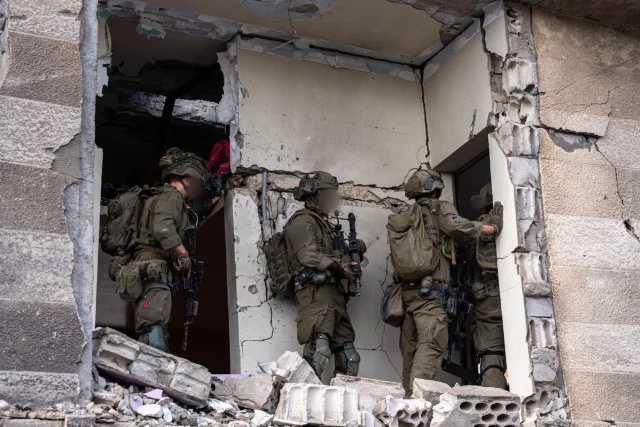
Israel's State comptroller Matanyahu Engelman published a series of scathing reports on Tuesday, exposing deep deficiencies in Israel’s weapons production, which led to shortages during the Gaza War.
The state comptroller’s report said the loss of independence in weapons production, which has been ongoing for the past two decades, negatively impacts the IDF’s freedom of operation and even endangers the lives of soldiers in the field.
According to the report, restoring Israeli production capabilities will require "significant financial investments and a lot of time.”
The report identified that part of the decline of Israel’s weapons production came from an Israeli preference for purchasing raw materials as cheaply as possible, which often led to dependencies on foreign suppliers, some of whom are located in countries that later imposed export restrictions on the supply of weapons components to Israel.
The government's stance on domestic weapons production did not change following the eruption of the conflict with Hamas in 2021’s “Operation Guardian of the Walls,” even as production lines for certain weapons, or weapons components, were shut down.
“The failure to establish a comprehensive policy and a budgeted plan for its implementation by the defense ministers before the outbreak of the war is due to the failure to implement the lessons required from ‘Operation Guardian of the Walls’ and the restrictions on procurement that countries around the world have imposed on Israel in the past, and thus they caused harm to the IDF’s readiness for war,” Comptroller Engelman’s report states.
In previous decades, the Ministry of Defense invested billions of shekels in building defense production infrastructure, including weapons. However, over the past two decades, the comptroller said that production of certain raw materials needed to produce specific weapons and ammunition was damaged or lost. The report did not detail which production capabilities were affected, for security reasons.
The Engelman report also highlights the danger of reliance on foreign suppliers, as some countries previously friendly to Israel imposed restrictions and embargoes on the supply of materials and components due to political backlash from the conflict.
The surge in global demand for weapons and components due to the war in Ukraine also negatively impacted Israel’s ability to procure the necessary supplies.
The comptroller said the defense establishment did not clearly define which weapons production capabilities should remain in Israel, nor prioritize local production, nor map out the risks and consequences of relying on foreign purchases, the report claimed.
“In the absence of such a plan, the ability to produce weapons in the country in emergencies and times of war could be harmed,” it stated.
“All of this is not in accordance with the findings of the investigation and lessons learned conducted by the Ministry of Defense following the Second Lebanon War in October 2006 and the recommendations of the Blue and White Committee from 2007, according to which a central budget should be allocated for such procurement,” the report continued.
Following the outbreak of the Oct. 7 war and the imposition of restrictions on certain weapons and components, the Ministry of Defense and the IDF began mapping capabilities necessary for production independence in Israel. That study was not completed until January 2025, Engelman’s report noted and the resulting budgeting decisions addressed only some production capabilities.
“This means a disruption in the pace of the IDF’s operational missions and concerns about harming its operational effectiveness in war,” the Engelman report argues.
According to Engelman, “During the war, deficiencies of operational significance arose: there was a decrease in the pace of operations carried out by the IDF, and certain [supply] means were lacking - thus posing a risk to the fighters.”
Engelman clarified that the Gaza War “highlighted even more Israel's need to increase its independence in weapons production, and reduce its dependence on foreign countries and international interests and considerations in everything related to the supply of weapons and the components and raw materials needed for their production.”
The Ministry of Defense, currently headed by Israel Katz, issued a reply stating, “The State of Israel's arms independence is at the core of the Ministry of Defense's strategy and at the top of the list of priorities.”
“Since the outbreak of the war and based on its lessons, and particularly in the past year, the Ministry of Defense has been working to close years of gaps and is promoting a large-scale plan to achieve 'Blue and White' arms independence worth billions of shekels,” the statement continued, pointing to the recent budget increases to the ministry as a sign the government takes the problem seriously.
The IDF also released a statement, claiming that its “combat capabilities have not been harmed and there has been no risk to the lives of fighters on the battlefield due to ammunition and weapons inventories.”
The military also claimed that “it is prohibited from interfering in these [procurement] decisions,” noting that “Overall responsibility in the field of vehicles and weapons production lies with the Ministry of Defense.”
You might also like to read this: