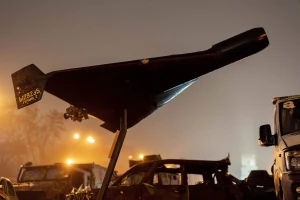
Hezbollah drone threat: As fighting continues despite ceasefire, IDF plans to produce thousands of suicide drones in new factory – report
Israel deploys low-tech Ukrainian solutions to counter new drone threat





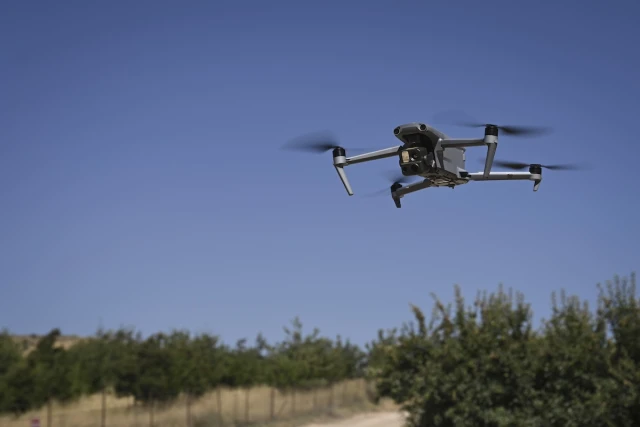
Despite the ostensible ceasefire between Israel and Hezbollah in southern Lebanon, fighting between the sides has continued on a small but intensive scale for weeks, with the Israeli military struggling to find an effective response against Hezbollah’s increased use of first-person view (FPV) drones.
The small and cheap drones that are controlled via kilometer-long fiber-optic cables can’t be jammed electronically and are hard to detect, causing five Israeli deaths and dozens of injuries so far, as the defense establishment is racing to find alternative solutions.
On Tuesday, the IDF said it had killed over 350 terrorists in southern Lebanon since the start of the ceasefire, though only 5-10 of them were said to be drone operators.
Over 1,100 Hezbollah targets were struck in the same timeframe, including “structures used for military purposes from which Hezbollah terrorists operated, weapons storage facilities, loaded launchers ready to fire, and additional infrastructure,” the IDF said.
The military also revealed Tuesday that troops of the Golani Brigade and the Egoz commando unit operated north of the Litani River for about a week recently, including major battles with Hezbollah terrorists.
The area is within the Israeli-held area demarcated by the “yellow” ceasefire line but lies north of the river, near the village of Zoutar al-Sharqiya, approximately 10 kilometers (6.2 miles) from Israeli territory. Hezbollah had used the mountaineous area to launch numerous mortar grenades and rockets.
According to Army Radio, terrorists emerged from a tunnel shaft in one of the clashes, leading to close-quarters combat. Several soldiers were wounded but none were killed.
The operation also included the use of heavy armored vehicles, demonstrating their ability to cross the river and support infantry raids in the area. Troops found “underground tunnel routes containing large quantities of weapons, weapons storage facilities, and missile launchers,” the IDF said.
🎥 WATCH: Exclusive footage of living quarters used by Hezbollah terrorists.
— Israel Defense Forces (@IDF) May 12, 2026
During special operations to clear terrorist infrastructure from the Litani area, south of the Forward Defense Line, 100+ military targets were struck.
Targets dismantled include:
- compounds used by… pic.twitter.com/qDQ5sQeMHE
Meanwhile, there were several more FPV drone attacks on Israeli troops on Tuesday, without reports of injuries at the time of publication.
As one among several layers of solutions to the drone threat, Army Radio reported that the IDF has decided to establish a military factory staffed by ultra-Orthodox soldiers that will manufacture thousands of suicide drones per month, including some meant to counteract FPV drones by exploding near them.
Similar systems have also been developed by the Ukrainian armed forces, which have collected years of experience in countering Russian FPV drones.
פרסמנו אצל @efitriger
— דורון קדוש | Doron Kadosh (@Doron_Kadosh) May 12, 2026
התשובה לרחפני הנפץ של חזבאללה? בצה"ל הוחלט: יוקם מפעל צה"לי לייצור אלפי רחפנים מתאבדים מדי חודש - שישרתו בו חיילים חרדים
צה"ל מקים בימים אלה מפעל שעתיד לייצר רחפני נפץ מתאבדים (רחפני FPV) - לשימוש בכל זירות המלחמה. מטרת הקמת המפעל היא לתעש ולהרחיב… pic.twitter.com/784Jikz1Mk
By establishing a new factory, the IDF aims to rapidly and significantly expand its arsenal of suicide drones, which, unlike the many drones already in use by the IDF, attack targets by slamming into them and exploding, rather than by launching projectiles from the air.
The local production will also significantly reduce costs. Some 200 ultra-Orthodox soldiers, the first of which are scheduled to be recruited in June, are expected to serve in the factory after undergoing technical preparatory training.
Shipments of thousands, and later tens of thousands of drones per month are set to start within two months, according to Army Radio.
The radio station also reported that the IDF has begun deploying another cheap, low-tech countermeasure against FPV drones, drawing on Ukrainian experience.
פרסמנו הבוקר אצל @yanircozin ו-@arik3000 ב-@GLZRadio
— דורון קדוש | Doron Kadosh (@Doron_Kadosh) May 12, 2026
עוד פתרון שנכנס לשדה הקרב לרחפני הנפץ של חזבאללה: בהשראת שדה הקרב בין רוסיה לאוקראינה - גדרות תיל מסתובבות
מדובר על גדרות תיל, שמחוברות באמצעות בזנטים (עמודי ברזל), ולכל אחת מהן יש מנוע חשמלי שמסובב את הגדר, וכך למעשה הסיבוב… pic.twitter.com/ZeOkkva08M
The drones are controlled via a cable that is drawn from a spool connected to the aircraft. With a range of over 10 kilometers, the majority of the cable usually falls to the ground and lies there during the flight.
The new system meant to exploit this weakness is a barbed-wire fence, which is connected to an electric motor that rotates the wire. When the drone cable falls onto part of the fence, the barbs grab onto it, and, through the rotation, either winding it onto the fence or cutting it, breaking the communication to the operator and causing the drone to crash.
The IDF Ground Technology Division aims to provide every battalion with these systems.
A senior IDF officer explained that the best solution is a combination of all available systems to counter FPV drones, including nets over armored vehicles and military positions, widespread deployment of various radar systems and the integration of their data, the barbed-wire fence system, anti-drone drones, and using shotguns and fragmentation ammunition in soldiers’ personal weapons.
The report noted that a shipment of tens of thousands of 5.56 mm fragmentation rounds arrived in Israel on Monday.
You might also like to read this: