IDF Captain and TBN Israel host Yair Pinto on reporting from Gaza’s front lines


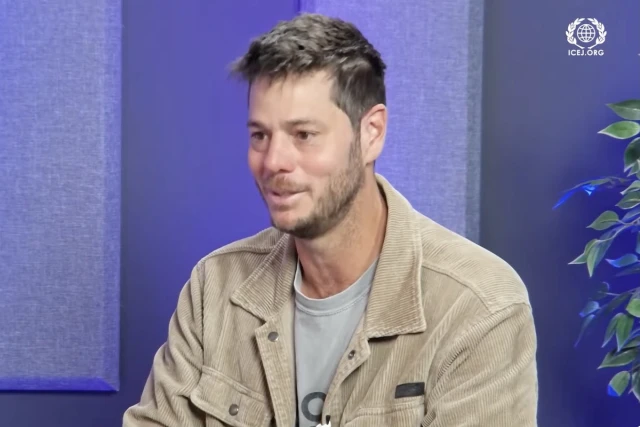
IIn a wide-ranging conversation with the ICEJ’s David Parsons, the Jewish follower of Yeshua described nearly a thousand days of war, the spiritual battle behind it, and the personal cost of leaving a three-month-old son to defend Israel’s north and then enter Khan Younis.
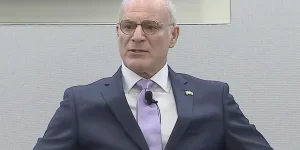
Yair Pinto was at home with his family on the morning of October 7, 2023, when the rocket sirens that ordinarily belonged to Sderot and Tel Aviv began wailing over Jerusalem. By the time his phone rang with reserve orders a few hours later, the Israel Defense Forces officer and TBN Israel host had told his wife the war would be over in “four days, twelve days max.” Almost a thousand days later, he is still in physical therapy from a knee injury sustained in Gaza, still reporting for the world’s largest Christian television network, and still, as he told the International Christian Embassy Jerusalem’s David Parsons on this week’s ICEJ webinar, convinced that what he witnessed was “more than just a political war.”
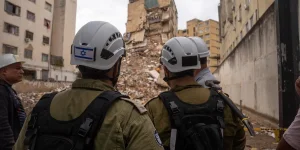
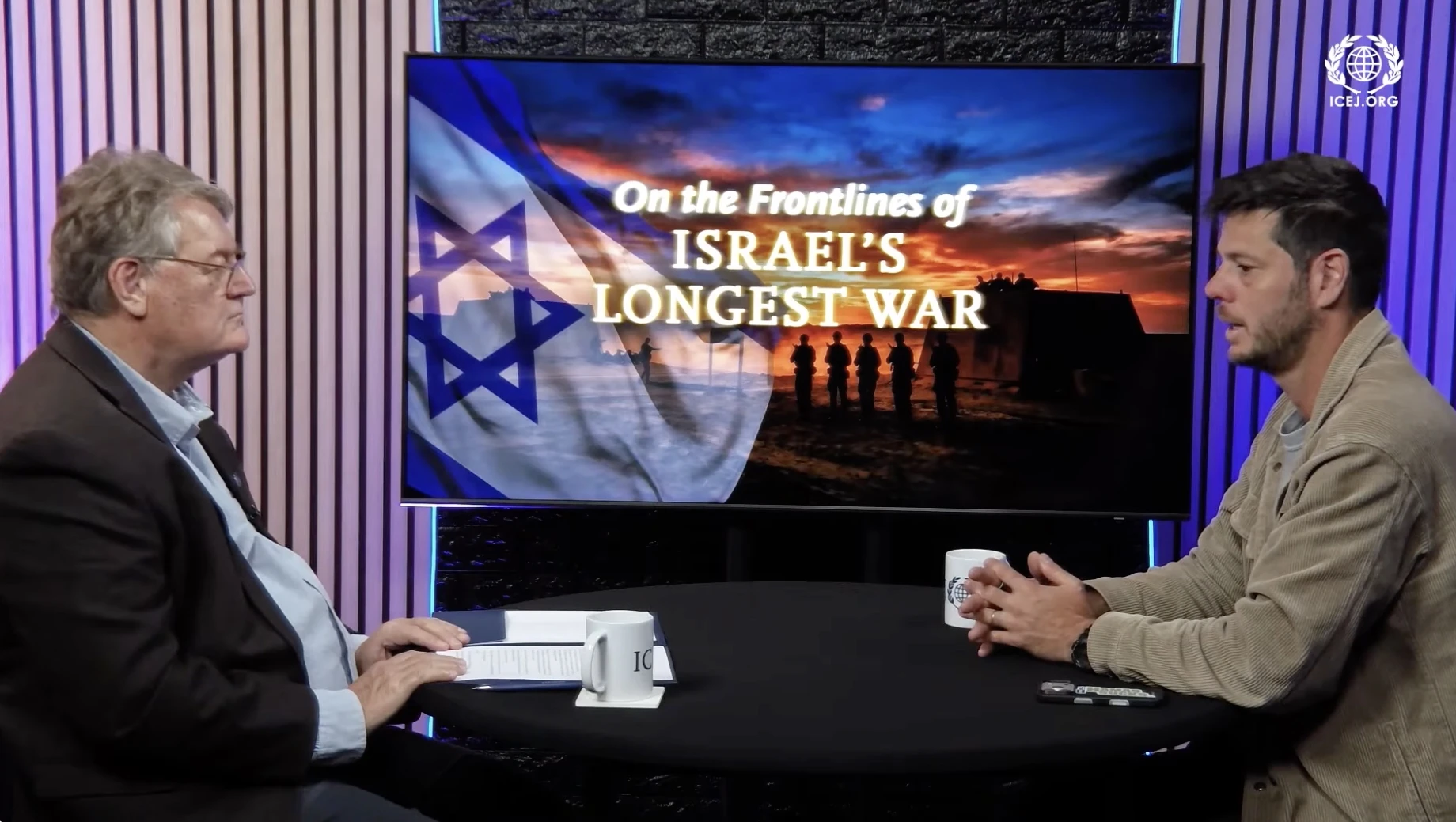
Speaking from the ICEJ’s Jerusalem TV studios, Pinto, an IDF armored corps reserve captain, walked Parsons through almost two and a half years of what he called Israel’s longest war. The conversation moved from the chaos of the first hours after the Hamas invasion, to the months he spent on the Lebanon border bracing for a Hezbollah offensive that did not come to the entry into Khan Younis, the southern city Pinto called “the birthplace of the Hamas terror organization.” It also moved into territory most secular interviews avoid: the spiritual stakes of the war.
A reservist with a camera
Pinto’s reporting began almost by accident. Before October 7, his role at TBN Israel was largely behind the scenes, producing and managing studios rather than presenting. Once mobilized, however, he saw that the international press was telling a very different story from the one his unit was living. “The world does not know what’s happening,” he told Parsons. “I’m here. I have a phone. I have this platform.”
What followed was a kind of guerrilla journalism. Soldiers are not ordinarily allowed to bring phones into combat zones, and Pinto admitted he initially operated on an “ask forgiveness, not permission” basis. When the IDF discovered the dispatches, the response was unexpected: commanders did not confiscate his device but asked him to coordinate. By the time of the webinar, he had filed reports from Syria, Lebanon, Gaza, and Hezbollah’s tunnel network.
The most dangerous thing he did inside Gaza, Pinto said, was not patrol but climb to rooftops to find a phone signal strong enough to upload video to the TBN team, where a small TBN team processed the footage for the TBN Israel YouTube channel. The channel grew from about 100,000 subscribers to millions of views per video. “My fellow soldiers said, ‘Are you crazy? Either Hamas will shoot you, or your wife will,’” he recalled.
‘God, give me peace now in my heart’
The interview’s most personal stretch came when Parsons asked about memorable experiences. Pinto described a moment shortly after he was asked to enter Khan Younis in his general’s tank, when the weight of what he was about to do nearly stopped him. “I stopped the car on the side of the road and started praying,” he said. “I said, ‘God, if this is from you, I want you to give me peace now in my heart. And also, I want you to make me smile as I’m inside the Gaza Strip, so that I can be happy in this terrible place.’”
The answer, he said, was immediate, and he pointed Parsons to footage of himself on convoy into Gaza, smiling beside fellow soldiers. That demeanor opened doors with Israeli troops who asked why he was filming in English. When he told them millions of Christians worldwide were praying for them, the reaction was often disbelief, then encouragement. When he identified himself as a Jewish follower of Yeshua, the conversations went further. “God opens doors on a huge national scale,” he said. “He’s working on the international level, countries, geopolitics, and all that. But he’s also always working on a personal level.”
Fighting ‘with your hands tied’
Pinto was unsparing about how Hamas conducts the war. He described unarmed women and children sent to scout IDF positions before fighters opened up with snipers and RPGs, AK-47s hidden under cribs in children’s bedrooms, and command centers burrowed beneath schools. Five soldiers in his unit, he said, were killed by fire from a school the IDF had identified as a Hamas position but not been cleared to strike. While not every UNRWA facility served as a Hamas headquarters, he said, many did.
He also walked Parsons through the warnings the IDF issues before strikes: leaflets in Arabic, robocalls, phone calls to individual buildings, and evacuation maps with safe routes. “If you’re out to commit genocide, you don’t do that,” he said. “You don’t warn the enemy, ‘We’re attacking here next.’” The trade-off, he noted, is that Hamas reads the same leaflets, prepares for entry, and slips fighters out among evacuating civilians. Hostage zones were off-limits to airstrikes entirely. “It was an impossible war to fight,” Pinto said. Like fighting “with your hands tied.”
The cost at home
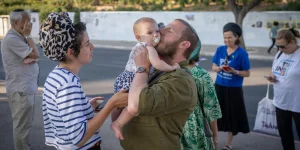
The personal toll was the conversation’s most sobering passage. Pinto left a three-month-old son and two daughters with his wife Anna, the daughter of the ICEJ’s longtime finance director Timothy King, on the morning of October 7. The boy is now nearly three. Pinto was wounded in Gaza, drove himself to a hospital, and underwent knee surgery; he plays wheelchair basketball during ongoing physical therapy. Many of his friends, he said, have divorced under the strain of repeated reserve call-ups. “The unit that is the most important unit for our society is the family unit, the husband, the wife, and the kids,” he told Parsons. “This unit was attacked and harmed so badly in this war.”
That theme carried into his read of the coming election. Israelis, he said, are looking for leaders who can address the cost of living, post-traumatic care for veterans, ultra-Orthodox conscription, and rising emigration. “The major attacks against us are the attempt to make Israelis decide to leave Israel, attacking the family unit, and the trauma of the children, and of all of us. These are especially prayer points for our audience.”
‘Something bigger’
Both closed in the kind of overtly theological frame All Israel News readers will recognize. Parsons cited the prophets’ image of Israel as “a threshing machine for all the countries of the region.” Pinto, asked whether even non-religious soldiers were seeing providence, answered “one hundred percent,” then linked the rebirth of Israel in 1948 to the present war on seven fronts as a single argument for divine faithfulness. “It’s not because of us,” he said. “It’s because God is faithful to his promises in the Bible to Abraham, Isaac, and Jacob.”
For an audience that wants both reporting and prayer points, Pinto delivered both. His intercessory list: the family unit, the children, returning veterans, and the Iranian people, whom he called “taken hostage by this regime and under threat even more than we are in Israel.” Parsons closed by calling him “a unique voice of a new generation,” with an open invitation to return.
The full interview is available on the ICEJ’s weekly webinar archive. Yair Pinto’s wartime dispatches can be viewed at the TBN Israel YouTube channel.
You might also like to read this: