Knesset advances bill to create civil antiquities authority for Judea & Samaria
New bill would extend Israeli oversight of archaeological and heritage sites in disputed territories



The Knesset advanced, in its first reading on Monday night, a controversial bill to create a new civilian authority to manage archaeological and heritage sites in Judea and Samaria.
The bill would include sites located in Areas A and B under the Oslo Accords, which the Palestinian Authority controls. The Israeli-controlled Area C is under the authority of the IDF-run Civil Administration, which is part of COGAT (the Coordinator of Government Activities in the Territories) as part of the Defense Ministry.
According to the Civil Administration’s Archaeology Unit, there are currently over 2,600 known archaeological sites in Judea and Samaria that would come under the jurisdiction of the new authority.
The passage of the first reading, by a simple majority, means it will be returned to the Education, Culture, and Sports Committee for further deliberation. If it passes, the bill will create a separate antiquities authority – the “Judea and Samaria Heritage Authority” – which would assume responsibility for antiquities sites.
It was first proposed in the summer of 2024, but was delayed due to the war and the need to make several changes to the bill.
Most archaeological excavations in Judea and Samaria in recent years were intended to prevent damage to historic sites, either due to weather conditions or human intervention, rather than for purely academic purposes.
Under the Oslo Accords, Israel has carried out some excavations through the Civil Administration archaeological body. Likud Knesset Member Amit Halevy, who sponsored the bill, said, “The current war is about our identity, our culture, about God, about our deep belonging to this land.”
Critics say the bill is part of a series of actions by the coalition government to institute a de facto annexation of parts of Judea and Samaria. Supporters of the bill argue that the Palestinian Authority (PA) has shown little interest in preserving antiquities connected to ancient Israel’s history, pointing to several cases in which historic sites were allegedly damaged during PA-led development projects.
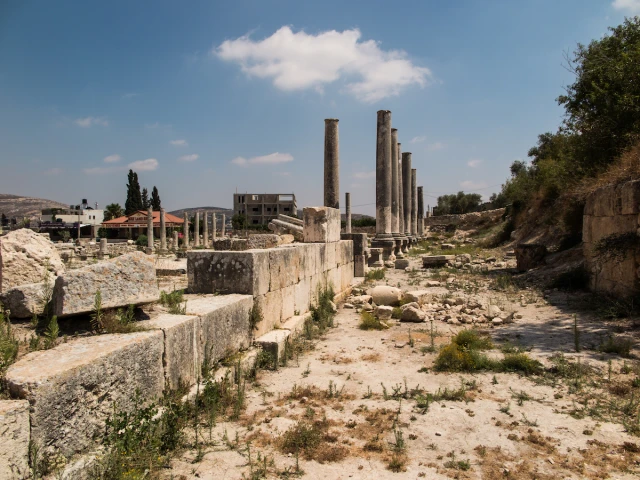
The legislation would see several significant archaeological and historic sites come under direct Israeli administration, including Sebastia, the capital of the northern kingdom of Israel during the 9th and 8th centuries B.C.; the Tomb of the Patriarchs in Hebron; Tel Shiloh, where the Tabernacle stood during the period of the Judges; several Hasmonean fortresses; a palace of Herod the Great; and the Qumran caves, where the Dead Sea Scrolls were discovered.
Originally, MK Halevy envisioned the Israel Antiquities Authority (IAA) taking over the administration of the archaeological and heritage sites. However, the IAA opposed the changes, reportedly out of concern for their potential impact on international cooperation with Israeli institutions.
The bill would give the proposed Judea and Samaria Heritage Authority the power to excavate, conserve, restore, manage, and develop archaeological sites in Judea and Samaria, as well as conduct research and acquire land to protect and preserve the sites.
You might also like to read this: