ICC reportedly files secret arrest warrants against 5 Israeli leaders over war crimes
Names of targeted individuals not released, believed to include current and former IDF chief, three coalition ministers





The International Criminal Court (ICC) in The Hague has issued secret arrest warrants against several Israelis, Haaretz reported on Sunday.
Haaretz cited a diplomatic source who told the outlet that three Israeli politicians and two military personnel would be issued arrest warrants.
The report did not specify when the arrest warrants were issued or who was being targeted, as the warrants have not been publicized.
The ICC previously issued arrest warrants for Prime Minister Benjamin Netanyahu and former Defense Minister Yoav Gallant. These warrants were issued in November 2024.
However, Ynet claimed that the report that the arrest warrants had already been issued was false, citing an official court response to a query from the Israeli news outlet.
Despite the fact that the warrants could be issued in secret, several possible targets have been identified, including Finance Minister Bezalel Smotrich, National Security Minister Itamar Ben Gvir, former IDF Chief of Staff Herzi Halevi, current IDF Chief of Staff Eyal Zamir, and current Defense Minister Israel Katz.
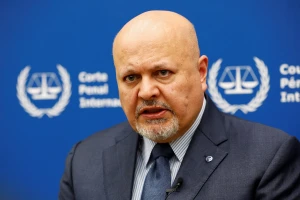
In May of last year, the Wall Street Journal reported that ICC chief prosecutor Karim Khan planned to issue arrest warrants for Smotrich and Ben Gvir.
According to the Journal’s report, Khan was investigating the ministers’ overstatements made by them and their role in expanding settlements in Judea and Samaria. Khan was reportedly investigating the latter for possible violations of the Geneva Convention, which prohibits countries from conducting population transfer to occupied territories.
Israel denies that the territory of Judea and Samaria is occupied, as its annexation by Jordan following the 1948 War for Independence was never officially recognized by the international community. Instead, Israel refers to Judea and Samaria as disputed territory, which has a different set of rules.
Khan was temporarily suspended from his position as prosecutor, following accusations of sexual assault against a female employee in his office. A report by the Wall Street Journal said that Khan filed the arrest warrants against Netanyahu and Gallant before gathering sufficient evidence in order to deflect attention from impending rape charges against him, and to gain public support for the case.
Prof. Eliav Lieblich, an expert in international law from the Faculty of Law at Tel Aviv University, told Haaretz that the ICC constitution does not require the court to notify suspects of an arrest warrant.
“The considerations for publishing the warrants in public, as was done in the cases of Russian President Vladimir Putin, Netanyahu, and Galant, is deterrence,” Prof. Lieblich explained.
The considerations for secrecy include “increasing the chance that the person will reach the place where he will be arrested,” he continued.
The arrest warrants issued against Netanyahu and Galant led them to avoid visits to countries enforcing the ICC warrants. At the same time, the issuance of the arrest warrants led to U.S. sanctions against several judges at the ICC, including Khan.
During the Gaza war, several countries banned Ministers Ben-Gvir and Smotrich from entering. Additionally, last July, the Dutch government placed the two ministers on a blacklist, barring them from entering all 29 European countries that are part of the Schengen agreement.
In deciding to issue arrest warrants against Netanyahu and Galant two years ago, the ICC determined that there was a reasonable basis for investigating the two over alleged war crimes in the Gaza Strip. Among other things, the arrest warrants accused Netanyahu and Gallant of being responsible for starvation as a method of warfare, murder, persecution, and intentionally directing attacks against a civilian population.
The court later rejected an appeal by Israel regarding its very authority to hear cases about the war in Gaza, based on the "Principle of Complementarity” contained within the Rome Statute, which established the ICC. According to that principle, Israel, as a sovereign country, has the right to independently investigate and try leaders accused of crimes.
Neither Israel nor the U.S. is a signatory to the Rome Statute, and both reject the ICC's authority.
Later on Sunday, the ICC denied having issued secret arrest warrants for the Israeli leaders.
ICC spokesperson Oriane Maillet said in a note to journalists that the Haaretz report was not accurate, and the court "denies the issuance of new arrest warrants in the situation in the state of Palestine."
This article was updated to reflect the ICC's issuance of a denial of the veracity of the Haaretz report.
You might also like to read this: