Israel, a thorn in the side of the world and the church

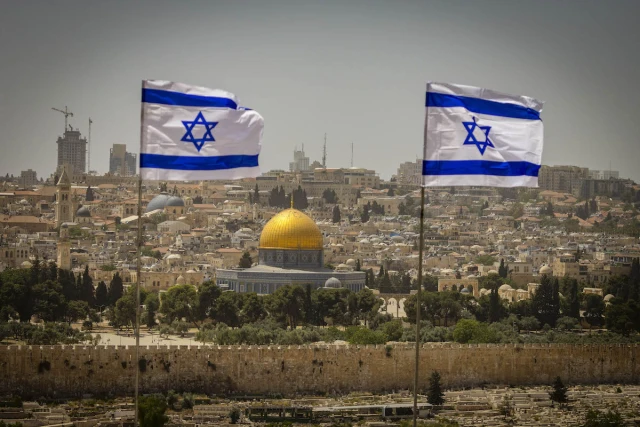
Why do the peoples rage and the nations grumble in vain? Even devout Christians grumble…
Israel, as a state, is only 78 years old, yet it is already considered one of the most hated nations in the international community. No country has had to fight as hard for its survival as the State of Israel, which was officially recognized in 1947.
This small nation—no larger than Switzerland—has fought six major wars against alliances of Arab states and several additional wars against Hamas and Hezbollah, which have repeatedly targeted Israel with terrorist attacks.
Major conflicts include:
1948–1949: War of Independence (following Israel’s declaration of statehood and invasion by Egypt, Syria, Jordan, and Iraq)
1956: Suez Crisis
1967: Six-Day War
1973: Yom Kippur War
1982: First Lebanon War
2006: Second Lebanon War (against Hezbollah)
2008–2014: Conflicts with Hamas in Gaza
2023–present: War following the October 7 Hamas attack
2026–present: War with Iran, including preemptive strikes to stop nuclear development
Since the rise of Iran’s mullah regime nearly four decades ago, Israel has faced ongoing threats of annihilation. With U.S. support, Israel has launched strikes targeting military infrastructure and leadership to prevent nuclear escalation.
Israel is fighting for survival against a coalition of hostile forces, many backed by global powers. At the same time, a growing wave of hostility is spreading worldwide—not only toward Israel, but toward Jews in general.
Since its victory in the Six-Day War in 1967, Israel has increasingly been portrayed as the aggressor. In the West especially, this perception has fueled a resurgence of antisemitism.
Today, criticism of Israel spans the political spectrum—from human rights activists to churches and Christian organizations. Many place disproportionate blame on Israel alone and demand that it cease defending itself.
What unites these diverse groups in their opposition to Israel?
Are they truly motivated by concern for human suffering? If so, why is their focus almost exclusively on Israel?
Between 1996 and 2026, roughly 200,000 people died in the Israeli-Arab conflict. During that same period:
Congo: 5–6 million deaths
Sudan: up to 1 million
Nigeria: 350,000
Somalia: 800,000
Yemen: 500,000
Iran: tens of thousands killed in internal crackdowns
Yet these tragedies have sparked far less global outrage.
Why do protests erupt worldwide only when Israel acts in self-defense? Why is there silence when Hamas uses civilians as human shields or embeds itself in hospitals and schools?
Israel faces a no-win situation:
If it does not defend itself, it is attacked.
If it does defend itself, it is condemned.
What is it about Israel that provokes such intense global reaction?
The Jewish people—only about 15 million worldwide—receive more condemnation from international bodies like the UN than nations with far worse human rights records.
This phenomenon is not new. Throughout history, the Jewish people have faced irrational hostility, rejection, and persecution.
Why?
At its core, the answer is theological.
The identity of the Jewish people is inseparably tied to the God of the Bible. They are the first people God called His own. Through them, He revealed His Word, His laws, and His plan of salvation.
Through Israel:
God spoke to humanity
The Scriptures were given
The Messiah, Jesus, was born
The Bible—the most influential book in history—came through the Jewish people. Their story is intertwined with God’s interaction with the world.
Those who reject God often reject what is connected to Him—including the Jewish people.
This hostility extends not only to Jews but also to Christians who follow Jesus, the Jewish Messiah. Jesus Himself warned of this.
Today, with over 388 million believers facing persecution worldwide, Christians are the most persecuted religious group. Their suffering reflects the same hostility toward God and His truth.
What is harder to understand is why many Christians align themselves against Israel.
Some argue that God’s promises to Israel were fulfilled in Jesus and no longer apply to the Jewish people. This view effectively dismisses much of the Old Testament and undermines the credibility of the prophets.
If the promises to Israel are invalid, then the foundation of the Messiah’s coming is also weakened.
Others claim moral high ground, emphasizing justice and compassion—but often apply these principles selectively, focusing only on Palestinian suffering while ignoring far greater global tragedies.
Is this truly biblical justice?
Still others claim that Jews are enemies of the Gospel. Yet Paul writes clearly:
“As regards the gospel, they are enemies for your sake; but as regards election, they are beloved… For the gifts and calling of God are irrevocable.” (Romans 11:28–29)
God has not rejected His people.
Christians themselves were once enemies of God, yet received grace (Romans 5:10). How, then, can they deny that same mercy to Israel?
Scripture consistently affirms that God keeps His promises:
“God is not a man, that He should lie…” (Numbers 23:19)
God has promised to restore Israel and make them a blessing to the nations (Zechariah 8:13). After 2,000 years of exile, He has brought them back to their land.
His plan is ongoing.
The Church today faces a critical choice:
Stand with God and His purposes for Israel
Or align with the world and reject them
When human opinion overrides God’s Word, Israel becomes a stumbling block.
But Scripture warns of the outcome:
Psalm 2:
Why do the nations rage
and the peoples plot in vain?
The kings of the earth rise up…
“He who sits in heaven laughs…
I have set my King on Zion…”
Blessed are all who take refuge in Him.
You might also like to read this: