Passover under pressure: Iran tests Israel’s breaking point
.jpg "Maayan Hoffman")




Although Israel often measures the impact of its war with Iran in the number of people killed and injured or the scale of physical destruction, another toll is becoming harder to ignore.
The psychological strain of Operation Roaring Lion is deepening, and it is being felt most acutely as the country prepares to celebrate the Passover holiday under the threat of rocket fire.
Passover tells the story of the Jewish people’s journey from slavery to freedom. But it is also one of the most demanding holidays on the calendar, especially for those who observe its laws closely. Homes are meticulously cleaned and koshered, kitchens are reorganized, and families spend days preparing for the lengthy Seder night that brings generations together around the table.
This year, as Israelis rushed to prepare for the holiday, Iran launched repeated missile attacks from early Wednesday morning through Thursday. According to IDF officials, the timing was intentional, aimed at increasing psychological pressure, disrupting daily routines, and heightening a sense of unease among civilians.
The strikes came alongside a warning from IDF Spokesperson Brig.-Gen. Effie Defrin, who cautioned that Israel could face a coordinated attack over the course of the Passover holiday.
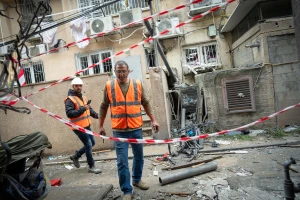
On Wednesday morning alone, sirens sounded across central Israel at 6:23, 7:43, 8:28, 8:58, and 9:44 a.m., continuing intermittently throughout the day. Some of the incoming fire caused significant damage, reinforcing the sense of insecurity.
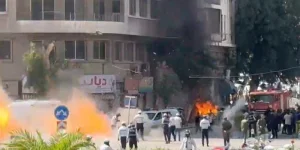
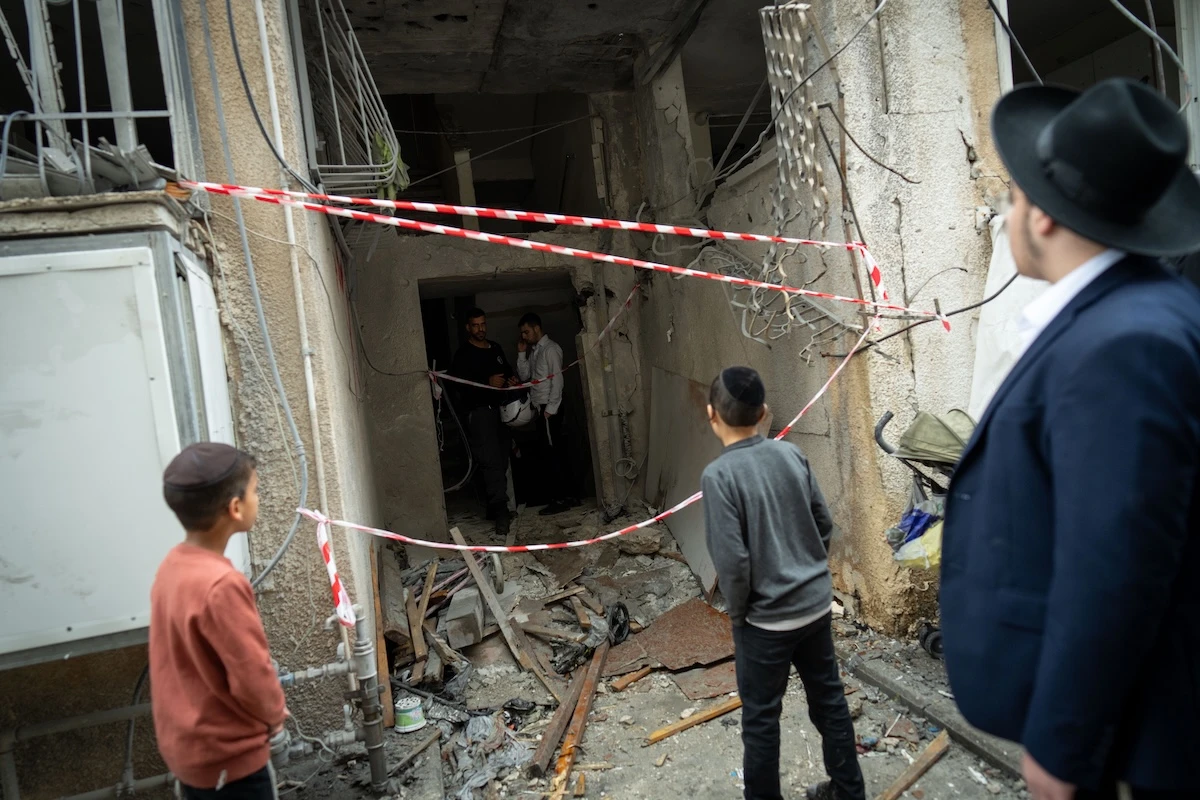
In one particularly intense incident, Iran launched 10 ballistic missiles within minutes, a volume not seen in recent weeks. Magen David Adom (MDA) released images from impact sites just hours before the Seder, sending shockwaves across the country and shattering any sense of normalcy for families preparing to celebrate together.
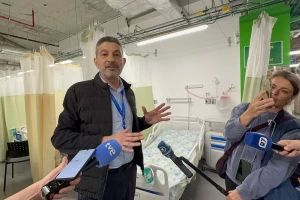
In one of the most serious cases, an 11-year-old girl from the ultra-Orthodox city of Bnei Brak was critically injured by shrapnel to her limbs and rushed to Sheba Medical Center. Hospital officials said she remained alive as the holiday began.
Elsewhere, in Rishon LeZion, MDA treated a 6-year-old boy in moderate condition with a head injury after he was struck by a car while running to a shelter.
“We arrived quickly and found the child conscious with a head injury,” said MDA EMT Ruth Chen. “He told us he was running to a protected space when he was hit by a car. We treated him and evacuated him in stable condition.”
More broadly, MDA reported that 26 people have been injured in car accidents during sirens since the start of the war.
By Wednesday evening, medics had treated more than 70 individuals, including 50 suffering from physical injuries.
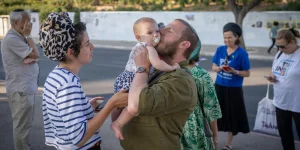
The attacks resumed early Thursday morning, with another barrage striking Bnei Brak in central Israel. MDA said it treated five people, including two 7-month-old infants injured by shattered glass.
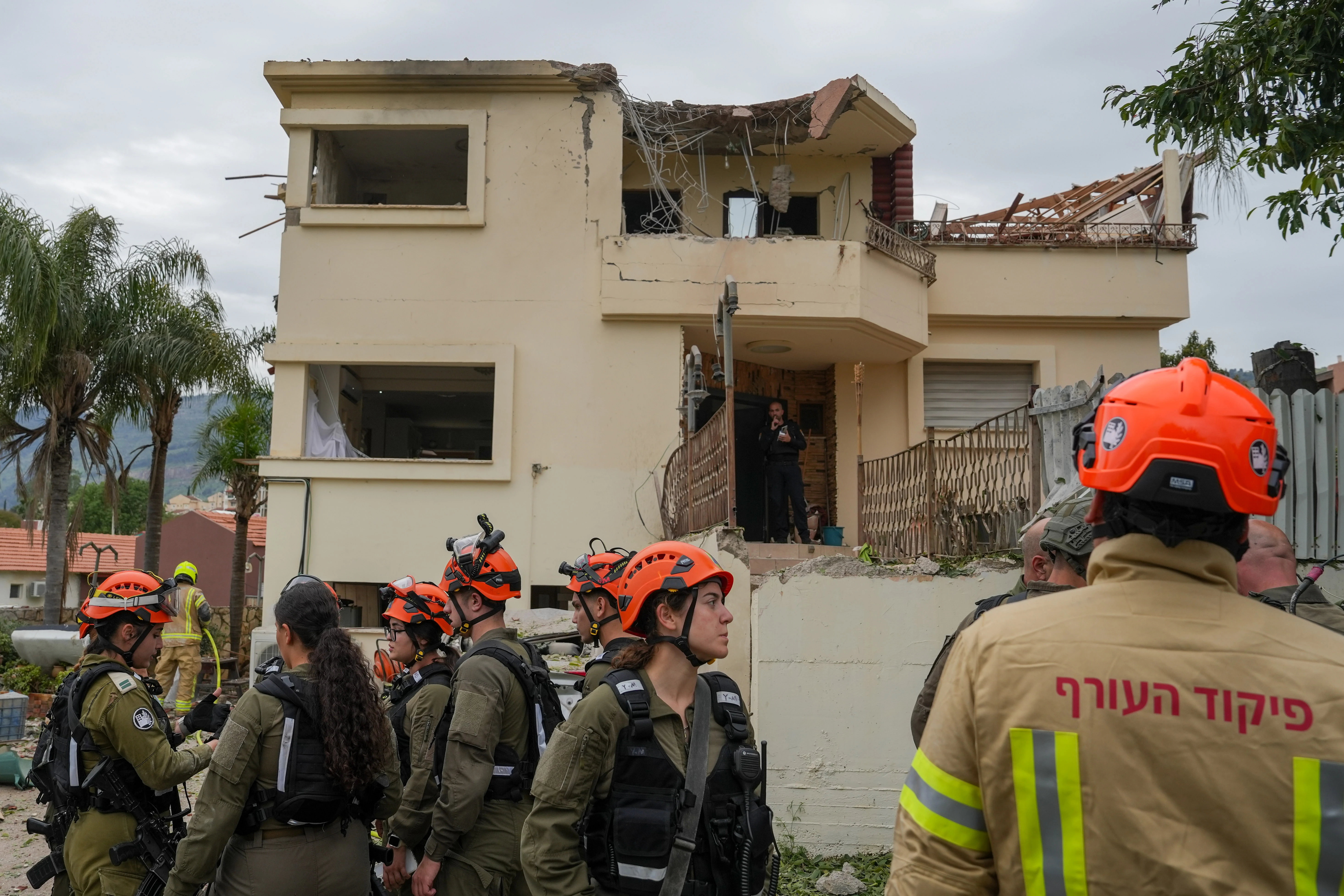
At the same time, more than 30 rockets were launched from Lebanon toward the Galilee before noon, with multiple impact sites reported in Kiryat Shmona, causing damage to homes and buildings. At least two people were lightly injured, and police said several others were treated for shock at the scene.
The Ministry of Health reported 6,286 people have been evacuated to hospitals since the start of the war. MDA alone has treated more than 530, including 19 people who were pronounced dead.
Although there has been no official confirmation of where those injured in Bnei Brak were located at the time of the strike, it is reasonable to assume that some were not in shelters, likely caught off guard while preparing for the holiday.
In the United States, President Donald Trump delivered a speech on the night of the Seder, declaring, “We are going to hit them (the Iranian regime) extremely hard over the next two to three weeks. We are going to bring them back to the stone ages, where they belong.”
Following the speech, energy prices surged, underscoring how closely American public sentiment is tied to economic conditions. If prices remain elevated, domestic pressure on the president to scale back operations before achieving stated goals could intensify.
This is despite the president’s insistence that the United States will not stop until its objectives are met. At the same time, Trump has suggested that regime change is already underway, citing the deaths of several senior figures, even though no formal shift in leadership has taken place.
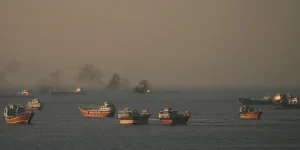
In a post on Truth Social, the president also claimed that Iran had approached the United States seeking a ceasefire, a claim Tehran has denied. He added that Washington would only consider such an agreement if Iran reopened the Strait of Hormuz. Until then, he said, “we are blasting Iran into oblivion.”
Iran appears to be counting on mounting pressure from Israeli and American civilians to bring the war to an end. In Israel, that means betting the strain on daily life will eventually become too great.
While the broader goal of regime change and a new regional reality still has wide support in Israel, maintaining public patience after two and a half years of multi-front conflict is no simple task.
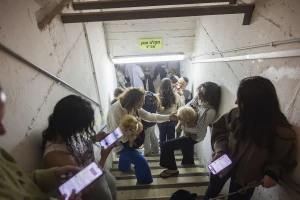
At 3:30 a.m. between Wednesday and Thursday, sirens once again echoed through Jerusalem, sending families rushing to shelters, many of whom had finished their late-night Seders only hours earlier.
Passover is meant to celebrate freedom. Yet sitting together in an underground shelter, huddled for safety while relying on the army’s protection, feels anything but freedom.
And that may be the point.
Beyond the physical damage, the timing and intensity of these attacks are designed to erode resilience from within, to turn routine moments into ones of fear and disruption.
As Israelis move through a holiday rooted in liberation while under fire, the question is not only how long the war will last, but how much strain a society can absorb before that pressure begins to shape the outcome.
You might also like to read this: