Israel tightens security for Passover and Easter amid ongoing missile threats from Iran



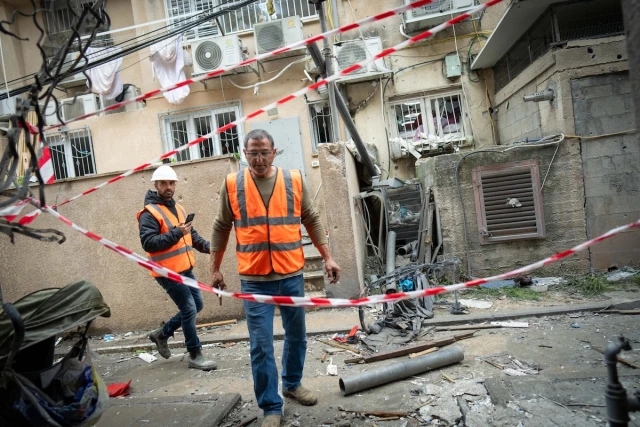
Passover and Easter in Israel will be observed under heightened restrictions this year, as the country faces ongoing missile threats from Iran and its allied groups, including Hezbollah in Lebanon and the Houthis in Yemen.
Israel Police and security forces have implemented extensive – and in some cases unprecedented – measures for the holidays, following military assessments that rocket and missile attacks are likely to continue throughout the festive period.
“We are prepared throughout the holiday and assume they will continue launching during this time,” said IDF Spokesman Brig.-Gen. Effie Defrin.
The atypical preparations include setting limits on passenger numbers on trains to Jerusalem. According to a statement by Israel Railways, no more than 1,200 passengers will be allowed onto each train in both directions on the Jerusalem line out of concern for passenger safety during the intermediate days of Passover, also known as Chol Hamoed.
The Jerusalem line mostly runs underground, and because of this is considered one of the most complex to operate, rail officials said. The Yitzhak Navon station in Jerusalem is located about 80 meters (262 feet) below ground. To obtain special vouchers needed for travel on the train during this period, passengers will need to access the railway’s website and mobile app, the telephone service center, or through service representatives who will be deployed at stations to assist and guide travelers.
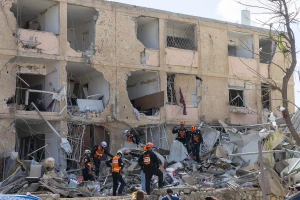
Israel’s security measures in preparation for the holidays also include scaling down religious ceremonies and limiting public access to the Old City and the Western Wall. In recent weeks, fragments of intercepted missiles have landed in the Old City area and the Jewish Quarter, according to police, reinforcing “the need for stringent precautionary measures,” and adding that freedom of worship has to be balanced with security needs.
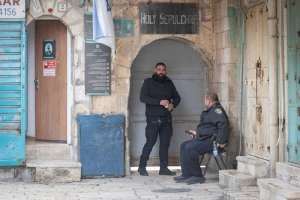
As part of the security preparations for Easter ceremonies and Holy Saturday (also known as the “Holy Fire” ceremony), Jerusalem District Police held coordination meetings with senior Christian church leaders in the city, including the Greek Orthodox Patriarch Theophilos III.
It was decided that this year’s ceremonies will be significantly scaled down and in a symbolic format only, and that holy sites in the Old City will be closed out of safety concerns.
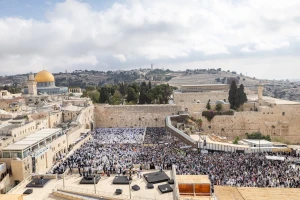
Due to security concerns, the public will be banned from accessing the Western Wall during Passover. The traditional Priestly Blessing ceremony, which usually draws tens of thousands of worshippers, will not take place.
Instead, 50 pre-selected kohanim (members of the Jewish priestly class) will be allowed to participate in the ceremony, scheduled for Sunday, April 5, which will instead be broadcast live. Jaffa Gate and the Dung Gate will also be closed to all traffic.
Despite the extensive preparations, the police have emphasized that security agencies currently have no concrete intelligence suggesting an escalation of missile fire on the eve of the holidays. Nevertheless, authorities are planning for that possibility, keeping forces widely deployed across the country.
You might also like to read this: