An Israeli hospital is preparing to deal with an imminent threat from the north in a coastal city
About ten kilometers from the Lebanese border, parents and pregnant women carefully plan their days around the nearby shelters



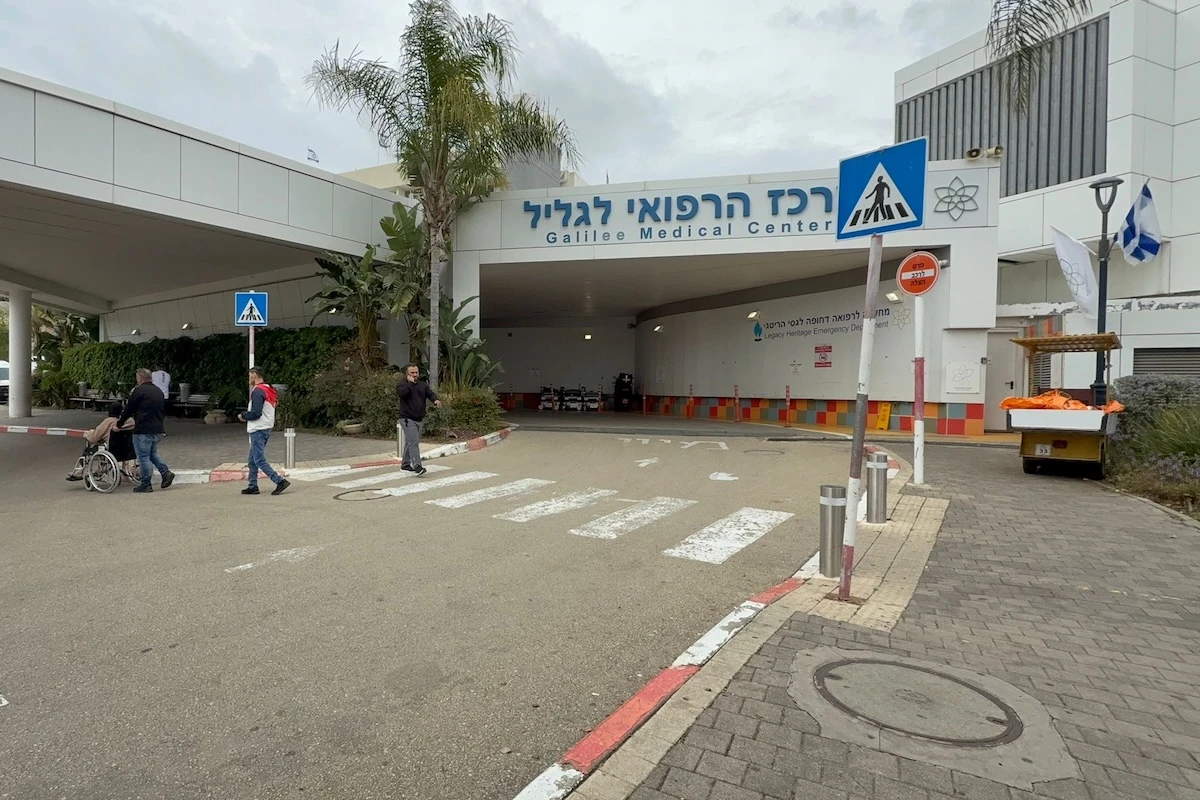
NAHARIYA, Israel — In this coastal city 6 miles south of the border with Lebanon, an ever-lurking threat of attack dictates plans and patterns for the day, especially for families with children.
For Rachel (name changed for privacy), that means being strategically near a bomb shelter with her 7 and 3-year-old if they play outside.
“And I’m moving much slower because I have a massive baby,” said Rachel, who is due to give birth next month. “All in all, I'm not living in fear. I'm not panicking. But I'm also not being foolish. We don't go far from the house unless we absolutely have to, which we don’t.”
Time is of the essence in Nahariya, a city of 63,000, where residents have as little as 15 seconds to reach shelter when Hezbollah launches a missile or drone. That’s why, after living through previous wars, Rachel's family chose an apartment building that has a shelter and a yard.
“The kids ride their bikes, we play with chalk. We spend about two hours a day if it's not raining outside every day,” she said. “If there are sirens, we can get to the shelter because we're already downstairs.”
If they are upstairs, there’s no time to descend multiple flights to a shelter. Instead, Rachel ushers her children into an interior hallway where they wait out attacks.
“We read books or play games. We have a basket of hallway essentials for Hezbollah attacks,” she said. “Normally, that's not so long that we have to be there; it just depends what they send.”
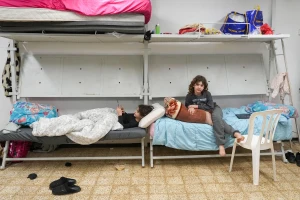
Each night, after the children fall asleep, Rachel and her husband move mattresses into the hallway.
“If there is a lot of activity from Hezbollah, we just pull the kids out of bed, put them on a mattress in the hallway, and they sleep there all night,” she said.
When she does go into labor, Rachel is expected to deliver the baby in one of the protected delivery rooms of the Galilee Medical Center.
Because of its proximity to the border, the Galilee Medical Center has long prepared for such scenarios. The second-largest hospital north of Tel Aviv and the closest to any of Israel’s borders, it is both a target and a place of healing.
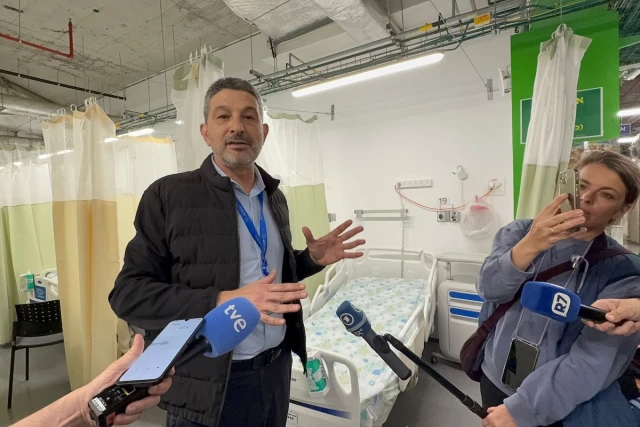
During a tour of the hospital last week, Deputy Director Dr. Tsvi Sheleg credited the foresight of former director Prof. Shaul Shasha, who, before the 2006 Second Lebanon War, relocated most of the hospital into protected spaces.
At the time, the decision was widely scorned.
“As it turns out, many people who are considered crazy are visionary,” Sheleg said.
The strategy was put to the test right away. Sheleg, an ophthalmologist, was suturing a patient’s eyelids when his department was hit by a direct missile in 2006.
“Dozens of civilians would’ve died,” Sheleg said.
Today, under CEO Masad Barhoum, the hospital’s critical units – including the emergency room, operating rooms, intensive care unit and delivery rooms – are fully fortified. In an emergency, patients wouldn’t need to be moved and care wouldn’t stop.
Thick metal doors surround the emergency room, built to withstand attacks. When sealed, the unit can function as a public shelter.
“It’s not a ‘protected hospital’—it is a fully fortified medical center with over 60% of the beds fully protected. Over 60% of the operating rooms are fully protected,” Sheleg said. “And many of the mandatory decisions regarding healthcare in war times were established in this hospital since we are the closest hospital to any border in Israel, and we have been under fire for decades.”
On the morning of Feb. 28, within four hours, 373 patients were moved from above-ground wards to underground facilities.
Sheleg, the hospital’s chief innovation officer, said staff regularly drill for scenarios ranging from wars to earthquakes.
“If a missile hits a house and dozens of patients will arrive to the hospital in a matter of minutes, we need to prepare ourselves,” he said. "So we built a managing system, to run the hospital in a fully protected manner in the underground facility.”
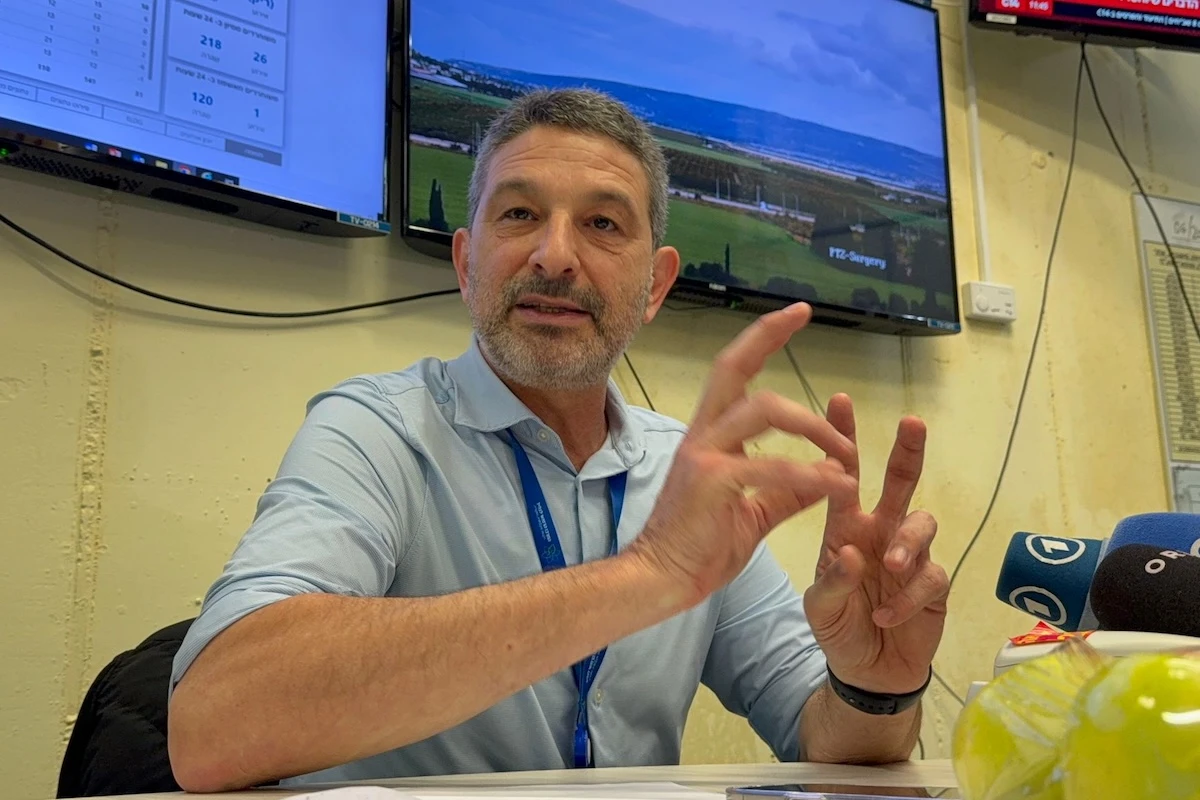
Key data – staffing, blood supply, equipment inventory and patient status – can be accessed in seconds, giving teams what Sheleg called “the big picture” during emergencies.
Two hours after the journalists’ tour, such a scenario unfolded. A Hezbollah rocket crashed into a residential area in Nahariya, killing one man before he could reach shelter, and wounding several.
Leaving one’s home in such a situation is a calculated risk. The one time Rachel's family piled into the car to go shopping, a siren caught them at the main intersection at the city’s entrance. They jumped out of the car and crouched at the nearest bus station until the all clear was given by the Homefront Command.
Though Rachel did not expect to give birth in the middle of a war, the fortified delivery rooms are safe. It’s being home with three children that worries her most.
“I’m not looking forward to nursing a baby with sirens. What do we do at night, because then I'll have the baby? Danny will have to take both kids,” she said.
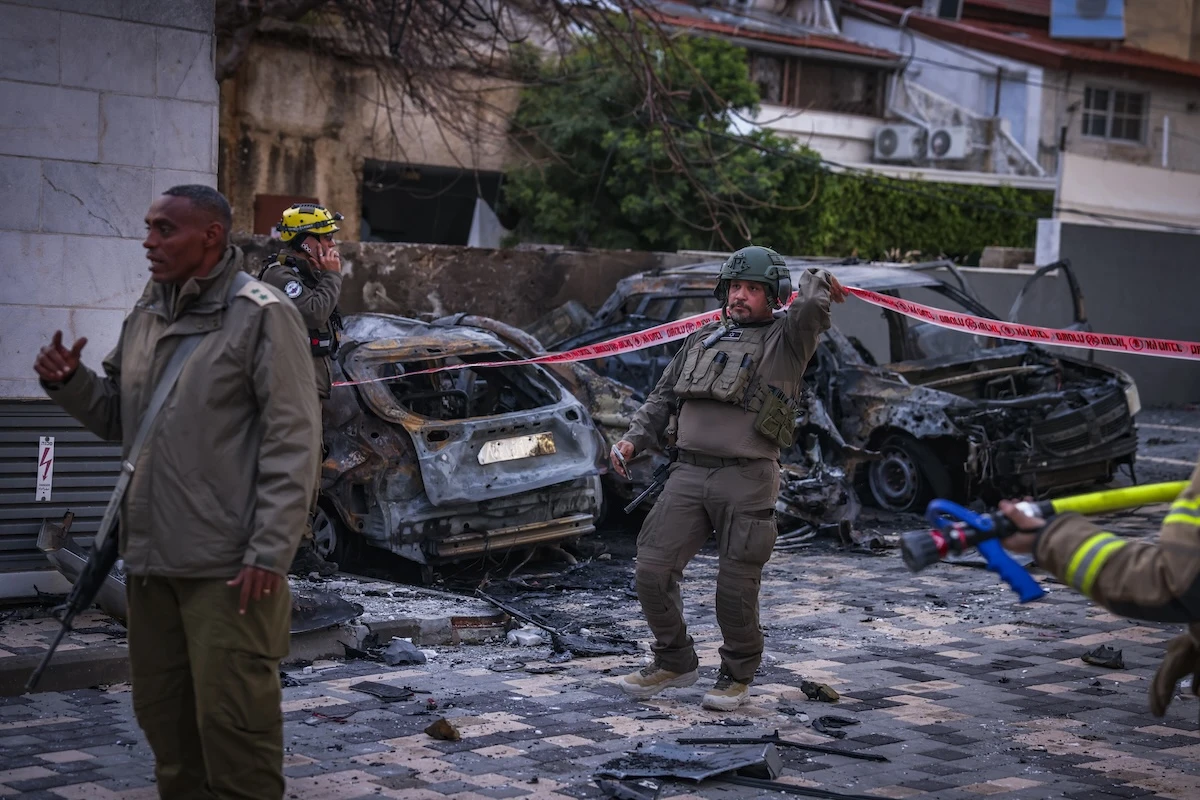
The situation appears to be taking its toll on her daughter. During a night siren, the 3-year-old shook uncontrollably as she headed to the shelter. Another time, she refused to leave it.
“She was very scared, very frightened, which is not typical of her,” Rachel said. “Every night before bed, we have to check for bad guys.”
One night, Rachel overheard her children whispering – her son trying to comfort his younger sister about her fear of the war. For Rachel, the hardest part is not being able to change the situation for her children.
“This isn’t something I can say, ‘Abracadabra. No more war. That's it. It's all done. I fixed it for you.’ It was heartbreaking,” she said.
“But, you know, that's it could be worse. I could have to leave my home, my husband could be in reserves,” she said. “We will make it work. That's our only choice.”
You might also like to read this: