Israelis on the global front lines to oppose the Islamic Regime


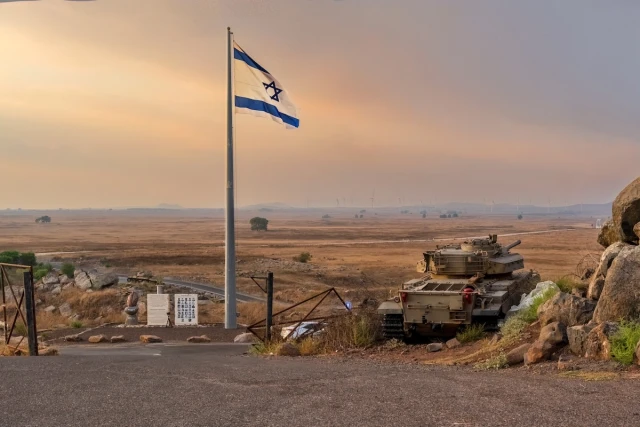
The cost of continuous warfare is immense. For a nation fighting a multi front war, disrupted sleep, constant alertness, and ongoing threats to personal safety are part of daily life. Israelis are living under these conditions as they defend their nation against what many leaders describe as the world’s most prolific sponsor of terror.
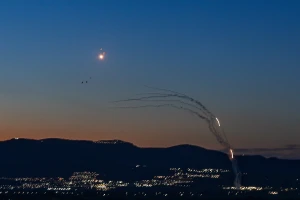
Today, Israel faces simultaneous attacks from multiple directions. Missiles launched from Iran, more than one thousand miles away, and rockets fired by Hezbollah from neighboring Lebanon place the population under constant threat.
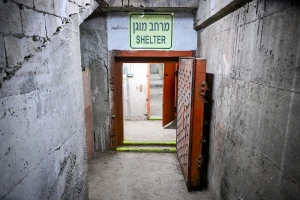
Amir Tsarfati, international Bible teacher and president of Behold Israel, explains the urgency. When a missile is launched from Iran, Israelis have about ninety seconds to reach shelter. In northern communities near the Lebanese border, the warning time can be thirty seconds or less. For many, especially the elderly or those with health challenges, nights are now spent in bomb shelters as a precaution.
Prime Minister Benjamin Netanyahu has described Israel’s current military response, Operation Roaring Lion, as a battle not only for national survival but also against what he calls an Iranian axis that threatens global stability. The United States, under President Donald Trump, has partnered with Israel through coordinated military efforts. Both nations rely on close strategic cooperation as they confront shared threats.
During a March 22 visit to emergency personnel in Arad, Netanyahu emphasized that every Israeli citizen is now on the front lines. Civilians, alongside the Israel Defense Forces, police, and emergency responders, are part of the national defense effort. He urged citizens to follow instructions from Israel’s Home Front Command without hesitation and to move immediately to protected spaces when alerts sound.
Israeli leaders have repeatedly stressed a sobering reality. Buildings can be rebuilt. Lives cannot.
As a result, safety protocols have become more stringent than in past conflicts. Israelis can no longer assume that danger will pass quickly. Extended stays in shelters are often necessary as threats evolve.
These conditions have also disrupted religious life in a country that protects access to holy sites for Jews, Christians, and Muslims. This year, major observances for all three faiths coincide within a short period. Christians mark Palm Sunday on March 29 and Easter on April 5. Jews begin Passover on April 1. Muslim worship continues daily, with peak attendance on Fridays at the Temple Mount.
However, at the outset of the conflict, Israel’s Civil Administration announced that all holy sites in Jerusalem’s Old City would be temporarily closed due to security concerns. This included the Western Wall, the Temple Mount, and the Church of the Holy Sepulchre.
The impact has been deeply felt. Archbishop Pierbattista Pizzaballa, the Latin Patriarch of Jerusalem, canceled the traditional Palm Sunday procession from the Mount of Olives. He acknowledged the significance of the moment, noting that when access to sacred sites is restricted, it resonates far beyond the region. Yet he affirmed that protecting life must take priority in times of danger.
On March 12, Israel’s Foreign Ministry reported a missile strike just a short distance from Jerusalem’s most sacred locations. The incident reinforced the need for heightened security measures to protect both residents and worshippers.
Alongside these spiritual disruptions are significant practical challenges. Many of Jerusalem’s buildings were constructed before modern safety standards required reinforced safe rooms. Municipal architect Sharon Dinur has noted that thousands of structures lack adequate protection. In fact, more than half of Israeli homes do not have private safe rooms.
In older neighborhoods, residents often rely on improvised shelters such as ancient vaults or cisterns. While these spaces may offer some protection, they are far from ideal under modern warfare conditions.
Despite these hardships, daily life continues with resilience and determination. Israelis adapt, endure, and remain vigilant as they navigate the realities of ongoing conflict.
Psalm 121:4 offers a reminder of enduring hope. “Indeed, He who watches over Israel will neither slumber nor sleep.”
This article originally appeared here and is reposted with permission.
You might also like to read this: