Israel halts defense exports to France amid growing diplomatic strains



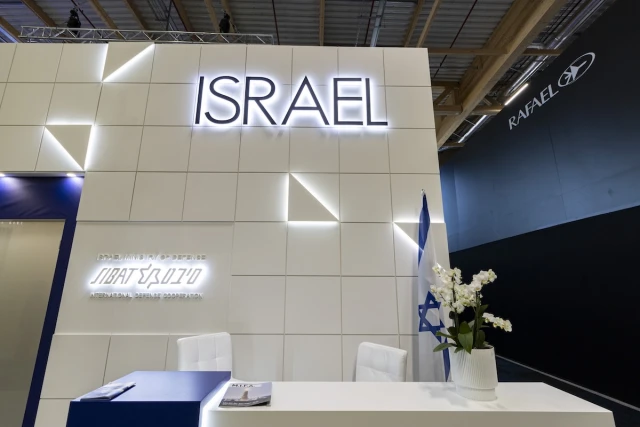
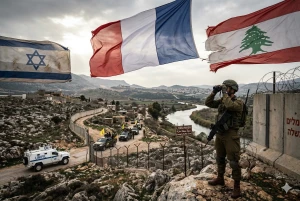
Reports emerged Tuesday that Israel has halted exports of defense-related equipment to France, marking the latest development in what has long been one of Jerusalem’s most complex and nuanced diplomatic relationships.
According to The Jerusalem Post, Defense Minister Israel Katz formally ordered the halt, with the probable backing of Prime Minister Benjamin Netanyahu. Government sources apparently told the JPost that the reason for the decision is the increasingly hostile stance toward Israel coming from Paris in recent years. This has allegedly prompted a reassessment within Israel’s defense establishment regarding the extent to which France can be trusted with advanced military equipment and technology.
France has officially boycotted Israeli defense companies for over a year, though existing contracts are still being fulfilled and private firms may continue negotiating new deals. Israel, for its part, continues to purchase defense equipment from French companies.
These factors suggest Katz’s announcement may be more symbolic than practical, though it reflects ongoing strains in long-term relations. At the same time, officials on both sides say intelligence sharing and cooperation in other areas remain strong, and France continues to provide diplomatic support at times, as the two countries maintain overlapping interests and adversaries across the Middle East and beyond.
France and Israel have experienced many ups and downs in the 78 years since the founding of the modern State of Israel. From the end of the 1948 Independence War until the Six-Day War in 1967, France served as Israel’s primary great-power patron, similar to the role the United States plays today. This included the provision of major weapons platforms such as the Mirage III fighter jet, at a time when few others were willing to sell advanced aircraft to the Jewish state.
French engineers have also played a vital role in establishing Israel’s electrical power generation and distribution network, including the nuclear facility in Dimona. Numerous additional military and civilian infrastructure projects were likewise supported by French assistance. In return, Israel provided France with an intelligence and logistical base that it could use to keep an eye on Arab nationalist movements in the Middle East, particularly in neighboring Egypt, which was ruled by Gamal Abdel Nasser, who supported separatist groups in Algeria, which was a French colony at the time.
In the Suez Crisis of 1956, the IDF fought Egyptian forces in conjunction with the French and British, to the tremendous annoyance of the Eisenhower Administration in Washington, which punished its European allies severely for acting without America’s consent. Israel was much less reliant on America at that time, so it was able to pocket the strategic benefits from the Suez Campaign and avoid the chastening that France and the UK endured in its wake.
In the run-up to the June 1967 Six-Day War, France imposed an arms embargo on the Middle East – a move that effectively targeted Israel, as Arab states were already well supplied by the Soviet Union. Nevertheless, Israel’s small army, navy, and air force – equipped largely with French aircraft, tanks, and ships – achieved a decisive victory.
The outcome impressed American officials, who were then struggling against the Soviet-backed North Vietnamese Army. The Pentagon and State Department saw the victory as strategically significant in the broader Cold War context, helping pave the way for a sharp increase in U.S. military, economic, and diplomatic support – ultimately replacing France as Israel’s primary backer and aiding the development of its domestic military-industrial base.
France had cool diplomatic relations with Israel for much of the next few decades, only resuming large-scale military cooperation in the early 2000s. However, even this cooperation did not include sales of major platforms such as aircraft or tanks, but rather niche electronic components, drones, radar, software and similar inputs.
Even this cooperation was kept quiet as France became more and more aligned with the Arab states, and its domestic politics became more influenced by its increasing Muslim population.
You might also like to read this: