Only long-term solution for Hormuz crisis is a pipeline through Israel, says PM Netanyahu – but Turkey and Syria compete for strategic route
Turkey and Syria aim to reroute planned corridor from the Gulf to Syrian ports and Turkish railways





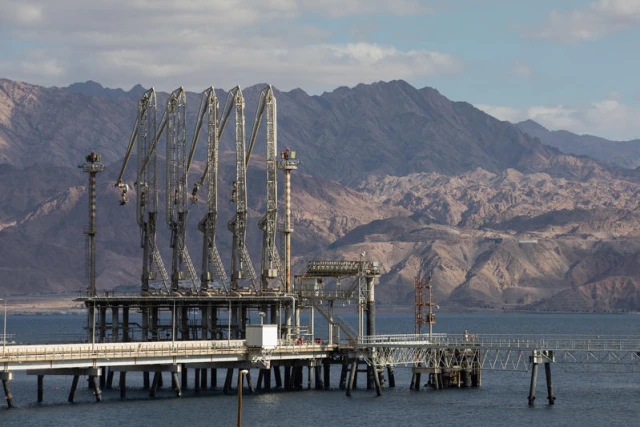
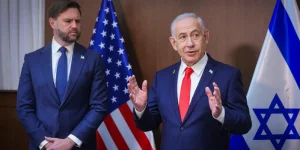
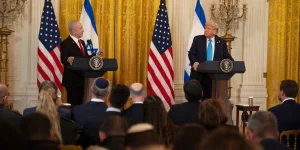
The only long-term solution to the danger of the Iranian regime blocking access to the strategic Strait of Hormuz runs through Israel, asserted Prime Minister Benjamin Netanyahu in a Monday interview with Newsmax.
“Long-term solutions include rerouting energy pipelines westward, across Saudi Arabia to the Red Sea and Mediterranean, bypassing Iran's geographic choke point,” Netanyahu said, adding that the pipelines should reach Israeli ports to ensure “free flow of oil and gas” in the future.
The prime minister also noted that “there are many military solutions” available to reopen the strategic waterway, which “the United States is leading,” but declined to go into detail.
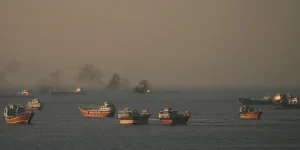
The Strait of Hormuz normally carries around a fifth of global oil and gas exports. However, attacks on ships by the Iranian regime have effectively closed off the waterway, causing energy prices to skyrocket across the globe.
While he didn’t specifically mention it in the interview, Netanyahu’s statements referred to the existing “India–Middle East–Europe Economic Corridor (IMEC),” also known as the “Peace Railway,” which was announced at the G20 Summit 2023 in India.
Report on Reshet Bet:
— Open Source Intel (@Osint613) March 29, 2026
With no clear end to the Iran war and growing energy and supply disruptions, regional players are moving to reshape trade routes.
Turkey and Syria under Ahmad al-Sharaa (Jolani) are pushing a rival corridor linking the Gulf to Europe, potentially bypassing… pic.twitter.com/66n0vUDj98
It envisions creating a route for the transport of goods from India to the United Arab Emirates via ship, and from there, via a 2,000-kilometer (1,240 miles) land route through Saudi Arabia, Jordan, and Israel to the port of Haifa and then onwards toward Europe, shortening shipping distances via the Suez Canal.
However, Syria and Turkey are reportedly working on an alternative plan to “cut out” Israel from the corridor, Kan News reported this week, and are lobbying Saudi Arabia for it.
Gidon Bromberg, CEO of EcoPeace Middle East, told Kan News, “While in Israel they understand that the IMEC project will transform the country’s economy, the Saudis have been sitting on the fence. Now, with the war in Iran, they clearly understand that IMEC is a vital interest for moving goods westward—but they have options: either through Haifa, north through Syria or Turkey, or via Egypt. Saudi willingness to route through Haifa depends on IMEC being part of a broader political initiative that also includes progress with the Palestinians.”
#BREAKING Saudi Arabia is increasing the capacity of the East-West pipeline to its maximum amid disruptions in the Strait of Hormuz.
— Prime (@nucleusprime) March 29, 2026
Saudi Aramco is operating its East-West crude oil pipeline (Petroline) at its maximum capacity of 7 million barrels per day, redirecting crude oil… pic.twitter.com/HWtaISsfs4
Saudi Arabia’s alternative to closing the Hormuz Strait is the “East–West Crude Oil Pipeline,” which runs for over 1,000 kilometers (620 miles) across the Arabian peninsula to carry oil to the Red Sea port of Yanbu.
However, Bloomberg reported that the pipeline is already pumping at its full capacity of 7 million barrels a day. Saudi exports through the Hormuz Strait stood at around 15 million barrels a day.
In addition, the Iranians have already attacked the port to further pressure Saudi Arabia, highlighting the need for new alternatives.
According to Kan News, Turkish President Recep Tayyip Erdoğan and Syrian President Ahmed al-Sharaa are working together to establish a new economic corridor from the Gulf to Europe.
Syria is reportedly developing projects such as a high-speed rail line to Saudi Arabia via Jordan, and a network of oil pipelines from northeastern Saudi Arabia to Syrian ports.
Erdoğan, who openly opposed IMEC for bypassing Turkey, has his own “Development Road” project, which aims to connect the Grand Al-Faw Port in southern Iraq to the Turkish border, and from there to Europe, via high-speed trains.
Turkey, Iraq, Qatar, and the United Arab Emirates signed a memorandum of understanding for the project in 2024, at an estimated value of $US17 billion.
Another potential threat to Israel’s role in IMEC comes from France and Lebanon. Last month, the president of Lebanon, Joseph Aoun, asked French President Emmanuel Macron to support the inclusion of the Lebanese ports of Beirut and Tripoli in the corridor.
While the French proposal views the ports as additional transit options, this could eventually also lead to Israel being cut out of the plan.
You might also like to read this: