Ukrainian President Zelenskyy skips Israel on Middle East trip, cites lack of communication with Israeli leaders
Despite common threats, Israel and Ukraine have had little military cooperation




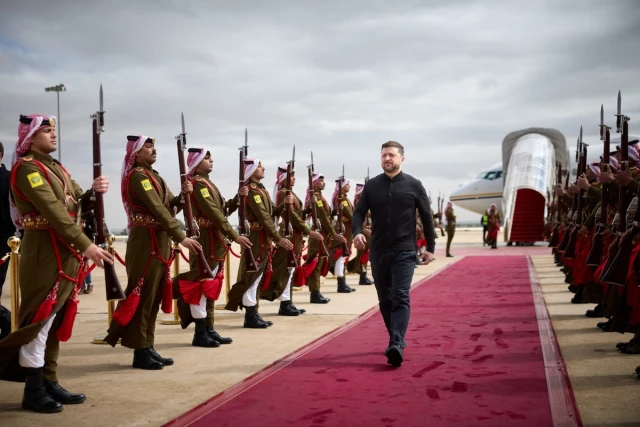
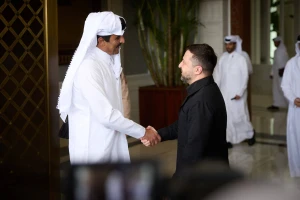
Ukrainian President Volodymyr Zelenskyy recently concluded a visit to the Middle East, stopping in several Arab countries, including Saudi Arabia, the United Arab Emirates, Jordan, and Qatar, but not in Israel.
Zelenskyy’s visit was reportedly intended to secure security and defense agreements, trading Ukrainian expertise on Iranian Shahed drones – which are also used by Russia – for fuel guarantees that would support Ukraine’s military and economy over the next year.
The Ukrainian leader linked the conflict in the Middle East to its own war with Russia.
Some in Israel are questioning whether Zelenskyy’s decision not to visit reflects a growing strain between the two countries, which share common threats due to Iran-Russia cooperation in both wars.
Since the war between Russia and Ukraine began in early 2022, Ukrainian officials have voiced their frustration with Israel for refusing to supply weapons to its war effort.
Israel has provided humanitarian aid to Ukraine, including a field hospital, assistance with water purification systems, and the delivery of an early-warning alert system similar to Israel’s “Red Alert,” however, the Israeli administration has stopped short of sending military supplies or equipment.
Ukraine’s ambassador to Israel, Yevgen Korniychuk, appeared to criticize Israel's early-warning system, saying that it had not demonstrated itself to be very effective. Those remarks were reportedly not received well by some in Israel’s defense sector.
Reports in Israeli media also claimed that Prime Minister Benjamin Netanyahu and other officials were upset that Zelenskyy conducted an interview with an Israeli news outlet before speaking with Netanyahu.
According to a Ynet News report, an Israeli official familiar with bilateral relations said Ukrainian officials have limited discretion.
“They never knew how to conduct a discreet dialogue with us, only to come out with public demands,” the official said. “Zelensky is convinced we owe him something just because he is Jewish, and that is not the case. That does not mean we could not have helped more, but they are no less to blame than we are.”
Another official told Ynet that Ukraine’s anti-drone capabilities “do not come close to our capabilities.”
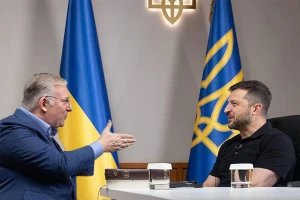
As some in Israel question why the Ukrainian president had not visited Israel during his Middle East trip, Israeli journalist Barak Ravid released a video interview with Zelenskyy on Israel’s Channel 12 News.
In an accompanying article, Ravid noted that Israel is one of the only Western countries, along with Hungary, that has not provided weapons to Ukraine, following the Russian invasion in 2022.
Ravid asked Zelenskyy why Israel was not on his itinerary. He explained that his visits to the Gulf states followed phone calls with their leaders, sending military advisors, and assessing how Ukraine could provide support after the war began.
He attributed the lack of such contact with Israel to its top leaders.
“I didn't have communication with the prime minister of Israel or the president. I mean, it depends on Israel's side,” Zelenskyy said. “That's why we didn't send anybody, and nobody asked me to help, so we didn't speak about it.”
Zelenskyy and Netanyahu last spoke in January 2025, during a phone call in which the Ukrainian president congratulated the prime minister on securing the release of additional hostages.
When asked if he felt like Netanyahu is on Putin’s side, Zelenskyy responded, “My feeling is that the Prime Minister always wants to balance between Russia and Ukraine. And even when Russia is helping Iran, I feel that Prime Minister still is balancing. But it's, I mean, he's the prime minister of his country. He has to decide what to do.”
In interviews with other reporters, Zelenskyy explained that his Middle East trip followed consultations between Ukrainian officials and their Gulf counterparts. Following those discussions, Ukraine deployed expert teams to prepare for substantive cooperation talks, after which the visit arrangements were finalized.
“After the expertise was prepared, I met with the leaders, and agreements were already prepared, the basis for our communication with the leaders,” Zelenskyy said. “With Israel, I had no contact either by phone or at the expert level.”
One of the officials who spoke with Ynet said that despite the issues between the two leaders, intelligence cooperation between Ukraine and Israel remains solid.
“There is no crisis right now, maybe a kind of competition,” the official said. “They are competing over weapons and American attention. We are simply moving on two parallel tracks. The crisis was at the start of the war, when they expected Israeli weapons and were disappointed. Each side is busy with its own war and can help the other only very little.”
You might also like to read this: