Gulf countries consider potential Haifa pipeline route as alternative to Strait of Hormuz




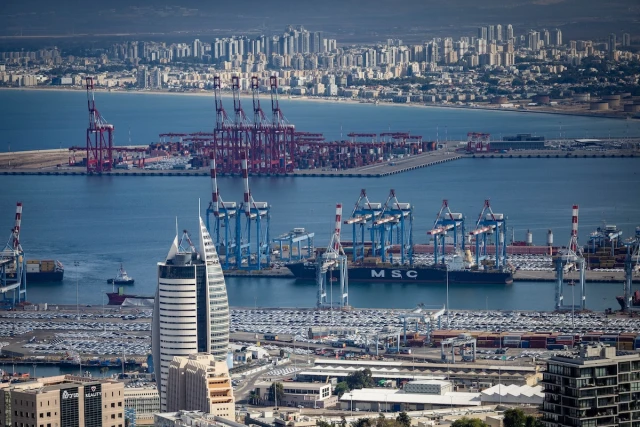
Gulf countries are considering the construction of new oil pipelines that could transport crude oil via Haifa on the Israeli Mediterranean coast as an alternative route to the strategically vital Strait of Hormuz, according to the Financial Times (FT). The deliberations come amid concerns about Iranian disruption of the Strait, a key artery for global energy exports.
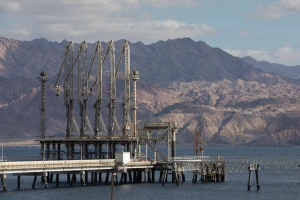
The Iranian blockade of the strategic waterway has caused severe disruptions to oil flow in the region. The report noted that Saudi Arabia is the only Gulf state that has maintained its flow of oil exports amid the ongoing Iran war due to its East-West pipeline, which bypasses the Strait of Hormuz via the Red Sea port of Yanbu.
“In hindsight, the East-West pipeline looks like a genius masterstroke,” an unnamed senior Gulf energy executive told the FT.
Christopher Bush, CEO of the Lebanese construction company Cat Group, which took part in the construction of the Saudi East-West pipeline, said his company "had inquiries about various pipelines."
U.S. President Donald Trump has expressed frustration with European allies, urging them to either buy American fuel or take stronger, more direct action to secure the Strait of Hormuz themselves.
“All of those countries that can’t get jet fuel because of the Strait of Hormuz, like the United Kingdom, which refused to get involved in the decapitation of Iran, I have a suggestion for you: Number 1, buy from the U.S., we have plenty, and Number 2, build up some delayed courage, go to the Strait, and just TAKE IT.” Trump said.
Israel’s Haifa port is seen as a stable outlet for exporting Middle Eastern oil to global markets. The FT noted that proposed Gulf pipelines to Haifa would also advance the U.S.-backed IMEC initiative, which envisions connecting the Indian Ocean to the Mediterranean Sea through the Middle East and Israel.
NewMed Energy CEO Yossi Abu says the potential pipelines to the Mediterranean would allow people in the region "to control their own destinies, with their friends."
“You need oil pipelines, railway connectivity throughout the region, onshore, without giving others bottlenecks to choke us,” he said.
Potential oil pipelines to Haifa would not be unprecedented.
In 1935, the British constructed a pipeline that connected the oil fields in Iraqi Kirkuk with Haifa, which was under British Mandate control at the time. The pipeline remained operational until Israel declared its independence in 1948.
Israeli Prime Minister Benjamin Netanyahu told the news outlet Newsmax on Monday that a pipeline to Israel was the long-term solution to the ongoing crisis involving the Strait of Hormuz.
“Long-term solutions include rerouting energy pipelines westward, across Saudi Arabia to the Red Sea and Mediterranean, bypassing Iran's geographic choke point,” Netanyahu explained, arguing that the oil pipelines reaching Israeli ports like Haifa would ensure “free flow of oil and gas” in the future.
However, Gidon Bromberg, CEO of EcoPeace Middle East – an organization of Jordanian, Palestinian and Israeli environmentalists – said Netanyahu's vision ultimately depends on Saudi Arabia.
Bromberg said that Israeli officials see the IMEC project as economically transformative, while Saudi Arabia has so far stayed on the sidelines. “Now, with the war in Iran, they clearly understand that IMEC is a vital interest for moving goods westward – but they have options: either through Haifa, north through Syria or Turkey, or via Egypt.”
“Saudi willingness to route through Haifa depends on IMEC being part of a broader political initiative that also includes progress with the Palestinians,” he added.
You might also like to read this: