IDF: Disarming Hezbollah requires full-scale ground operation in Lebanon




The Israeli military has indicated that fully disarming the Iranian-backed terrorist group Hezbollah would require a large-scale ground operation in Lebanon, an option that is currently not under consideration, according to a Jerusalem Post report on Friday.
The assessment comes as the Israel Defense Forces continue efforts to push Hezbollah forces north of the Litani River, aiming to reduce the group’s capacity to launch rockets and drones at northern Israeli communities.
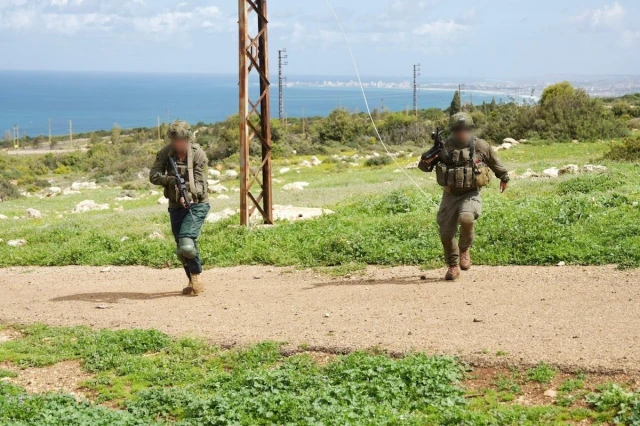
Israeli ground forces are expected to establish a buffer zone extending up to 10 kilometers (6 miles) from the border within the coming week. According to reports, five IDF divisions are currently operating inside Lebanon, working to secure territory up to the Litani River.
Despite these developments, concerns remain among residents of northern Israel that Hezbollah could continue launching longer-range rockets and drones from positions deeper inside Lebanese territory.
To calm the Israeli public, the Israeli Chief of Staff, Lt.-Gen. Eyal Zamir emphasized on Friday that the Israeli military "remains committed to the long-term objective of disarming Hezbollah. This objective encompasses a wide range of efforts that will continue over time."
While Hezbollah’s military capabilities have been severely degraded by the IDF, Hezbollah forces still have capabilities that threaten the security of northern Israeli communities, in particular.
Israeli Defense Minister Israel Katz pledged that disarming Hezbollah remains a key strategic objective.
“Israel’s policy in Lebanon has been and remains clear: the top objective is the disarmament of Hezbollah through military and diplomatic means – regardless of the issue of Iran. We promised security for the northern communities, and that is exactly what we will deliver," Katz stated.
In February, Hezbollah signaled it would refrain from attacking Israel unless the United States and Israel directly targeted Iran’s leadership. However, the group later launched rocket and drone attacks after Iran’s Supreme Leader Ali Khamenei and dozens of senior Iranian commanders were killed in large-scale U.S. and Israeli airstrikes on Feb. 28.
In response, the Lebanese government outlawed Hezbollah’s military activities and condemned the terror group for dragging Lebanon into a war against its own will.
“We will not allow the country to be dragged into new adventures, and we will take all necessary measures to apprehend the perpetrators and protect the Lebanese people,” the Lebanese Prime Minister Nawaf Salam said last month.
The Lebanese state has so far been unable to disarm Hezbollah or fully reassert control over all of its territory, particularly in southern Lebanon and parts of Beirut where the group maintains a strong presence. Hezbollah has not disarmed in line with the terms of the U.S.-brokered 2024 ceasefire agreement.
The Israeli military is currently assessed to be the only force capable of disarming Hezbollah. However, Israel’s ground operation remains limited in scope, focused primarily on areas up to the Litani River. As a result, Hezbollah is expected to continue operating in areas further north beyond the reach of Israeli forces. The IDF has indicated it will maintain a significant troop presence within an Israeli-controlled security zone in southern Lebanon while awaiting further government directives. Israeli forces are authorized to track and engage Hezbollah operatives within this zone, though operations are not expected to extend beyond the Litani River.
Since the escalation of tensions between Hezbollah and Israel in early March,10 Israeli soldiers and more than 1,000 Hezbollah operatives, including members of the Radwan elite force, have been killed.
You might also like to read this: