From Canaan to Israel: The names of the Promised Land


What’s in a name? For the land that stretches from the Mediterranean Sea to the Jordan River, the answer is everything. The very identity of this narrow strip of earth has been contested for millennia—not merely as a matter of cartography, but as the foundation of the Jewish people’s oldest claim. The names applied to this land are not neutral descriptors; they are weapons, pronouncements, and, most critically for the Jewish state, declarations of an unbroken connection that predates empires.
Before Israel: The Land of Canaan
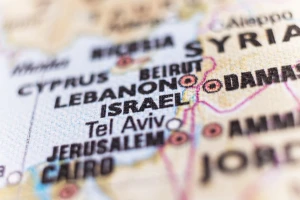
Before the rise of the Kingdom of Israel, the land was known to the ancient world as Canaan. This name, which first appears in 15th-century BCE documents, designated the territory roughly corresponding to modern-day Israel, the Palestinian territories, western Jordan, and parts of southern Lebanon. To the Greeks, "Canaan" was virtually synonymous with "Phoenicia," but in the Hebrew Bible, it took on a deeper theological meaning. It was the "Promised Land," the inheritance God swore to Abraham, Isaac, and Jacob.
Yet, from the very beginning, the land was also intimately bound to the people who would shape its destiny. The Bible records the name "Eretz Yisrael"—the Land of Israel—first mentioned in 1 Samuel 13:19 after the Exodus. "Israel" itself was the name given to the patriarch Jacob after he wrestled with an angel, signifying "he struggles with God." From that moment, his descendants became the Children of Israel, and the land promised to them was known as the Land of Israel. This is not a foreign colonial imposition; it is a name rooted in the founding narrative of the Jewish people, long before the rise of Rome or the advent of Islam.
The Philistine Precedent and the Birth of "Palestine"
Even the name "Palestine," often wielded by Israel's detractors as a counterweight to Jewish sovereignty, has its origins in a foreign people who arrived roughly at the same time as the Israelites. In the 12th century BCE, the Philistines—a seafaring people of Aegean origin—settled on the southern coast. Their territory, known as Philistia, was limited to a narrow coastal strip encompassing the Pentapolis of Gaza, Ashkelon, Ashdod, Gath, and Ekron.
It was from this localized designation that the Greeks later derived the name "Palaistinê." When the historian Herodotus wrote of a "district of Syria, called Palaistinê" in the 5th century BCE, he was referring to a vague geographical area, not a sovereign nation. The Philistines were eventually defeated by King David and vanished from history, absorbed into the local population. Yet their foreign name lingered, waiting to be weaponized by a later empire seeking to erase the Jewish presence.
The Roman Erasure: Syria Palaestina
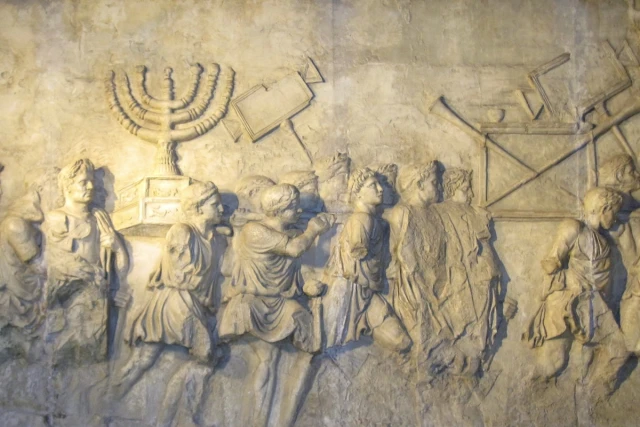
The most politically charged moment in this naming war occurred in 135 CE. After the Roman Empire brutally crushed the Bar Kokhba revolt—the final Jewish attempt to regain sovereignty—Emperor Hadrian sought to sever the land’s connection to the Jewish people forever. He renamed the province of Judaea to "Syria Palaestina".
Hadrian did not choose this name at random. He deliberately revived the archaic term "Philistia" (Palestine) to rename the Jewish homeland. As one scholar noted, this was a calculated act of erasure. He razed Jerusalem, rebuilding it as a pagan city called Aelia Capitolina, and banned Jews from entering its borders. For nearly two millennia, that Roman insult—Syria Palaestina—was the official name used by successive conquerors, from the Byzantines to the Crusaders to the Ottoman Turks.
But here is the critical distinction: while the Romans could change a colonial administrative label, they could not change the reality. Throughout the long centuries of exile, Jews never stopped calling their homeland "Eretz Yisrael." They prayed for rain in its seasons, faced its direction in daily prayer, and concluded every Passover Seder with the refrain, "Next year in Jerusalem."
The British Mandate and the Return of "Israel"
For centuries, the land was divided into Ottoman districts, never functioning as a single political unit. However, after World War I, the League of Nations granted Britain the Mandate for Palestine, creating the geopolitical entity known as Mandatory Palestine between 1920 and 1948. Notably, the Mandate charter included Hebrew as an official language and explicitly recognized the "historical connection of the Jewish people with Palestine" and the grounds for "reconstituting their national home". Even under the foreign name "Palestine," the world acknowledged that this land belonged to the Jews.
Then, on May 14, 1948, David Ben-Gurion read the Declaration of Independence. In a moment of profound historical justice, he declared: "Eretz Israel—the Land of Israel—was the birthplace of the Jewish people". The new state would not be called "Palestine" or "Judaea." It would reclaim the ancient, biblical name: Israel.
Conclusion: A Name Rooted in Truth
Why does Israel have a sovereign claim to this land? Because names matter. "Canaan" is a pre-Israelite artifact. "Palestine" is a foreign colonial label—first from the Greeks, then weaponized by the Romans to punish a defeated people. For hundreds of years, it was merely an administrative convenience for the Ottoman Empire and later the British.
But "Israel" is a name that comes from the Bible, from the covenant between God and Abraham, from the very identity of the Jewish people. It was a name that survived the destruction of the Temple, the fires of the Inquisition, and the gas chambers of Europe. The restoration of that name in 1948 was not an act of modern politics. It was the final chapter of a 3,000-year-old promise kept.
You might also like to read this: