Airlines begin gradual return to Israel amid fragile Iran ceasefire



International airlines are beginning to resume flights to Israel following a fragile cease-fire between Iran, the United States and Israel, signaling a tentative return to normalcy in regional air travel.
Greek carrier Blue Bird Airways, owned by Israel’s Kavei Hufsha Group, said it will resume flights between Tel Aviv and Athens today (Sunday), initially operating one daily flight in each direction, with a second daily service set to be added later in the week. Etihad Airways, the national carrier of Abu Dhabi, is also planning to resume operations, with two daily flights scheduled to begin on Wednesday.
Most foreign carriers, however, are not rushing to resume service, though some say they are preparing to return in the near to medium term.
Among the most notable is Hungarian low-cost carrier Wizz Air, which has built a reputation for operating no-frills routes to destinations often avoided by larger airlines. The company has shown particular interest in the Israeli market, even outlining plans to establish a hub at Ben Gurion International Airport alongside its existing bases in Budapest, Bucharest, London Luton, Warsaw, Rome and Abu Dhabi.
Even Wizz Air has said its plans remain subject to change if the war resumes, and many other European carriers have yet to make firm commitments. Industry analysts say airlines are unlikely to do so before the end of the two-week cease-fire. That could change if the truce is extended or if negotiations produce a longer-term resolution to the conflict.
In the meantime, Air France said in a social media post that it is considering the resumption of limited weekly flights in late May. The Germany-based Lufthansa Group – which includes Lufthansa, SWISS, Austrian Airlines, Brussels Airlines, Eurowings, Discover Airlines, Air Dolomiti and Edelweiss – has likewise signaled its intent to resume flights in the near to medium term, subject to developments.
Various media reports indicate that budget airline flyDubai is planning to restart service in late April, and British Airways is planning to restart flights in July.
America’s largest air carrier, Delta Air Lines, might start as early as late May, while United Airlines is likely to start flights again only in mid-June.
Another complicating factor in this picture, related to the war in Iran, is the imminent shortage of jet fuel in Europe due to the drastic reduction in traffic through the Straight of Hormuz.
“If the passage through the Strait of Hormuz does not resume in any significant and stable way within the next 3 weeks, systemic jet fuel shortage is set to become a reality for the EU,” the Airports Council International (ACI) group told Bloomberg News.
Other regions of the world are also reporting short inventories of jet fuel, while a large share of the world’s refining capacity dedicated to jet fuel is located in the Persian Gulf region. Before the war started, nearly 30% of the EU’s jet fuel supplies came from these refineries.
Under these circumstances, European airlines are likely to cut their services worldwide, not just to and from Israel.
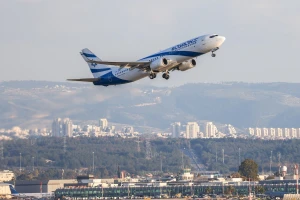
Meanwhile, Israeli carriers El Al and Arkia are ramping up operations, with El Al aiming to restore a full schedule to more than 30 destinations by mid-April and Arkia targeting a full restart by May 3.
You might also like to read this: