US and Iran exchange blame after 21-hour talks end without deal in Pakistan
Pakistan urges both countries to honor ceasefire agreement, pledges to continue mediation



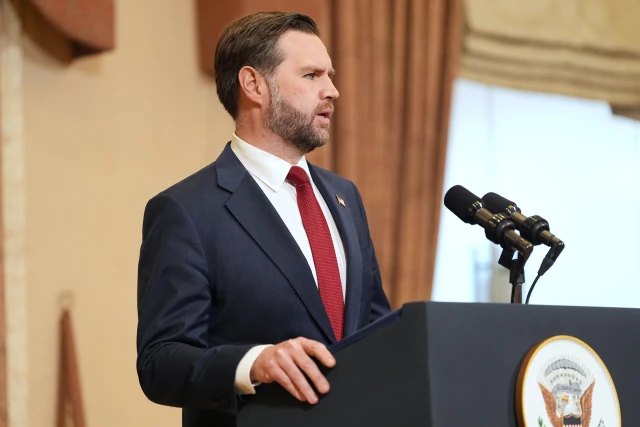
U.S. Vice President JD Vance said negotiations between the U.S. and Iran in Pakistan ended without a deal after the Iranians refused to accept American terms.
The high-stakes talks ended after 21 hours, with Vance saying the failure to reach an agreement is “bad news for Iran.”
“The bad news is that we have not reached an agreement, and I think that's bad news for Iran much more than it's bad news for the United States of America,” Vance told reporters before the U.S. delegation departed Islamabad.
“We go back to the United States having not come to an agreement,” the vice president said. “We've made very clear what our red lines are.”
Both sides blamed the other for failing to reach an agreement, with Vance saying the Iranians chose not to accept the U.S.’s terms, which he said focused on the nuclear issue.
“But the simple fact is that we need to see an affirmative commitment that they will not seek a nuclear weapon, and they will not seek the tools that would enable them to quickly achieve a nuclear weapon,” Vance told reporters. “That is the core goal of the president of the United States. And that’s what we’ve tried to achieve through these negotiations.”
Meanwhile, Iranian media blamed “excessive demands” by the U.S. for the failure of the talks.
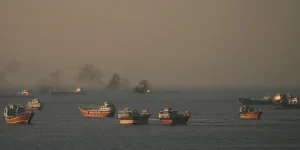
Axios reported that significant points of disagreement included the Strait of Hormuz, which Iran is demanding control of, and uranium enrichment.
Before departing Pakistan, Vice President Vance said the U.S. has made a final offer to Iran, raising doubts about the possibility of future talks.
“We leave here with a very simple proposal. A method of understanding that is our final and best offer. We will see if the Iranians accept it," Vance told reporters.
U.S. Vice President JD Vance: "And we leave here, and we leave here with a very simple proposal, a method of understanding that is our final and best offer. We’ll see if the Iranians accept it." pic.twitter.com/IEWxWEbvjy
— AZ Intel (@AZ_Intel_) April 12, 2026
However, Iranian foreign ministry spokesman Esmaeil Baqaei indicated that there could be future discussions.
“Naturally, from the beginning we should not have expected to reach an agreement in a single session. No one had such an expectation,” Baqaei told Iranian state broadcaster IRIB.
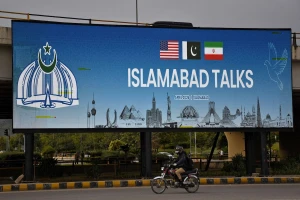
The direct talks were held in Islamabad, Pakistan, between the U.S. delegation, which consisted of Vice President JD Vance, special envoy Steve Witkoff and President Donald Trump’s son-in-law Jared Kushner, and the Iranian side, composed of Iranian Parliament Speaker Mohammad-Bagher Ghalibaf and Foreign Minister Abbas Araghchi.
There were contradictory claims regarding key items in the negotiations, such as the Strait of Hormuz and Israel’s ongoing operations against Hezbollah in Lebanon.
Iran is seeking to include Lebanon in the ceasefire, where its proxy, Hezbollah, is being struck by Israel. Both Israel and the U.S. have denied that Lebanon was part of the ceasefire agreement.
After the vice president announced the failure of the talks to achieve a deal, Trump shared an article on his Truth Social account which claimed that he could impose a naval blockade on Iran.
The article compares the situation in Iran to what he did in Venezuela in the lead up to the operation to arrest Nicolas Maduro at the beginning of the year.
Pakistan’s Foreign Minister Ishaq Dar called on both countries to honor their commitment to a ceasefire despite the failure to reach a deal during the negotiations.
“It is imperative that the parties continue to uphold their commitment to ceasefire,” Dar said in a statement. He also announced that Pakistan will continue to mediate between the U.S. and Iran.
You might also like to read this: