From missiles to fuel costs: How war with Iran is freezing air travel to Israel



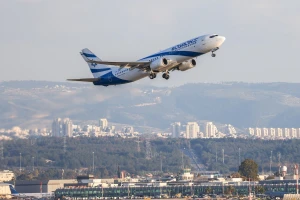
One of the casualties of the war with Iran has been Israel’s beleaguered tourism industry, as most international air carriers – and even Israel’s typically unfazed local airlines – have largely suspended flights to and from the country.
The threat of incoming missiles from Iran, Hezbollah, and the Houthis in Yemen has prompted insurance providers to refuse coverage for aircraft flying to and from Israel, forcing many carriers to suspend service at Ben Gurion International Airport.
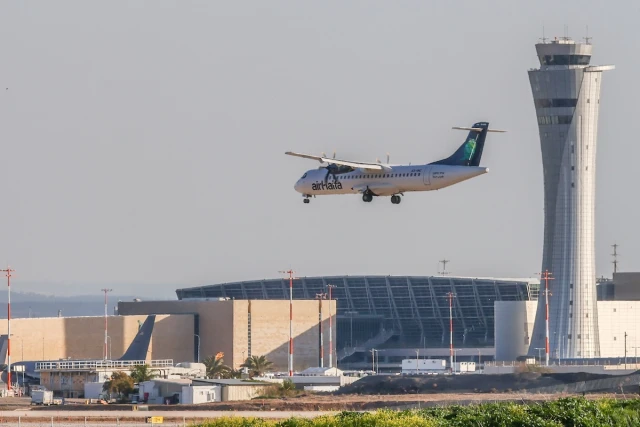
The risk of drone and missile strikes by Iranian-backed Shi’ite militias in Iraq – and potentially elsewhere in the region – has also led most carriers to halt even limited service to Ramon International Airport, located just a few kilometers north of Eilat.
Service to nearby airports in southern Jordan and northeastern Egypt has also been scaled back, though not canceled entirely.
Some airlines also noted that with so many military aircraft moving through the airspace of the Middle East, it would be very difficult for civilian aircraft and ground control radars to operate, even if there were no active hostilities.
Most of the flights that Israeli airliners are continuing to operate involve repatriating Israeli citizens who were abroad when the conflict began on Feb. 28.
However, most of the major American air carriers, including Delta and United Airlines, have announced they will not resume service before June, possibly later. Air Canada has also suspended service to Tel Aviv until at least May.
Lufthansa Group, which includes SWISS Air, Austrian, Brussels Airlines, and ITA Airways, as well as Aegean Airlines, might return a little earlier, depending on assessments of the security situation. British Airways, Virgin Atlantic, Air France & KLM are taking a more cautious approach, evaluating conditions weekly. But they have also suspended service to a number of other regional airports.
Other Middle East airlines, including Qatar Airways, Emirates and Etihad Airways, have also suspended most of their regional operations. Global companies, including Air India, Japan Airlines, and Malaysia Airlines, have rerouted much of their traffic to avoid the Middle East air corridors and hubs, including Ben Gurion Airport.
This is by far the largest disruption to regional air travel in many decades. By comparison, for most of the War of Redemption (formerly called Iron Swords War), which began with the Hamas attack on Israel on Oct. 7, 2023, some airlines suspended flights in and out of Tel Aviv for a few weeks, while others maintained limited service. Even during the 12 Day War last June, flights were disrupted only for a limited time and Israeli carriers continued to operate at nearly full capacity.
Going further back in history, many airlines also suspended service to Israel during the 2006 Second Lebanon War, but flights quickly resumed when that conflict ended. During the Second Intifada from 2000 to 2005, airlines reduced their flights to and from Israel but that was less because of the perceived security risk and more because the demand for flights was depressed since fewer tourists wanted to come.
Some analysts have speculated that flights may not resume quickly, even after the current conflict ends.
Although President Trump has said the war will be over soon, and Israeli officials have indicated there are few remaining targets from their original list, Iran does not appear to be in any hurry to halt its attacks on Israel and other regional actors.
Airlines are also warning that rising jet fuel costs – driven in part by the closure of the Strait of Hormuz – will force them to reduce flights in the near term, leading to route cuts worldwide, not just in the Middle East.
This is likely to have a cascading effect on economic activity, deepening a recession that many economists believe is all but inevitable in the second half of 2026.
You might also like to read this: