‘Fragile truce’ takes hold despite Iranian attacks on Kuwait & UAE amid near-universal praise for US-Israel-Iran ceasefire
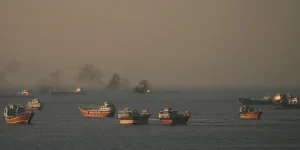
First ships transit Hormuz Strait following start of ceasefire





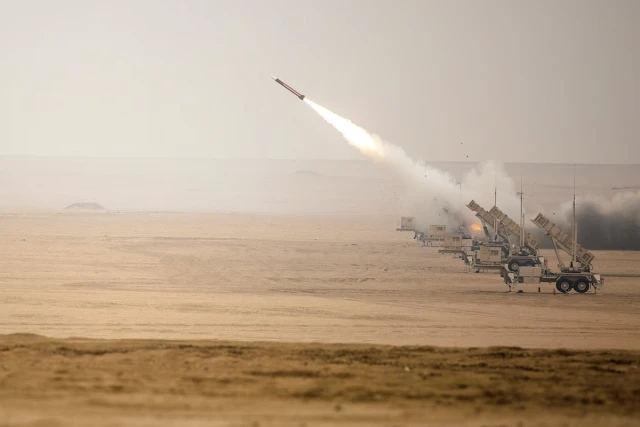
Nations around the world welcomed what U.S. Vice President JD Vance described as a “fragile truce” between the United States, Israel, and Iran on Wednesday, amid reports of ongoing strikes hours after the ceasefire was supposed to take effect.
Early Wednesday, the ship‑tracking service MarineTraffic reported that the first vessels had begun transiting the Strait of Hormuz following the ceasefire agreement, with ships moving through the strategic waterway as maritime traffic tentatively resumed.
Speaking to reporters during a visit to Hungary, Vance noted that the Iranian regime has not spoken with a unified voice during the negotiations and that “this is why I say this is a fragile truce… You have people who clearly want to come to the negotiating table and work with us to find a good deal, and then you have people who are lying about even the fragile truce that we’ve already struck.”
“If they’re going to lie, if they’re going to cheat, if they’re … going to try to prevent even the fragile truce that we’ve set up from taking place, then they’re not going to be happy,” he said, adding that President Donald Trump is “impatient to make progress.”
Vessel movements resume in the Strait of Hormuz following ceasefire announcement
— MarineTraffic (@MarineTraffic) April 8, 2026
Early signs of vessel activity are emerging in the Strait of Hormuz following a ceasefire announcement, which includes a temporary reopening of the strategic waterway to allow for negotiations.… pic.twitter.com/CSy6PZlCJ4
According to Iran, negotiations over a final agreement are due to begin in Islamabad, Pakistan, in the coming days. The ceasefire was supported by most regional stakeholders, including Saudi Arabia and the Gulf countries, Turkey, Egypt, as well as the Europeans and even the Pope, who had strongly criticized Trump’s last threatening message as “truly unacceptable.”
Israel said it would accept a ceasefire with the Iranian regime but stressed that it would not apply to the conflict with Lebanese proxy, Hezbollah.
On Wednesday afternoon, the IDF announced it had carried out the largest wave of strikes against Hezbollah since the fighting resumed, hitting more than 100 command centers and military sites across Beirut, the Beqaa Valley, and southern Lebanon within only 10 minutes.
#Statement | The Foreign Ministry expresses the Kingdom of Saudi Arabia's welcome of the announcement by President Donald Trump of the United States of America and the Prime Minister of Pakistan Muhammad Shehbaz Sharif of the ceasefire agreement reached between the United States… pic.twitter.com/BgdVV0WUPq
— Foreign Ministry 🇸🇦 (@KSAmofaEN) April 8, 2026
However, Iranian attacks were reported from Kuwait and the United Arab Emirates late on Wednesday morning.
The Kuwaiti army said it intercepted 28 Iranian drones in the morning hours, with strikes damaging oil facilities and power stations.
Kuwait's Ministry of Foreign Affairs said it welcomes the ceasefire, but called on Iran and its proxies to “immediately stop attacks that undermine stability, respect the sovereignty of countries and cease violations of the ceasefire.”
UAE Air Defenses engaged 17 Ballistic Missiles and 35 UAV's.
— وزارة الدفاع |MOD UAE (@modgovae) April 8, 2026
The Ministry of Defense announced that on April 8, 2026, UAE air defense engaged 17 ballistic missiles and 35 UAV's launched from Iran.
Since the onset of the blatant Iranian attacks, UAE air defenses have engaged a… pic.twitter.com/5jxRODWF9p
The Emirati Defense Ministry also announced that its military had "engaged 17 ballistic missiles and 35 UAV's launched from Iran" on Wednesday.
Iranian state media later responded that the attacks on Gulf countries were in retaliation, after “enemies” struck oil refining facilities on Lavan Island in the Persian Gulf.
The Hamas terrorist organization in Gaza also welcomed the ceasefire in a statement.
Hamas spokesman Hazem Qassem said, “We commend the leadership and people of Iran for their steadfastness, and for successfully breaking the will of the Zionist-American enemy and preventing them from carrying out their scheme. Unity among the peoples of the region and solidarity between them must be strengthened in order to prevent external colonialist forces from taking control and changing its identity.”
You might also like to read this: