Between sirens and Seder: One woman’s Passover in a time of war
Naomi Geffen tries to survive the season while tending to a kosher-for-Passover home, a company and an adult daughter with disabilities


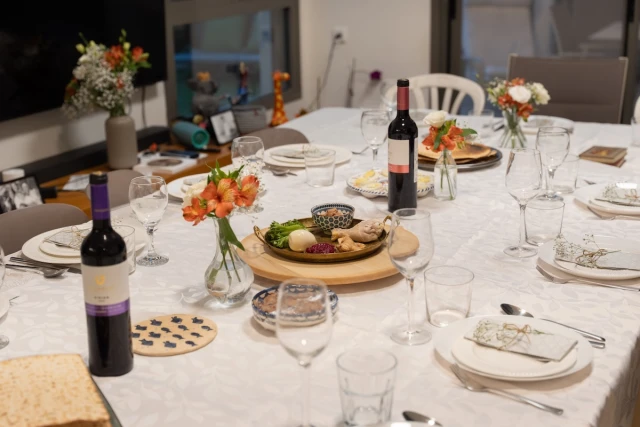
The preparation leading up to Passover can be one of the most demanding times of the year for observant Jews who observe rigorous rabbinic rules to turn their homes into a hametz-free environment.
Meticulous cleaning, sorting and organizing to make one’s home kosher for Passover – and then cooking for the holiday – usually falls disproportionately on the woman of the house.
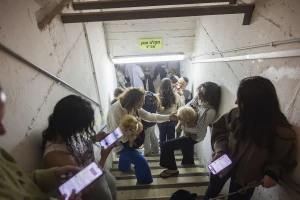
Now, the normal demands of Passover preparations are compounded by the war, with frequent disruptions by sirens, incoming missiles and, with school closures, children at home.
This season has been particularly overwhelming for Naomi Geffen – an ultra-Orthodox Jew who is a widow, mother of a daughter with special needs and also the CEO of the company she founded with her late husband.
“I’m in survival mode,” Geffen said in an interview in the week leading up to Passover. “I’m here by myself and there’s no one else I can ask to help.”
“Because of my outlook toward Judaism, there are certain things that I need to do to feel like I’m observing properly,” she told ALL ISRAEL NEWS. “Everything takes time, and time is not necessarily on our side.”
When the war broke out, Geffen had her 25-year-old daughter Tehilla, who has Down's syndrome, move from her assisted living apartment in Jerusalem to stay with her in Beit Shemesh, a city that sits between Jerusalem and Tel Aviv. Here, she could ensure that her daughter was safe, but it added a new element to her Passover preparation and workday.
“It's already very tense, and it doesn’t help when you are running in and out of safe rooms,” Geffen said.
Until her husband David died suddenly in 2023, they shared the tasks. That includes caring for Tehilla – along with her two older children – and running their company Loving Classroom, an education program focused on fostering empathy, respect and positive relationships.
Spring is a critical period for promoting it ahead of the next school year.
“This is the time we’re supposed to be marketing,” Geffen said. “If you don’t start now, you’ve missed the window.”
“And Pesach waits for no woman,” she said.
Now, every decision rests on Geffen’s shoulders. That includes not only her daughter’s safety, but also the needs of her wider family. Geffen also helps with her grandchildren and her adult son.
The preparation and the interruptions of war have compounded Geffen’s sense of loneliness.
“I lost my best friend,” Geffen said of her husband. “I lost the person I most love in the world – the person I shared everything with.”
“Even just saying, ‘Did you hear that?’” she said. “There’s no one.”
From sharing the news to sharing the tasks, David would take the children out for a meal while she focused on prepping their home for Passover.
“As a single mother, as a widow, all of this is very hard for me. There is a division of tasks that one does for Pesach. When you try to turn the kitchen around (for Passover), people still want to eat,” Geffen said.
“In the old days, this – what my husband did was take the kids and go buy falafel or something,” she explained. “(Tehilla) could do that in theory, but not in wartime when there could be an alert or a siren. I don’t have anyone else home who can take her or protect her in that way. It's just her and me.”
On top of that, the strain is showing on Tehilla, who has repeatedly expressed, “I don’t like the war. I miss Abba.”
Though she is independent and high functioning, she cannot go out by herself due to the risk of ballistic missile attacks. Geffen drilled finding shelters in the neighborhood, but she’s not confident that Tehilla will respond properly in an emergency.
“If she wants to go to the mini-market, I have to ask: ‘What would you do if there’s a siren?’ I’ve practiced it with her,” Geffen explained. “We’ve looked for safe places, stairwells. But then she’ll say, ‘I don’t know.’ And then I don’t feel safe letting her go.”
“I’ve done it once or twice, but clearly I’ve not done it enough times with her that I feel safe sending her out by herself when there’s a siren.”
That constant calculation adds to her list.
“There’s always that extra thinking power that you have to do,” Geffen said.
ALL ISRAEL NEWS contacted Geffen again on Passover eve to find out how she fared. She explained the escalation of stress in the final days before the holiday – checking for crumbs of hametz in the home, burning the leftovers and demonstrating that the home is ready for Passover – a few tasks that David took on.
“All of the things that were his role, his domain, now is my domain and it is twice as much work,” she said.
“I tend toward stringency, which makes one more paranoid and anxious,” Geffen said with a laugh. “This year I’m doing what I have to and everything else I have to survive. And I just about survived.”
You might also like to read this: