Israel reopens special ed amid Iranian missiles, forcing parents to weigh risk vs relief
For many parents and their children, going back to school is a welcome break during war




For Bruriya Amichay, opening her special education school in Jerusalem this week meant she had to leave her four young children at home with a babysitter who would have to get them to a safe room during sirens.
Meanwhile, Amichay, principal of the Feuerstein School, would be responsible for getting dozens of children with cognitive and physical disabilities to shelter during the same alarms.
This was put to the test first thing on Wednesday.
Sirens punctured the morning air just as some students were arriving and others were still en route after nearly three weeks without school.
“It was not easy. Some of them panicked,” Amichay told ALL ISRAEL NEWS. “But as soon as we got inside, we could see the smiles on their faces and they met the staff. We have special needs students, but we know that they have a lot of inner strength.”
Israel’s Department of Education typically opens special education programs as soon as possible, even when the Homefront Command restrictions continue to limit gatherings around the country. The same was true during COVID shutdowns and previous wars.
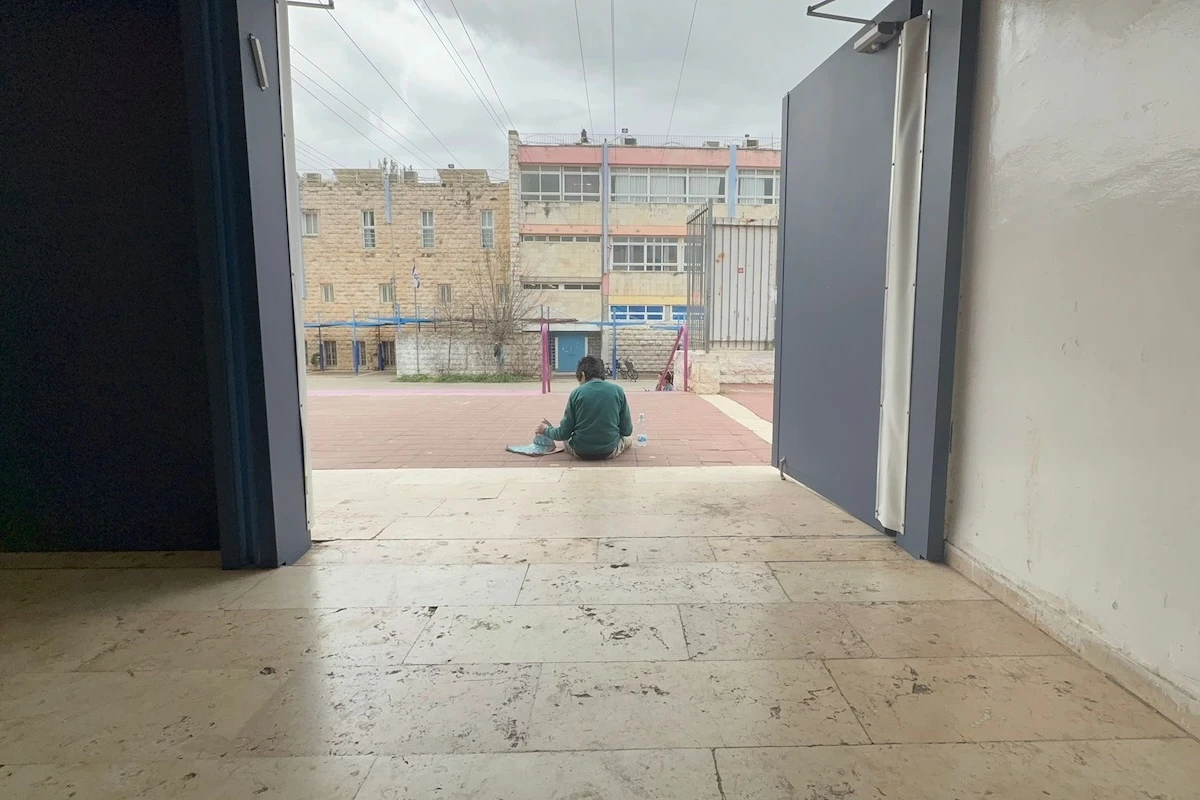
Each school is assessed for an adequate safe room that is accessible within a certain timeframe – usually seconds – which presents a challenge for those with physical disabilities. Out of safety concerns, Feuerstein School moved its operations to a nearby school where a large public bomb shelter has been transformed into a makeshift classroom.
“We have students who can’t reach the shelter quickly enough,” Amichay said.
While sending vulnerable children out during wartime may seem counterintuitive, families of children with special needs face different battles at home.
“They opened up special ed before general education because they understand that a typical kid, with all the challenges, can keep himself busy. A child with autism needs someone to help him or her – and that becomes a 24/7 activity,” said Kalman Samuels, founder and president of Shalva, the Middle East’s largest center for children with disabilities. “The pressure that child has at home can lead to screaming, can lead to crying, can lead to violence, can lead to anything.”
Frequent and unpredictable sirens and prolonged stays in safe rooms not only disrupt routines but add a new layer of strain on families.
“Many, many children are impacted by pressure. Many children are not claustrophobic, but they don't like small, packed areas,” Samuels explained. “If you live in an apartment and you have to go to a general safe room down below with many, many people, children who normally function well can start screaming, yelling, and not functioning altogether.”
“It’s not only autism – it’s all kinds of issues,” he told ALL ISRAEL NEWS. “When the child is forced to stay in a room and he can’t go out – it takes 5 minutes, 10 minutes, 15, 20 minutes – enormous problems are caused.”
Iran’s ballistic missiles and Hezbollah’s rocket and drone barrages are mostly shot down by Israel’s air defense systems. But even the interceptions can cause significant damage and death from falling shrapnel.
As a national emergency center for special needs, Shalva has received dozens of referrals from welfare agencies around the country to take in families facing different challenges. Liat Rahat, Shalva’s director of educational programs, said the center has the capacity to take in 100 people from around the country. One was a single mother and her son with autism who were sleeping in an underground train station in the Tel Aviv area because of continuous nightly sirens. Another is a paraplegic who cannot make it to a shelter on time.
Shalva opened some of its regular activities as well on Wednesday, including kindergartens, the after-school program and a vocational training center for young adults.
For parents in the Jerusalem area, bringing their children to their activities themselves is a mixed bag of relief and risk. Gaby Shine, mother of 15-year-old Hallel, decided to make the harrowing drive to bring her daughter to Shalva.
“There are long stretches where there isn’t even anywhere to stop on the side of the road, let alone a shelter. So I just ended up praying during the journey. It was stressful,” she said. “But I’m glad I took her. Halleli started to say she’s in prison at home and it really does her a lot of good to be with people and have structured activity. So I guess risking our lives to get there is worth it in some crazy kind of way.”
Adults with special needs face similar challenges. Rena said that her daughter, Michal, 31, went back to work at a nearby restaurant a few days into the war.
“She needs to be in her regular daily routine and she would be miserable if she were at home all day waiting for sirens,” Rena said. “Her place of work has a protected area nearby and so they all go there if there is a siren."
Rena noted that most people with Down syndrome, like her daughter, thrive when they have a predictable routine.
“Everybody needs one, but regular kids figure out what to do,” she said. “Children with Down syndrome have fewer resources; you can’t just tell them, ‘Go read a book.’”
Samuels said reopening programs for these children gives both them and their families a temporary reprieve amid the stress of war.
“Atmosphere and routine are the two key factors in caring for children with disabilities,” he said, adding that many parents have told him their children say “Shalva” first thing in the morning, “because they know, after they go to school, here’s where they come to life, because it's fun.”
Of course, most of the staff at special education programs have family at home – and children who have yet to return to their schools or daycare, which are all still closed.
“It's not easy for us. When you have a siren during a school day, we also sometimes are afraid and panic,” Amichay said. “We come here because we love our students.”
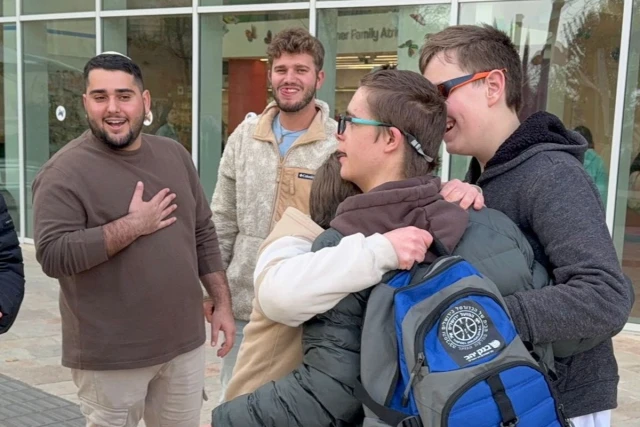
Certainly, the children who returned to their schools and to the Shalva after-school program were thrilled. On day one, 80% of the students returned to Feuerstein.
“Its the first day and all they want to do is to sit together and talk and to be outside under the sky,” Amichay said. “We feel a sense of purpose and like we are doing something very meaningful and special.”
You might also like to read this: