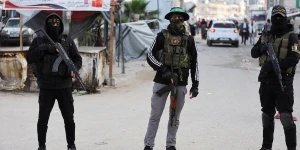
Gunfire erupts near Israeli consulate in Istanbul; attackers neutralized, motives unclear



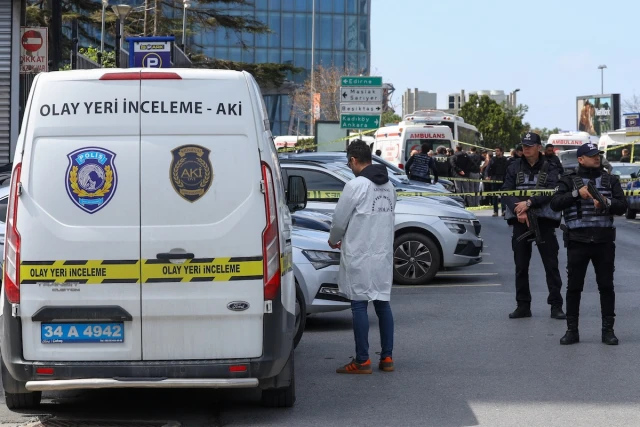
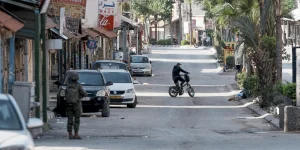
The streets of Turkey’s financial capital, Istanbul, erupted in gunfire just after noon on Tuesday when three armed men reportedly opened fire on police officers stationed outside a building that housed the Israeli Consulate in the city. The gun battle reportedly left one attacker dead and the other two wounded.
According to Istanbul Governor Davut Gul, two police officers were also lightly injured in the exchange of fire. The wounded attackers have reportedly been arrested and are currently under interrogation. Police say initial findings indicate that two of the assailants are brothers, and one reportedly has a criminal record.
Turkish Interior Minister Mustafa Ciftci said that the attackers were affiliated with “an organization that exploits the region,” which some analysts say is a reference to ISIS, which has been involved in several shootouts with security forces in recent months.
Israeli Foreign Minister Gideon Sa'ar issued a statement praising the swift response of Turkish security forces. “We appreciate the Turkish security forces’ swift action in thwarting this attack. Israeli missions around the world have been subjected to countless threats and terrorist attacks but terror will not deter us,” he said.
Authorities emphasized that the Israeli consulate in the building has been vacant since the early days of the Swords of Iron War and is not the only office located in the high-rise. Police reportedly have not established a clear motive for the attack, and it is not known whether the empty Israeli diplomatic mission was the intended target.
Israel’s diplomatic relationship with Turkey has reportedly been troubled for some time, with Ankara recalling its ambassador to Israel in November 2023, just a few weeks after Israel withdrew its ambassador to Turkey at the beginning of the war in Gaza. Turkey has hosted leaders of Hamas and taken other measures that have been unfriendly toward Israel.
Despite political tensions, economic relations between Israel and Turkey remain robust, with a large volume of bilateral trade and investment totaling between $6 and $9 billion annually. This includes Turkey’s facilitation of oil shipments from Azerbaijan to Israel through the Baku–Tbilisi–Ceyhan (BTC) oil pipeline. Israel reportedly imports about 94,000 barrels of Azerbaijani crude per day, almost half of its total supply, routed entirely through this pipeline. While Turkey has restricted trade with Israel in the past, these oil shipments, which are vitally important for Israel, have so far never been part of those restrictions.
Turkey’s exports to Israel also include steel, cement, textiles, vehicles, machinery and various other goods and services, mostly for use in the construction industry.
Israel’s exports to Turkey include chemicals, plastics, high-tech products and agricultural produce.
In the past, there was also close intelligence, security and military cooperation between the two countries, but those ties have grown much weaker in the two decades since President Recep Tayyip Erdoğan came to power. Notably, Israel’s defense industry used to export large volumes of equipment to Turkey and there were also several large deals involving Israeli upgrades and maintenance for Turkish aircraft, tanks, drones and other strategic weapons systems. Those ties have also frayed and it has been many years since a large package of defense exports or upgrades has been announced.
Turkish participation in military training exercises with the IDF has largely ceased, even when the Americans invite both parties to such drills. Some Pentagon officials reportedly view this as complicating logistical preparations and adding unnecessary costs.
Israeli tourism to Turkey has also collapsed in recent years, although it used to be a major source of revenue for Turkey’s Mediterranean resort cities.
At the same time, Turkish construction firms have built dozens of large buildings in Tel Aviv and logistics companies continue to serve as transit hubs for Israeli exports to Europe. Turkish exports to Saudi Arabia have often passed through Israel, especially over the past 15 years, after the highways Turkish trucks once used to transport these exports through Syria became blocked or unsafe due to the ongoing civil war.
Geography and mutual interests keep the economic relationship between Turkey and Israel strong, even as the political and diplomatic relationship remains fraught. Some analysts have warned that this fragile situation could change very rapidly under certain circumstances, requiring vigilance and preparations for potential escalations on both sides.
You might also like to read this: