Iran’s underground 'missile cities' built to withstand airstrikes



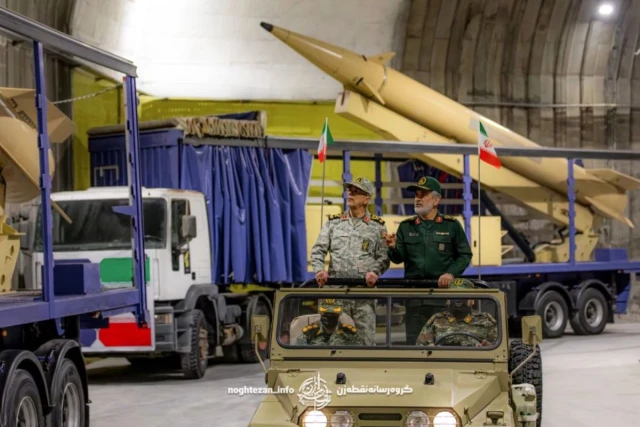
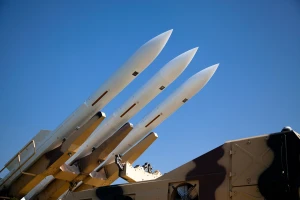
Iran stores thousands of drones, as well as numerous cruise missiles and launchers, in massive underground “missile cities,” according to a Daily Mail report. These vast subterranean sites are designed to protect the regime’s most potent offensive weapons from destruction in airstrikes.
The report notes that Iran's Yazd base is deliberately constructed some 500 meters inside a mountain. It also reveals that Iran’s underground facilities are carved into Shirkuh granite – reportedly one of the hardest types of rock on Earth. This natural material can withstand far greater pressure than conventional building materials, making it difficult even for U.S. GBU-57 bunker-buster bombs to penetrate.
"The mountain does not care how many sorties are flown above it. The railway does not care how many portals are sealed. The geology is the defense, and the geology has been there for 300 million years," analyst Shanaka Anslem Perera told the Daily Mail.
"The persistence of Iranian missile fire despite three weeks of intensive strikes is not resilience. It is infrastructure. IRGC did not prepare for this war by building rockets. It prepared by building railways inside mountains. The rockets are replaceable. The railways are permanent. And the granite that protects them was formed before mammals existed," Perera explained.
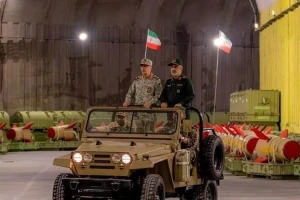
The British daily reported that Iran’s missile bases are vast, resembling entire cities rather than conventional military installations. Iran’s most advanced “missile city” reportedly includes an automated rail system running through tunnels deep inside the mountain, linking assembly areas with weapons storage depots and concealed launch exits.
In March 2025, the Islamic Revolutionary Guard Corps (IRGC), alongside Tasnim News Agency, unveiled a new underground missile city in a propaganda video, claiming it was “one of the hundreds of missile cities” operated by the force. The footage showed Iran’s late chief of staff, Mohammad Bagheri, and late IRGC Aerospace Forces commander, Amir Ali Hajizadeh, inspecting missiles in vast underground corridors; both were later killed by the Israeli Air Force during Operation Rising Lion, along with dozens of other senior Iranian officials.
U.S. intelligence officials recently estimated that Iran still retains a significant number of missiles and roughly half of its prewar missile launchers, despite a month of extensive U.S. and Israeli airstrikes. Israeli intelligence is more optimistic, estimating that only about 25% of the launchers remain operational, excluding those that are damaged or buried under debris. However, both assessments agree that Iran still maintains substantial offensive military capabilities.
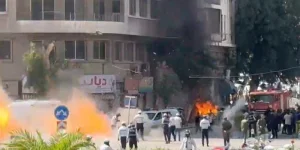
Israeli and U.S. Air Forces have struck many of Iran’s underground missile facilities, but the extent of the damage remains unclear. They have also targeted facility entrances; however, CNN reported that although 77% were hit, many have since been reopened after debris was cleared. With multiple access points, the bases can continue operating even when some entrances are blocked and analysts broadly agree that destroying these underground missile cities is key to degrading Tehran’s offensive capabilities.
You might also like to read this: