Israel’s energy strategy tested by global oil crisis


The war with Iran and its blockade of the Strait of Hormuz serve as reminders that interdependence, rather than geography, governs energy markets. What appears at first glance to be a regional disruption has quickly become a global stress test – not only for oil, but for gas, fertilizers, and the broader architecture of trade.
Roughly a fifth of the world’s oil passes through Hormuz. Less often noted is that about 20% of global liquefied natural gas (LNG) flows through the same corridor, much of it from Qatar. In 2024 alone, Qatar exported approximately 9.3 billion cubic feet per day through the strait, alongside smaller volumes from the United Arab Emirates. LNG’s advantage is that it compresses gas into a liquid, roughly 600 times smaller in volume, making it critical for transportation but not immune to geopolitical risks.
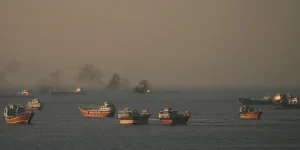
That vulnerability is now becoming acutely felt across the globe. Around 3,000 vessels typically transit the strait each month, a figure that has fallen by around 95% amid Iranian threats and soaring insurance costs. “You can be attacked, and you can’t get insurance, or it is extremely expensive,” said Arne Lohmann Rasmussen, chief analyst at Global Risk Management. “While there is no physical blockade, threats from the Iranians, plus drone and missile attacks, mean tankers are not going through the strait.”
Markets have responded in the only way they can: by repricing risk. Oil and gas remain well above pre-conflict levels. The shock, however, is not uniform. Although it operates through a global pricing mechanism, its effects are uneven across regions, leading to varying impacts on local economies and energy markets, depending on their reliance on oil imports and on geopolitical stability.
Israel, despite its proximity to the conflict, finds itself relatively insulated. There has been no physical shortage of oil. Though petrol prices have risen to a four-year high – about NIS 8.05 per liter – the impact on electricity tariffs is expected to be negligible, according to the Electricity Authority.
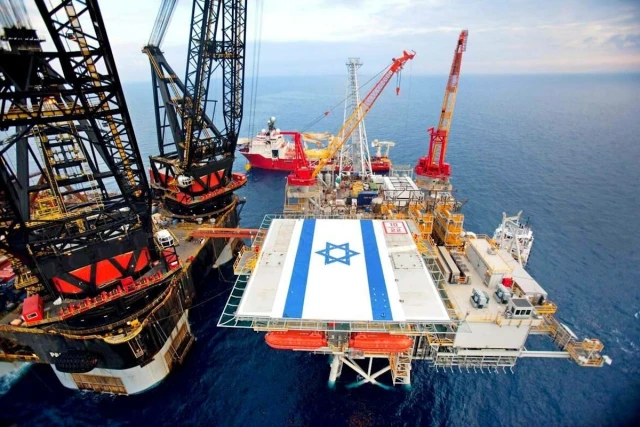
This resilience reflects structural choices. Israel does not rely on Hormuz for its crude imports, sourcing instead from Azerbaijan, Angola, Kazakhstan, Brazil, and Nigeria. Its electricity system is largely powered by domestic gas from the Leviathan and the Karish gas fields.
Yet even in this context, the war has revealed significant limitations. In an effort to protect offshore infrastructure, the northern Karish reservoir has been shut since the start of the war against Iran, while Leviathan has only recently resumed partial operations. The result has been a temporary fallback to coal and diesel generation.
However, if Israel’s challenge is operational, Asia’s is structural. The region absorbs roughly 80% of oil shipments through Hormuz. Governments have moved quickly to suppress demand. In Sri Lanka, fuel quotas and public holidays have been imposed. In the Philippines and Bangladesh, work weeks have been shortened and institutions have been closed.
Japan illustrates both vulnerability and preparedness. It imports roughly 95% of its oil through Hormuz, making it one of the most exposed advanced economies. Yet it maintains strategic reserves sufficient for around 240 days of consumption and possesses a sophisticated domestic refining industry, allowing it to cushion short-term disruptions.
China, by contrast, combines exposure with leverage. It is estimated to purchase around 90% of Iran’s oil exports, embedding the strait’s risks into its supply chain. Yet China is not currently facing shortages, supported by strategic reserves that can sustain at least 200 days of imports. That buffer helps explain Beijing’s relative detachment from efforts to resolve the conflict. As some say, urgency is a function of vulnerability, and China’s vulnerability – at least for now – is manageable.
The disruption extends beyond oil. Hormuz is a key route for fertilizer exports, with roughly one-third of global trade passing through it. Natural gas, a primary input in fertilizer production, directly links energy markets to food prices. Any sustained disruption risks transmitting the shock into agriculture, particularly in import-dependent economies.
Europe’s experience is opposite to that of Asian countries. Only about 12% of its oil imports originate from the Middle East. Even though supply remains available, affordability does not. Prices have surged, driven not only by global benchmarks but also by structural changes within Europe itself.
Its vulnerability is amplified by a decline in domestic refining capacity, as environmental policy has led to closures across the continent. The result is greater reliance on imported refined products and reduced flexibility in times of stress.
The rush to abandon fossil fuels at almost any cost may satisfy political narratives, but it is increasingly colliding with economic reality. What is presented as a necessary transition has, in many cases, become a premature retreat – one that assumes alternative systems are ready when they are not. The current crisis lays bare the consequences. As supply chains tighten, the erosion of domestic refining and production capacity no longer looks like an environmental revolution but like shooting oneself in the foot. If disruption persists, the outcome will not simply be higher prices at the pump but mounting pressure on industry and supply chains and a deeper economic crisis.
That said, not all is negative. Some mitigation is already in place. Saudi Arabia operates a 1,200km east–west pipeline capable of transporting up to five million barrels per day to the Red Sea, bypassing Hormuz. The United Arab Emirates has similarly connected inland oilfields to the port of Fujairah. These routes provide partial relief, though they fall short of fully replacing the strait’s capacity.
For Israel, the current episode underscores both the strengths and limits of its energy model. Diversified imports and domestic gas have provided resilience, while recent disruptions underscore the importance of protecting critical infrastructure. It is not immune – no country is – but it is better positioned than most to absorb the shock.
The deeper consequence, however, will be felt beyond the immediate crisis. This episode is likely to leave a lasting imprint – a kind of strategic aftertaste – for countries heavily dependent on the Strait of Hormuz. Just as the COVID-19 pandemic exposed the risks of over-reliance on Chinese manufacturing and prompted a wave of diversification, so too this conflict is likely to accelerate a rethinking of energy dependencies.
Asia may look more seriously at alternative suppliers in the US, Africa, and Latin America. Europe may be forced to reconsider the balance between decarbonization and energy security. Even producers in the Gulf are already investing in routes that bypass the strait altogether.
It is important to remember that markets do not forget shocks. They reprice them, and over time, they reorganize around them.
You might also like to read this: