









Lebanese singer Carine Bassili speaks out: Peace with Israel is possible – but only after Hezbollah is gone
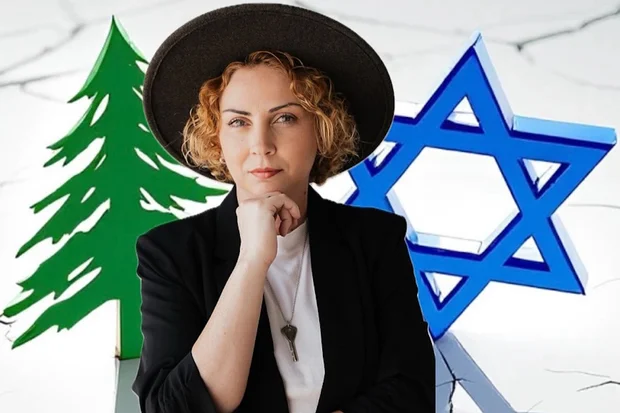
Born and raised in Lebanon, Carine Bassili grew to love Israel and is currently banned from her homeland. She has written several songs of peace in recent years and spoke with ALL ISRAEL NEWS about the latest political developments between her country and Israel.
“I'm not surprised,” said Bassili. “That’s the reason why I started this whole journey,” she explained, speaking of her songwriting and Israel advocacy. “The Lord showed me it's going to happen in the next few years. God promised me, you will go back to your country, just trust me.”
Carine posted on social media six years ago that peace was coming. Encouraged, she adds, “I see shifts happening. There are definitely a lot of changes I've noticed.”
One of the seismic shifts was a Lebanese news station, Al Jadeed, broadcasting with an Israeli and a Lebanese flag side by side together in the studio – equal in size and prominence. It was unthinkable until very recently.
“A lot of people want peace,” Bassili affirms. “We're seeing that. But at the same time, I believe if we had that peace treaty we can only have peace with Israel after they destroy Hezbollah.”
Frustrated at the disinformation in the media, Bassili wants to put the record straight about the relationship between Hezbollah and Lebanese Christians.
“Many believe that Hezbollah was protecting the Christians,” she says. “People don’t know that when Hezbollah came and started taking territories in Dahieh, making it their headquarters, it was actually a Christian area. But when they started gaining power many people were forced to leave,” she explained. “If they were there to protect Christians, they wouldn't have made the Christians feel unsafe in their own homes.”
“I lived in a very hot zone. I was on the line between them and the Christian area. So when I heard Tucker Carlson talking about how Hezbollah is protecting Christians, I thought, that's not true. They were forming an alliance with Christians because they wanted to gain power in the other areas through these Christians,” Bassili protested.
However, she explained that though many Lebanese people are in favor of peace with Israel, it was not the same as feeling positively about the Jewish state. Many are simply sick of Hezbollah with all the war and destruction the terror group brings, and want it gone. However, it is unlikely that an Israeli would be well received in Lebanon, even if there were peace between the two countries, at least initially.
“Israel, the Jews, they cannot come to Lebanon alone because there's still hatred. They have to be very careful. We don't want to risk any Jewish people's lives,” she cautioned.
“They don't want to be excited to go to Lebanon right away because we have a lot of people who hate.” Establishing a diplomatic relationship is the first step, according to Bassili, and “then maybe Christians can go to Israel,” she suggested.
“For the Jews to come it's dangerous, unless they have a second citizenship. To use an Israeli passport and to cross the border and to come… it cannot happen right away. It's going to take some time for the Jewish people, but I believe the Christians are going to be able to go. It’s going to be safe for them.”
Bassili believes that encouraging Lebanese Christians to visit Israel and providing them with a positive experience would help pave the way for peace if travel between the two countries becomes possible.
“They have to open up a way for the Christians to get there and to go to be in Israel, to be around the Jews, so when they come back they can start speaking up about their experiences. That will help the Jews to come to Lebanon. Little by little. I think it needs to be a plan like this,” she suggested.
It took time for Bassili herself to develop a love for Israel. “I was struggling with that,” she says, recalling the beginnings of God’s call on her life as a Lebanese musician. “I was like, Lord, what is that you want me to do with the Jewish people?”
“I felt like He was going to use music to do something in the atmosphere and in the region, to shift things and to change the narrative in the spirit and to break some things. So that's why I started doing it.”
Bassili’s songs have included “Pray for the Peace of Jerusalem,” “God of Israel,” and an Arabic version of Israel’s Eurovision song about the Oct. 7 attack, “Hurricane.”
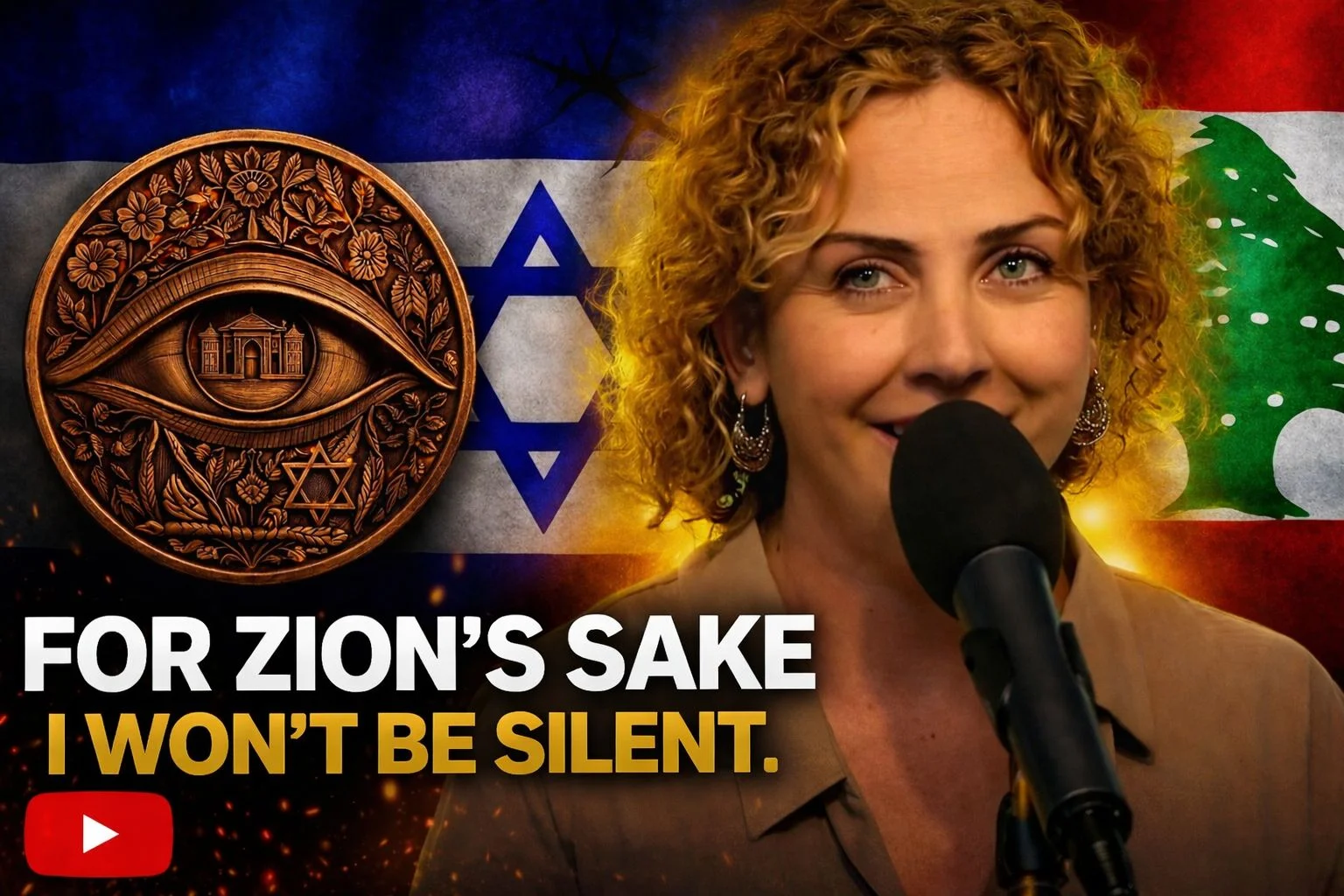
Now a song based on Isaiah 62 is being released, but in some ways it is not a new song – the inspiration came before the Hamas attack three years ago. She felt that she should not release it back then but wait. Now is the time, she says, to release it.
“I believe it’s what we have been releasing in the Spirit over the region, in the music, in our prayers,” she said, sharing that scriptural sounds of peace and healing have power. “This is how God created this universe, through his voice,” she adds. Her songs have been played far and wide, including countries in the Middle East.
Isaiah 62 begins with the words, “For Zion's sake I will not keep silent, and for Jerusalem's sake I will not be quiet.”
“The church, the world, is being silent. Christians are not speaking out for Israel,” Bassili laments. The song was recorded in Hebrew, English and Arabic, but unlike her previous songs, no Jewish people took part in this rendition of the song about Zion.
“I want to have an Arab Israeli just because I felt from the Lord. Jews are obviously going to stand up for their people, so it was important to have an Arab Israeli to stand in the song to say, “Yes, you know, for Zion's sake, I will not be silent. It was very strategically why the Lord got an Arab believer from Israel.”
Courage is contagious. When brave people like Carine take a bold stand, as Billy Graham famously said, the spines of others are stiffened.


Support our independent, on-the-ground reporting from Israel. Become a $5/month Ally.
Popular article:
interview Easter message of resurrection hope amid war at Jerusalem's Garden Tomb
biblical commentary Let my people go: a Passover message for today
4 IDF soldiers killed, 2 wounded in fighting in southern Lebanon, as Israel eliminates dozens of Hezbollah terrorists
Receive latest news & updates
A message from All Israel News
Help us educate Christians on a daily basis about what is happening in Israel & the Middle East and why it matters.
For as little as $10, you can support ALL ISRAEL NEWS, a non-profit media organization that is supported by readers like you.
Latest articles:

More than 1,300 antisemitic posts blame Israel, Jews for French riots – report

Thailand turns to Israeli anti-drone technology to counter growing battlefield threat
Israeli fighter jets flew to Iranian border in ‘power projection,’ deterrence exercise ahead of elections next week

Israel targets nuclear fusion leadership as AI drives soaring energy demand

Israel's Sheba Medical Center climbs to 6th in global smart-hospital rankings