Australia launches Bondi terror attack inquiry; Jewish community describes surge in antisemitism


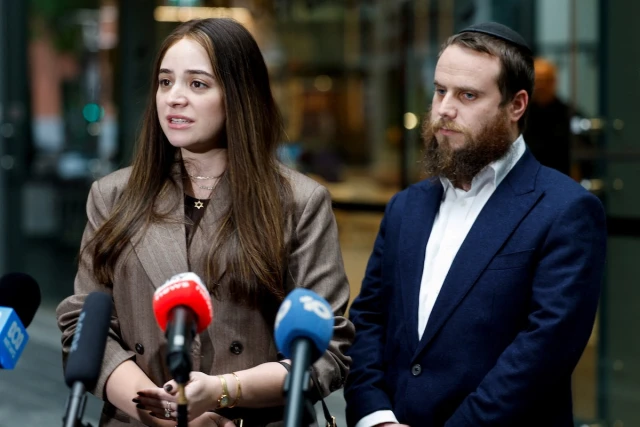
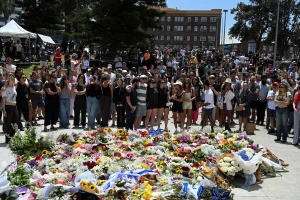
The Australian government has launched a Federal Royal Commission to investigate the shooting attack at Bondi Beach in Sydney during Hanukkah last December that left 15 people dead and several others wounded. On Monday, the Commission began hearings to allow members of the public to present testimony about the incident, the events leading up to it, and its aftermath.
The first day of testimony was dominated by members of the Jewish community coming forward with accounts of antisemitism they have personally experienced and witnessed over the past few years, which many said directly contributed to the hostile atmosphere that led up to the attacks.
In her opening remarks, Commission Chair Virginia Bell stated, “The sharp spike of antisemitism that we have witnessed in Australia has been mirrored in other Western countries and seems clearly linked to events in the Middle East. It’s important that people understand how quickly those events can prompt ugly displays of hostility towards Jewish Australians simply because they are Jews.”
Zelie Hegen, a member of the Commission, said there are thousands of people who want to testify about the antisemitism they have encountered. Calling it “one of society’s oldest hatreds,” she said the impact of such vitriol has been widespread across Australia.
Many witnesses agreed, saying that anti-Jewish sentiments had long been considered out of bounds in Australia, but since the Oct. 7, 2023, Hamas attacks on Israel, there has been a marked shift, with many ordinary Australians openly expressing hostility toward Israel specifically and Jews more generally.
“Antisemitism was allowed to come into the open,” said Sheina Gutnick, whose father, Reuven Morrison, was killed in the Bondi attack.
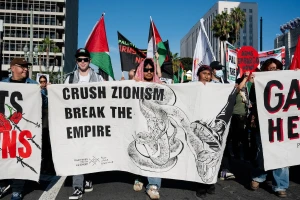
Other witnesses spoke anonymously or under pseudonyms because they were afraid of being targeted for violence if they were identified publicly. They described incidents of low-level harassment on the street, as well as more prominent public displays, including hearing large crowds protesting against Israel and chanting antisemitic slogans. There have also been widespread acts of vandalism against synagogues, ranging from graffiti to arson. Jewish-owned businesses and even private homes have also been targeted.
During a protest against the war in Gaza, held in front of the Sydney Opera House just a few weeks after the Oct. 7 terror attack, Israeli flags were publicly burned. One witness who testified said this was “such an un-Australian thing to do,” though she also blamed police for not preventing it.
The Bondi Beach attack in December 2025 was the deadliest shooting in Australia in 30 years and the worst antisemitic attack in the country’s history. The attackers, Sajid Akram and his son Naveed Akram, claimed to be affiliated with ISIS. Sajid was killed at the scene, while Naveed was wounded, arrested, and charged with 15 counts of murder and various other charges.
With an estimated Jewish population of 117,000, Australia has the 8th or 9th largest Jewish population in the world. Demographers have noted that the rate of natural increase has slowed in recent years, but overall numbers have risen due to an influx of Jewish refugees from South Africa. Almost all of Australia’s Jewish population resides in two cities – Melbourne and Sydney – while sizeable communities also exist in Perth, Adelaide and Victoria.
You might also like to read this: