Serbia and Israel move towards ‘strategic partnership’ after April visit of FM Đurić
Foreign Minister Marko Đurić, descendant of Holocaust survivors, visited distant cousin, former hostage Alon Ohel




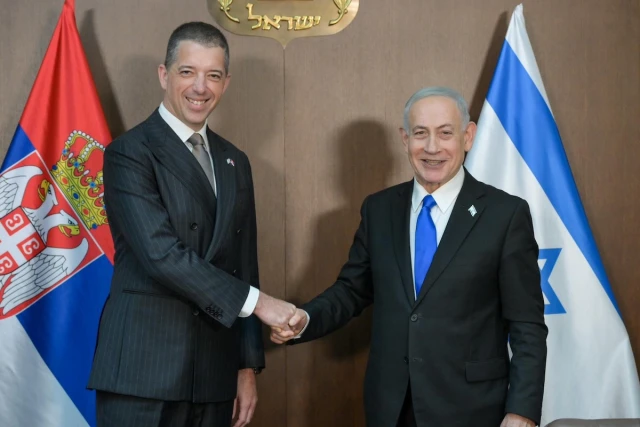
Israel and Serbia recently began a dialogue aimed at developing a strategic partnership that builds on several years of increasing bilateral ties and strong Serbian support for Israel in the aftermath of the Oct. 7, 2023, Hamas massacres in southern Israel.
Serbian Foreign Minister Marko Đurić, who visited Israel at the end of April, told The Jerusalem Post that he believes the two countries have already built a robust relationship, saying, “We have reached the level of strategic partnership between both countries.”
Diplomatic and economic ties between the two countries have increased significantly over the past four years, with trade between them tripling over that period.
In 2023, following the closure of Israel’s Ben-Gurion International Airport on Oct. 7 and the cancellation of many events in Israel, professional sports teams often hosted European teams in Belgrade instead of in Israel.
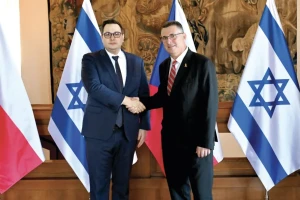
A sign of the rapidly growing ties between Serbia and Israel came when, during a press conference ahead of meetings with Israeli Foreign Minister Gideon Sa’ar, Đurić addressed Sa’ar and those in attendance.
#BREAKING Serbian Foreign Minister Marko Đurić surprised Israeli counterpart Gideon Sa’ar by speaking in Hebrew at a press conference.
— The National Independent (@NationalIndNews) April 28, 2026
"I want people in Israel to know that in Serbia and Belgrade they have true friends, and we stand with you in this difficult time," Đurić said. pic.twitter.com/KTHOHAKJl1
“I want people in Israel to know that in Serbia and Belgrade they have true friends, and we stand with you in this difficult time,” Đurić said in Hebrew.
“Serbia has strategically made a decision to stand again, as many times before in history at crucial historic moments, with the Jewish people and with the State of Israel,” Đurić told the Jerusalem Post.
The Serbian Ministry of Foreign Affairs called the discussions between Đurić and Sa’ar a “confirmation of the continuous strengthening of bilateral relations, as well as a significant step in further political, economic, and strategic connectivity between the two countries.”
Министар спољних послова Републике Србије Марко Ђурић @markodjuric изјавио је данас на заједничким изјавама, након састанка са израелским колегом министром спољних послова Државе Израел Гидеоном Саром @gidonsaar и прве седнице стратешког дијалога двеју делегација, да посета… pic.twitter.com/aRvsa2Fm9d
— MFA Serbia (@MFASerbia) April 28, 2026
The sessions ran almost four hours, covering security agreements, regional developments, economic cooperation, and technology sharing. Following the meeting, the two ministers announced the establishment of a Serbian-Israeli Business Council to oversee the expansion of trade between the two nations.
Earlier in April, Serbian President Aleksandar Vučić announced that his country would jointly produce combat drones with Israel as part of a strategic partnership involving Serbia’s state arms producer, Yugoimport SDPR, and Israeli defense giant Elbit Systems.
“We will have the best drones in this part of the world,” Vučić told reporters during a visit to a military unit in Belgrade in April.
While Serbian media reports did not clarify when the project is expected to begin, it will reportedly involve the production of drones in Serbia.
An important part of the discussion between the two foreign ministers was the implementation of a free trade agreement, which is expected to further increase bilateral trade between Serbia and Israel.
“When I speak of a free-trade agreement with one of the most developed economies in the world, that means when we join forces in different fields, we achieve better results,” Đurić told the Jerusalem Post.
In addition to trade, flights between the two countries are also set to increase, rising to five direct flights between Tel Aviv and Belgrade per week.
In a video message to the Serbian public, Đurić said Serbia's visit to Israel was meant to strengthen relations with one of the most influential countries in the world.
“We came here for Serbia, for our history, but also for our future, and today I can say that we have succeeded,” Đurić said.
During World War II, the Nazis often targeted the Serbian people, alongside the Jews and the Roma people, for elimination as “undesirables,” and Serbian fighters joined Jewish “Partisan” resistance groups.
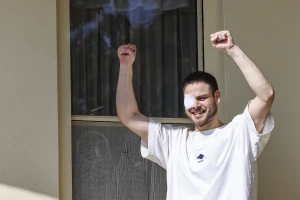
Đurić himself is the descendant of Holocaust survivors, and is related to former Israeli hostage Alon Ohel, who was released by Hamas during the October 2025 Gaza ceasefire deal. Đurić and Ohel are distant cousins, and the Serbian foreign minister reunited with Ohel in Tel Aviv, which he described as the fulfillment of a long-held wish.
Đurić told the JPost that he and Ohel “share the same great-grandfather from Novi Sad, and with [Ohel] I was able to stroll the streets of Tel Aviv, to go to Carmel Market, to eat a shawarma. I never believed that this day would come.”
The Serbian foreign minister pointed to the long history of ties between his country and Israel, noting that Serbia approved the Balfour Declaration in 1917, and was the first European country to pass legislation to allow the return of Jewish property to Jewish families killed during the Holocaust.
Due to Serbia’s own mistreatment at the hands of the Nazis, Đurić said that antisemitic rhetoric is not well received in his country, adding, “Anyone who shouts something against the Jews in Serbia harms at the same time both the Serbs and the Jews.”
Israeli Foreign Minister Sa’ar is expected to visit Belgrade to continue the strategic dialogue.
You might also like to read this: