US intel assesses: Iran could still build a nuclear weapon within a year, despite war - report
Focus on conventional military targets in recent conflict didn't change timeline for development of weapon




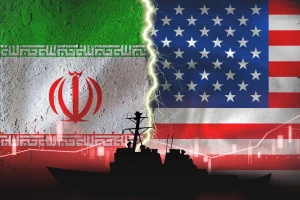
The time required for the Islamic Republic of Iran to build a nuclear weapon has not significantly changed, U.S. intelligence assesses, according to a report in Reuters.
Citing “three sources familiar with the matter,” Reuters reports that despite U.S. and Israeli strikes on Iran, many of which were focused on removing top leadership and degrading Iran’s military infrastructure, the time Iran would need to build a nuclear weapon has not changed significantly since the U.S. carried out Operation Midnight Hammer in June 2025.
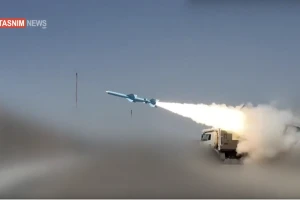
The focus of Operation Roaring Lion and Operation Epic Fury has largely been on conventional military targets, such as ballistic missile infrastructure, including launchers and fabrication sites, as well as attempts to degrade the Islamic Revolutionary Guard Corps.
While the Israel Air Force did carry out some limited strikes on Iranian nuclear sites, the primary concern is on the over 400 kilograms (around 900 pounds) of highly enriched uranium (HEU), the location of which is not known.
Prior to Israel’s launching of Operation Rising Lion in June 2025, the U.S. intelligence assessment was that Iran could build a nuclear weapon within three to six months, two of the sources told Reuters.
Israel’s strikes killed several of the top nuclear scientists and damaged several of the Islamic Republic’s nuclear research and development sites. However, Israel lacks the heavy bunker buster bombs necessary for penetrating Iran’s deeply embedded covert nuclear facilities.
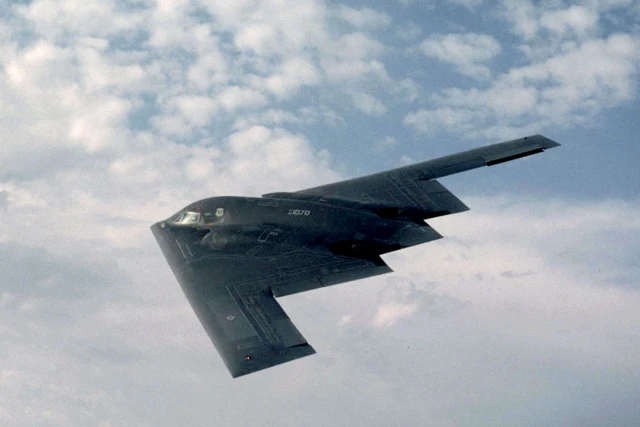
Following the U.S. strikes on Iranian nuclear sites in Isfahan, Fordow, and Natanz, which involved the use of 14 GBU-57 MOP (massive ordinance penetrator) bombs, that assessment changed to one year or longer for Iran to develop a nuclear weapon.
The U.S. dropped the bunker buster bombs on two of Iran's underground nuclear sites, with most being dropped on the Fordow site, which sits under a mountain, while two were dropped on the underground facility at Natanz.
The HEU was believed to be at the Fordow site, which has been inaccessible since the U.S. strike, while another significant portion was believed to be held at underground facilities in Isfahan. Following that strike and the resultant destruction, there is no evidence that the Iranians have accessed the material.
However, the Iranian regime has been conducting operations to remove some of the blast debris and reopen access tunnels.
U.S. intelligence assesses that, if the regime were to order the development of nuclear weapons, the material could be recovered and an operational weapon could be achieved in about one year.
Another concern is that Iran may have removed most of the HEU before the U.S. strikes, moving it to other facilities. Inspectors from the International Atomic Energy Agency, the UN agency that develops safeguards and monitors the use and development of nuclear materials, have not been able to carry out inspections since the start of Operation Rising Lion in June 2025.
Eric Brewer, a former senior U.S. intelligence analyst who worked on assessments of Iran's nuclear program for the government, told Reuters that he is not surprised that assessments have not changed. He noted that U.S. strikes in Iran during the most recent operation did not target nuclear facilities.
“Iran still possesses all of its nuclear material, as far as we know,” Brewer said. “That material is probably located in deeply buried underground sites where U.S. munitions can't penetrate.”
Recent reports indicate that U.S. President Donald Trump is considering additional strikes aimed at further disrupting Iran’s ability to pursue nuclear weapons, as negotiations between the two countries remain stalled.
White House spokeswoman Olivia Wales told Reuters that the U.S. is committed to ensuring Iran never has a nuclear weapon.
“While Operation Midnight Hammer obliterated Iran’s nuclear facilities, Operation Epic Fury built on this success by decimating Iran’s defense industrial base that they once leveraged as a protective shield around their pursuit of a nuclear weapon,” she explained. "President Trump has long been clear that Iran can never have a nuclear weapon – and he does not bluff.”
You might also like to read this: