Israel’s tech sector races to counter Hezbollah's new FPV drone threat



Israel’s air defense system has long been held up as a model of technological layering: rockets, missiles, and drones are each met with tailored responses refined over years of conflict. Yet along the northern border, a cheaper and far simpler threat is exposing the limits of that architecture.
Fibre-optic guided first-person view (FPV) drones, deployed by Hezbollah, are not sophisticated weapons. They are, however, effective – precisely because they sidestep the logic on which much of Israel’s defensive advantage rests.
The principle is straightforward; instead of relying on radio signals, these drones are connected directly to their operator via a thin fibre-optic cable. That physical link renders them immune to electronic jamming, one of the primary tools used to disrupt unmanned aerial threats. In practical terms, a drone assembled from commercially available components, fitted with a camera, explosives, and a spool of cable, can remain fully controllable until the moment it reaches its target.
This is not an entirely new development. Variants of fibre-optic drones have been used extensively in Ukraine, where both sides have adapted to increasingly effective electronic warfare. The logic has now reached Israel’s northern front. What has changed is not the availability of the technology, but its operational relevance. Israeli defenses have proven effective against larger projectiles and many types of wireless drones, prompting a shift towards systems that are harder to disrupt.
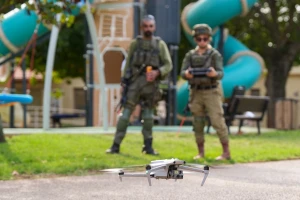
The consequences are tactical but tangible. These drones operate at low altitude, are small in size and offer minimal warning. Israeli assessments indicate that they have become one of the more immediate threats to troops operating in southern Lebanon. Recent incidents – including attacks that resulted in fatalities and injuries – underline the point. As Robert Tollast, a drone expert at the Royal United Services Institute, put it, such systems are “absolutely deadly”, particularly because they can approach targets at low altitude with little chance of disruption.
Israel’s difficulty does not primarily lie in identifying the threat. Over the past decade, it has developed a dense ecosystem of sensing technologies designed to detect small aerial objects. Companies like Third Eye Systems specialize in electro-optical detection, using advanced imaging to identify drones against complex terrain. Magos Systems provides compact radar platforms optimized for low-altitude targets, particularly in cluttered environments.
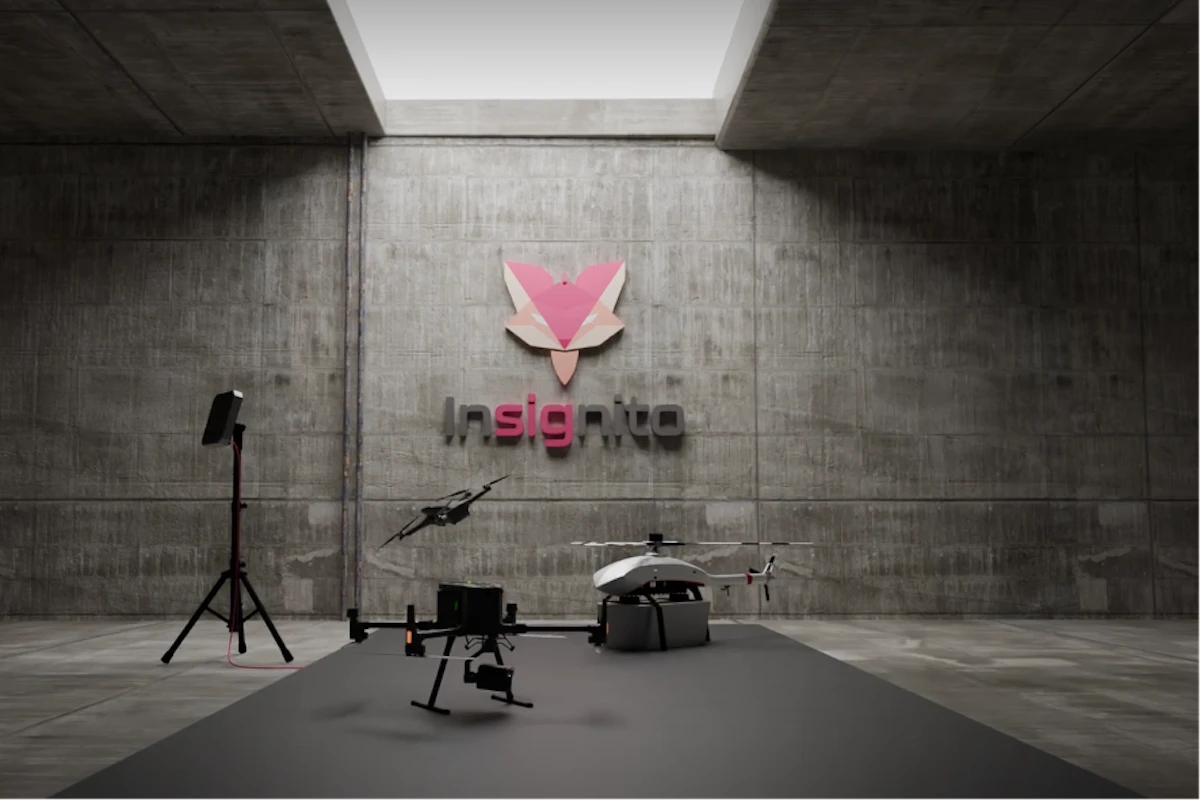
Acoustic detection has also become an important layer. Insignito, a Tel Aviv-based defense technology company founded in 2022 by former Israeli Air Force (IAF) experts, focuses on analyzing sound signatures to identify drone activity. Its systems are designed to distinguish between background noise and the distinct acoustic footprint of drone propellers, adding another channel of detection where visual or radar tracking may be limited. Together, these capabilities form a detection framework that is, in most cases, technically sufficient.
The constraint emerges after detection. Fibre-optic drones remove the option of electronic disruption, leaving physical interception as the only viable response. Here, the gap becomes more evident. Systems such as those developed by Smart Shooter, which use computer vision to enhance the accuracy of small-arms fire against drones, offer a practical but limited solution. Engagement ranges are short, often within a few hundred meters, and the margin for error is minimal. A missed interception at that distance is not easily recoverable.
This limitation has been acknowledged by Israeli defense officials. Ran Kochav, former head of the Israeli Air and Missile Defense Forces, has argued that current systems are struggling to cope with the threat, noting that such drones are “very difficult to detect, and even after they’re detected, they are really hard to track. His assessment points to a broader issue: the challenge is not simply technological capability but deployment and readiness against a threat that evolved faster than doctrine.
Other Israeli companies are attempting to extend the engagement window. General Robotics develops remotely operated weapon stations that can be integrated with detection systems, enabling faster and more stable targeting. Robotican, a smaller but increasingly visible player, has focused on aerial interception, developing drones designed to neutralise hostile UAVs by entangling them mid-air. The concept reflects a broader shift towards drone-on-drone defence, extending interception beyond the immediate vicinity of the target.
However, these approaches, while promising, are not yet scaled. Interceptor drones require trained operators and remain limited in number. Command-and-control integration, an area where larger groups such as Elbit Systems are active, is improving but still subject to the constraints of real-time battlefield conditions. The ambition is clear: to fuse detection, tracking and interception into a single, responsive system. The execution remains incomplete.
Laser-based systems, often presented as a future solution, illustrate the same dynamic. High-energy lasers offer the theoretical advantage of rapid engagement and low cost per use. Israel has invested in such technologies, including systems referred to as Iron Beam, or “Or Eitan.” Yet their operational footprint remains limited. Range constraints and the need for multiple units to cover dispersed forces reduce their immediate impact against small, fast-moving drones operating at low altitude.
In the meantime, the response has been pragmatic. Israeli forces have adapted vehicles with cages and protective structures designed to mitigate the impact of incoming drones. Such measures are effective at the margin but do not address the underlying issue: control of the airspace at very short ranges.
For Israel, this is not unfamiliar territory. The country’s defense industry has repeatedly evolved in response to operational gaps, often turning those solutions into exportable technologies. Iron Dome is the most cited example, but it is part of a longer pattern of adaptation under pressure. The current challenge is likely to follow a similar path, though under tighter timelines.
There is also a structural shift. Unlike rockets or missiles, fibre-optic drones do not require advanced manufacturing capabilities. The barrier to entry is low, and the knowledge required to assemble them is increasingly accessible, complicating efforts to contain the threat at its source.
More broadly, they reflect a trend in modern conflict in which relatively simple adaptations can neutralize complex systems. The cost asymmetry is stark: devices assembled from commercial components are now capable of challenging defenses that have taken years and significant investment to build.
The response, therefore, is unlikely to be singular. It will involve incremental improvements across detection, interception and operational doctrine. Greater emphasis on aerial interception, faster integration of sensor data and adjustments to how forces operate in contested environments are all part of the emerging picture. The role of smaller, specialized companies alongside established defense groups reflects the need for speed and flexibility.
The risk is not that fibre-optic drones fundamentally alter the balance of power. They do not. Their range is limited, and their payloads are relatively small. The risk is that they expose a narrow but consequential vulnerability – one that can be exploited repeatedly at low cost.
Closing that vulnerability will require time, coordination and sustained investment. Israel has the technical capacity to do so. The question is whether the pace of adaptation can match the speed at which such threats evolve. In a contest defined by iteration, the advantage lies not with the most advanced system, but with the one that adapts fastest.
You might also like to read this: