UAE official says any future Iran settlement must address ballistic missiles and drones amid repeated attacks
Gulf states have been hard hit by Iranian ballistic missile and drone attacks on civil and energy infrastructure




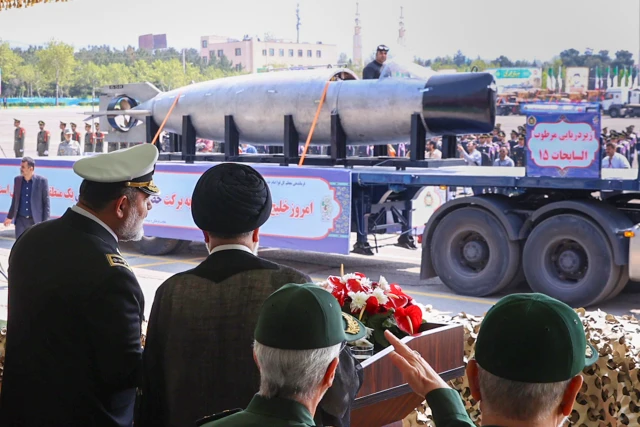
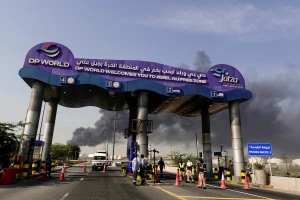
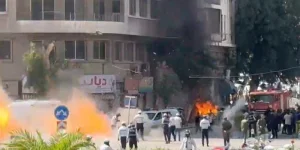
The Gulf states have been hit particularly hard by Iranian missile and drone attacks following the start of military operations against the Islamic Republic by the United States and Israel.
In fact, despite Israel being one of the primary actors, the Iranian regime has fired more ballistic missiles on the United Arab Emirates than it has on Israel.
On Monday, the UAE announced it had intercepted 233 ballistic missiles from Iran since the start of the conflict, along with eight cruise missiles, and over 1,000 drones.
الدفاعات الجوية الإماراتية تتصدى بنجاح للصواريخ الباليستية والجوالة والمسيرات الإيرانية.
— وزارة الدفاع |MOD UAE (@modgovae) March 9, 2026
UAE Air Defences Successfully Intercept
Iranian Ballistic and Cruise Missiles and UAVs Attacks#وزارة_الدفاع #وزارة_الدفاع_الإماراتية#MOD#UAEMinistryOfDefence pic.twitter.com/YM4PbmNydg
The high volume of munitions directed at countries which are not participating directly in the war has caused a change of stance regarding Iran’s defensive and offensive capabilities.
While most of the Gulf nations that have been targeted by Iran are calling for a return to negotiations, some, such as the UAE, are now demanding that Iran’s missiles and drones be part of the discussions, in addition to the nuclear program that has been the focus of negotiations in recent years.
Before the start of the joint military operations, Israeli officials had repeatedly stated their demand that negotiations between the U.S. and Iran address the Islamic Republic’s ballistic missile program, warning that the program represented a threat to the entire region.
Now it appears that the Gulf nations, along with other regional states, are beginning to publicly agree with that assessment.
Iran has launched attacks on the UAE, Qatar, Bahrain, Kuwait, Saudi Arabia and Oman, while claiming to target U.S. bases in those countries. However, most of the attacks have struck civilian sites or oil and gas infrastructure, in an apparent attempt to push those nations into pressuring the U.S. to end the war.
An Emirati official, speaking on condition of anonymity, told UAE site The National that Iran’s missile capabilities are now under scrutiny, after Tehran’s attacks on Gulf countries demonstrate the missiles are designed for attack rather than defense.
“Any new negotiated settlement with Iran will no longer be confined to the nuclear aspect,” the official said. “Missiles are now center stage, because missiles now are not seen as self-defense.”
The attacks by Iran caught many of the Gulf states off guard. Some had anticipated a token attack, much like the one carried out against Qatar after the U.S. struck Iranian nuclear sites last June in Operation Midnight Hammer.
“We’ve been getting ready, not expecting war but getting ready for a sort of emergency, such as the one that we are facing today,” the Emirati official told The National.
“The UAE is a country that prepares, and we have been preparing for a long time because of our reading of the situation in the region,” he explained. “We’ve been preparing in terms of food stock, in terms of facilities and so on and so forth.”
However, he said that “what we have seen is something that we did not expect. We did not think that Iran would actually risk the relations of all its neighbors."
Even Qatar, which strongly favored a negotiated deal between the U.S. and Iran, and forbade the American military to use its bases in the country for strikes on Iran, has expressed outrage over the targeting of its territory.
Qatari prime minister, Sheikh Mohammed Al Thani said Iran’s targeting of his country has caused “a big sense of betrayal.”
“All the attacks on the Gulf countries – we never expected this from our neighbor,” Al Thani said during an interview with Sky News. “We have always tried to preserve a good relationship with Iran, but the justifications and pretexts they are using are completely rejected.”
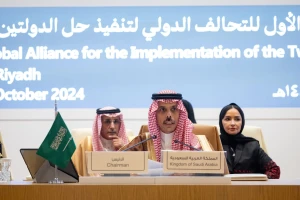
On Sunday, foreign ministers of the Arab League, who conducted an online meeting at the request of Saudi Arabia, Egypt, Jordan, Bahrain, Qatar, Kuwait and Oman to discuss the attacks, issued a statement condemning the Iranian missile and drone attacks.
The statement called the Iranian attacks “a flagrant and unjustified aggression that violate sovereignty, international law, the UN charter as well as international humanitarian laws.”
While not threatening any concrete military action, the statement ““emphasized the right of Arab nations to defend themselves” while expressing “full solidarity with the Arab nations targeted by the Iranian aggression.”
Meanwhile, Iran’s parliament speaker, Mohammad Bagher Ghalibaf, has again rejected the idea of a ceasefire and renewed negotiations with the U.S.
“We are definitely not looking for a ceasefire,” Ghalibaf wrote on 𝕏 on Monday. “We believe that the aggressor should be punched in the mouth so that it learns a lesson [and] will never think of attacking our beloved Iran again.”
This article originally appeared on ALL ARAB NEWS and is reposted with permission.
You might also like to read this: