Israel’s shekel surge: Peace dividend or policy headache?




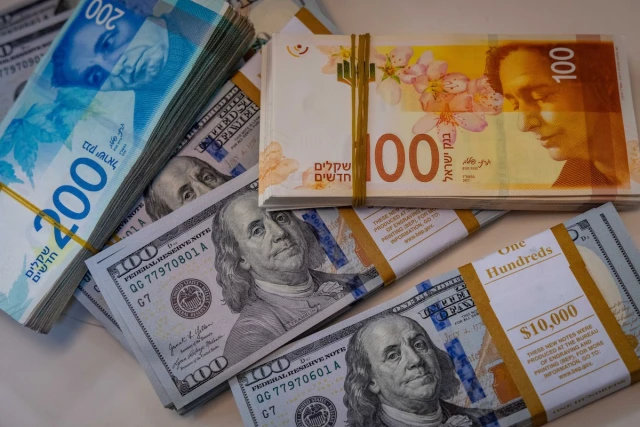
Currency markets are rarely sentimental. Yet Israel’s shekel is behaving as if geopolitics is once again working in its favor. After two years in which war risk dominated pricing, the combination of a ceasefire with Iran and emerging talks with Lebanon has prompted a sharp reassessment of Israel’s risk premium. The result is a currency strengthening towards levels not seen in decades.
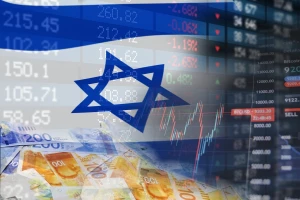
The US dollar has fallen from around 3.7 to below the key 3.0 shekel mark over the past year, putting the exchange rate at levels not seen in more than thirty years. With gains of over 20% against the dollar, the shekel has outperformed most major currencies. Dollar weakness explains little of it. It is a repricing of Israel. Markets, in other words, are trading the prospect of stability.
That view is shared by market economists. Jonathan Katz, chief economist at Leader Capital Markets, points to the strength of the shekel as reflecting expectations of an improving geopolitical outlook, reinforced by underlying economic fundamentals, including the resilience of the high-tech sector and continued capital raising abroad.
The drivers are clear. Foreign capital has returned in force. Bank of Israel data show a net foreign investment of roughly $39 billion in 2025, up from $25 billion the year before. Israel’s technology sector – still the dominant export engine – continues to generate substantial dollar inflows. At the same time, institutional investors have reduced foreign currency exposure, selling dollars and hedging overseas assets. According to the Bank of Israel, local companies sold more than $13 billion of foreign exchange in the final quarter of 2025 alone.
This trend is reinforced by a decline in perceived geopolitical risk. As Edith Moskowitz of Beinleumi Bank notes, the risk premium embedded in Israeli assets has fallen. Measures that track the shekel against a broader currency basket still point to meaningful appreciation, reinforcing that this is not simply a dollar weakness story.
In short, Israel is running a structural surplus of dollars. That may seem like a good problem to have. In practice, it is more complicated.
A stronger currency has delivered an immediate dividend. Inflation has eased back into the Bank of Israel’s 1-3% target range, supported by cheaper dollar-denominated imports. Households benefit directly as the cost of imported goods and overseas travel declines, easing pressure on living standards after a period of war-driven disruption.
The exchange rate is also contributing to the central bank’s efforts. A stronger shekel tightens financial conditions without requiring higher interest rates. That helps explain the Bank of Israel’s reluctance to intervene and sell dollars. Cutting rates too early, or actively weakening the currency, risks undermining progress on inflation.
Yet currencies are blunt instruments. What helps consumers often hurts producers.
Exporters – from traditional manufacturing to segments of the technology sector – are feeling the strain. Revenues are largely dollar-denominated, while costs, particularly wages, are in shekels. The arithmetic is straightforward: every percentage point of appreciation erodes margins. Surveys suggest that around 40% of exporters and more than half of technology firms are considering expanding operations abroad, a sign that the adjustment may not be purely cyclical.
However, the impact of a stronger shekel is uneven. High-margin software companies are better placed to absorb currency shifts than industrial exporters operating on thinner spreads. Defense exporters may even benefit, supported by sustained global demand. But the broader risk is structural: a persistently appreciating shekel raises the incentive to shift activity offshore.
That risk is amplified by the structure of Israel’s economy. High-tech accounts for roughly half of exports and contributes a disproportionate share of tax revenues through corporate profits and high-income employment. It is also highly mobile. When revenues are earned in dollars but costs are anchored in a strengthening shekel, relocating parts of the cost base becomes a rational response. Early indications suggest firms are already weighing that option. Even a partial shift would have implications beyond exports, feeding through to tax receipts and, ultimately, fiscal capacity.
That risk is not without precedent. Periods of currency strength have historically coincided with rising offshore activity, particularly in manufacturing. What distinguishes the current episode is the scale of capital inflows and the persistence of the underlying drivers.
Those drivers extend beyond geopolitics. Israel’s external accounts remain robust, underpinned by technology exports and services income. The economy has proved resilient even during conflict, reinforcing investor confidence in its underlying strength.
That resilience is now being amplified by expectations of a more stable geopolitical environment.
But markets may be getting ahead of themselves. The current exchange rate appears to price in a best-case scenario: a durable ceasefire, progress in negotiations with Lebanon, and no renewed escalation with Iran. That is a demanding set of assumptions.
Even modest setbacks could reverse the trend. The same forces supporting the shekel – capital inflows, lower risk premia, and favorable sentiment – can quickly move in the opposite direction. A flare-up in the north or a breakdown in talks would likely see the currency weaken as rapidly as it has strengthened.
There are also external risks. While global dollar weakness has been a secondary factor, a reversal in US monetary conditions would remove a supportive tailwind.
For the Bank of Israel, the policy dilemma is clear. Intervention would offer relief to exporters but risks undermining the central bank’s inflation mandate. With foreign exchange reserves of about $234 billion, the capacity to act is not in question. The price to do so would be its credibility.
For now, policymakers appear content to let the currency do much of the work. If inflation remains contained, gradual rate cuts could follow, easing some of the upward pressure while providing some relief to borrowers, including in the housing market. But interest rates alone are unlikely to offset the scale of foreign capital flowing into the economy.
That leaves the burden of adjustment with the private sector.
Over time, a persistently strong currency reshapes economies. It favors high-productivity sectors and compresses lower-margin industries. In Israel’s case, that points to an even greater concentration around high tech.
Efficient, certainly. Balanced, less so.
The broader question is whether the current exchange rate reflects fundamentals or optimism. For now, it reflects both. Israel’s economic strength justifies a firm currency. But the pace of appreciation suggests markets are also pricing in a geopolitical dividend that has yet to be secured.
For now, the currency tells a simple story: investors believe the worst is over. Whether that belief proves durable will determine whether the shekel’s surge marks a new equilibrium – or simply another phase in a cyclical pattern.
You might also like to read this: